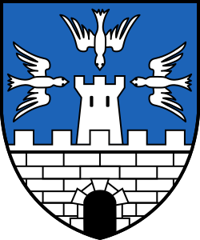
Collombey-Muraz
Origin of the name Collombey-Muraz
The forms « de Columberio » (1263) for Collombey and « de Mura » (1283) for Muraz are attested. Collombey reportedly derives from the Latin « columbarium », dovecote or burial vault. Muraz would come from the Latin « murum », plural « mura », and may refer to the remains of walls. In the local patois Collombey is reportedly called « Collambâ », a form still to be confirmed.[1]
Founding of Collombey-Muraz
Collombey-Muraz brings together, on the left bank of the Rhône, Collombey-le-Grand, Collombey-le-Petit, Muraz and Illarsaz. The Barmaz necropolises show that people have lived here since the Neolithic, and a Roman villa stood on the site of the church of Muraz. In the Middle Ages Collombey may have belonged to the Abbey of Savigny, near Lyon. It then passed to the priory of Lutry and later to the Abbey of Saint-Maurice, while belonging to the Savoyard castellany of Monthey. The castellany's property remained undivided until 1788, and the municipality (burghers' community) of Collombey was created in 1787. From 1798 it belonged to the district of Monthey.[1]
History of Collombey-Muraz
4300-3800 BC. Necropolis of forty cist graves at Barmaz I, in the Middle Neolithic I.[1]
around 900 BC. Occupation of the Refuge, above Barmaz, in the Late Bronze Age.[1]
1040. Collombey becomes a possession of the priory of Lutry.[1]
1263. Collombey passes to the Abbey of Saint-Maurice. Mention « de Columberio ».[1]
1283. Mention « de Mura » for Muraz.[1]
1536. After the conquest of the Chablais by the Valais dizains, the locality is attached to the government of Monthey.[1]
1647. The Bernardine nuns settle permanently in Collombey, in the castle of Arbignon.[1][2]
1708. The parish centre is moved to Monthey. A new parish is established in Collombey in 1723.[1]
1787. Creation of the municipality (burghers' community) of Collombey. The property of the former castellany remains undivided until 1788.[1]
1850. Construction of a suspension bridge.[1]
1854. Embankment works on the Rhône.[1]
1868. Collombey takes legal action against Monthey to obtain jurisdiction over Monthey plots enclosed within its territory. The ruling, in its favour, only comes in 1938.[1]
1873-1874. Construction of a new church of Saint-Didier.[1]
1900. Hans Boshardt discovers the first prehistoric remains at Barmaz.[1]
1939-1945. The municipality reclaims its last uncultivated land under the Wahlen plan. A camp for military internees is set up at Illarsaz.[1]
1947-1955. Excavations by Marc-Rodolphe Sauter at Barmaz I and II and at the Refuge.[1]
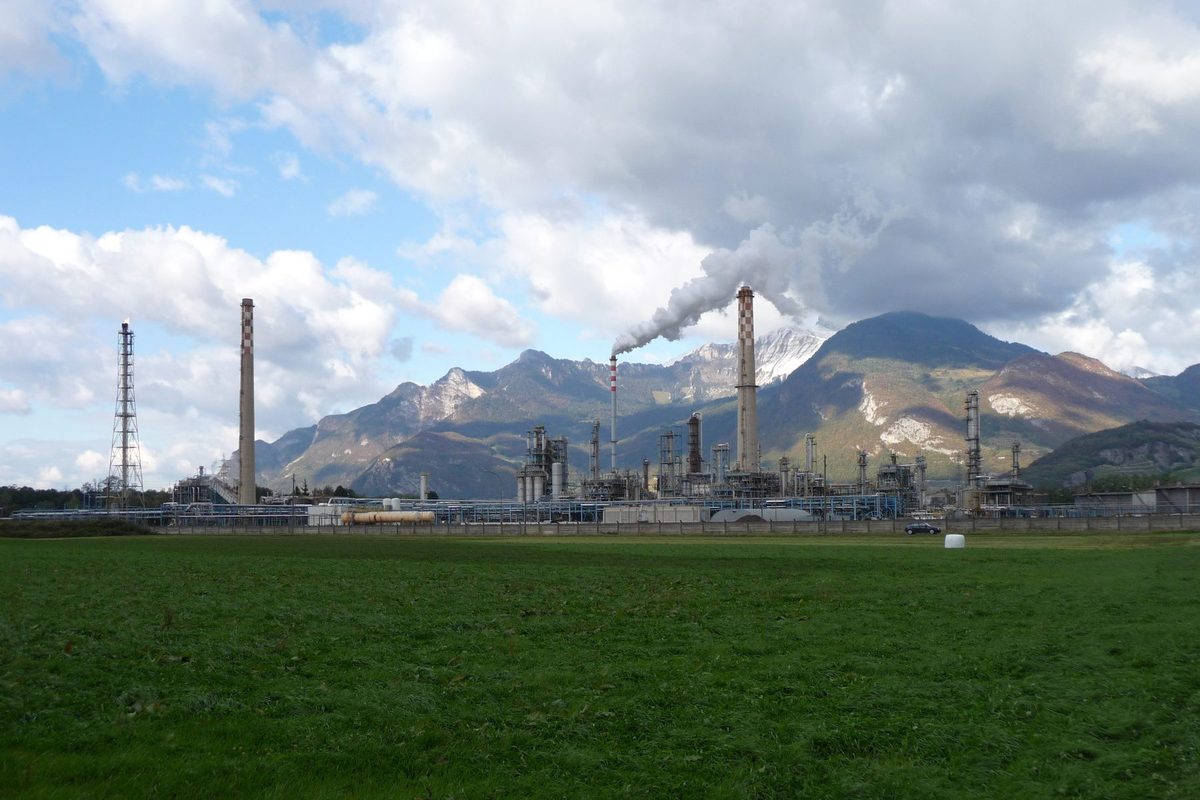
1961. An oil refinery is established.[1]
1972. Excavations beneath the church of Muraz reveal a Roman villa decorated with a fresco.[1]
1980-2000. Strong growth of the municipality, with new school classes and the creation of a lower secondary school.[1]
Population of Collombey-Muraz
Sources and references: [1][4]
| 1850 | 935 |
| 1900 | 1'103 |
| 1950 | 1'598 |
| 1980 | 2'982 |
| 2000 | 5'695 |
| 2025 | 10'184 |
Historic sites in Collombey-Muraz
Bernardine convent. Coming from La Roche-sur-Foron, the Bernardine nuns stayed in Saint-Maurice (1629) and then in Monthey (1634). After the authorisation of the Valais Diet (1643), they settled permanently in the castle of Arbignon in 1647. The convent church dates from the early 18th century and was restored in 1994.[2]
Church of Saint-Didier in Collombey. Built in 1873-1874 to replace the old church of the parish established in 1723.[1]
Church of Muraz. Parish attested from the 10th-11th centuries and dependent on the episcopal mensa. The church succeeded a small funerary cella built over a Roman villa. The present neo-Gothic building dates from 1898 and reportedly keeps a bell tower of 1657, date uncertain.[1]
Châtillon-Larringes manor. Residence reportedly built on the former tower of the nobles of Collombey and rebuilt in 1653 after a fire.
Remains in Collombey-Muraz
Necropolises of Barmaz I and II. On a spur of the Pointe de Bellevue, which rises to 480 m, Barmaz I yielded a necropolis of forty cist graves from the Middle Neolithic I, later Neolithic settlement layers and a necropolis of fifteen burials from the end of the Early Bronze Age. Barmaz II, 170 m away, a second necropolis of twenty graves. They are the largest necropolises of the Cortaillod culture excavated in Valais.[1]
Roman villa of Muraz. A villa decorated with a fresco and a small funerary cella were uncovered beneath the church of Muraz during the 1972 excavations. Early medieval graves lie near the church.[1]
Glacial erratics and « marbles ». In the 19th and early 20th centuries the glacial erratics and the limestones known as Collombey « marbles » were quarried. The Bloc Studer, above the municipality, belongs to the federal inventory of the erratic boulders above Monthey and Collombey.[1]
Sources
- Dictionnaire historique de la Suisse, « Collombey-Muraz » (Alain Gallay ; Bernard Monnet, version du 03.08.2005)
- Dictionnaire historique de la Suisse, « Collombey » (monastère des bernardines, François Huot, version du 03.08.2005)
- Inventaire fédéral des paysages, sites et monuments naturels (IFP), objet 1709 « Blocs erratiques au-dessus de Monthey et de Collombey »
- Office fédéral de la statistique (OFS), STATPOP, chiffres provisoires au 31.12.2025, via citypopulation.de
- geo.admin.ch, recherche de lieux (coordonnées)
Localities of the municipality with a page
Other villages near Collombey-Muraz
Missing information, or do you have a source? Suggest a correction or addition. Every submission is checked before it's published.
Suggest a change