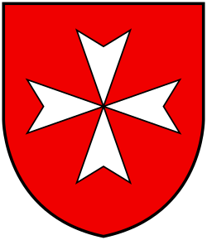
Bardonnex
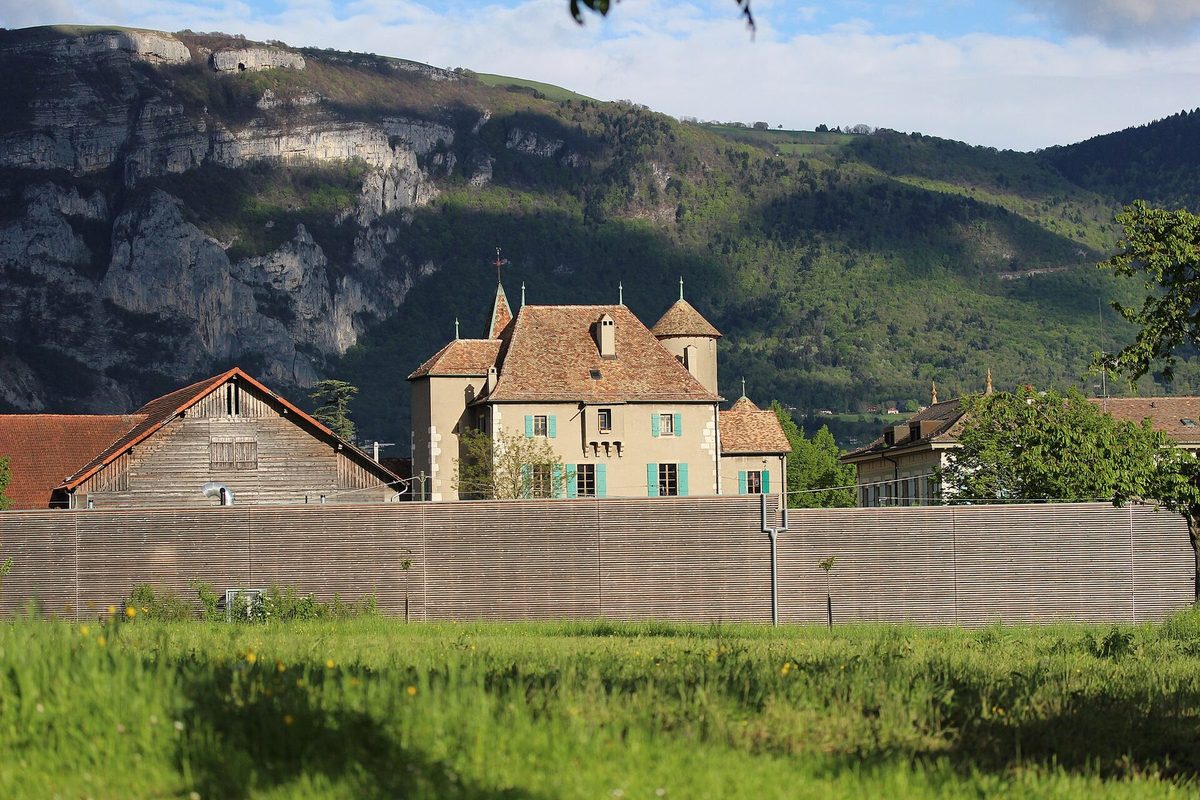
Origin of the name Bardonnex
Bardonnex is first mentioned in 1153 as « Bardonacum », in a papal bull that cites its church. The hamlet of Compesières, which gave its name to the former municipality, appears in the 12th century as « Compeseres ». The etymology of these names has not yet been explained.[1][3]
Founding of Bardonnex
Nobody knows who founded the village. At Landecy a villa and significant Roman remains have been uncovered, as well as an early medieval cemetery. The church of Bardonnex belonged to the Benedictine priory of Saint-Jean-hors-les-Murs. The centre of gravity then shifted to Compesières: the bishop of Genève gave the church of Saint-Sylvestre there to the Knights Hospitaller of St John of Jerusalem, who made it the seat of their commandery of the Genevois. Bardonnex belonged to this lordship of Compesières, while Évordes and Landecy depended on the convent of Saint-Victor. After the wars of the late 16th century the church of Bardonnex disappeared and that of Compesières served the Catholics from then on. The school, the town hall and the presbytery are still at Compesières.[1][2][3]
History of Bardonnex
Roman period. A villa stands at Landecy, where significant Roman remains have been uncovered.[1]
Early Middle Ages. A cemetery shows the occupation of the area.[1]
12th century. First mention of Compesières, as « Compeseres ».[3]
1153. First mention of Bardonnex, as « Bardonacum ». A papal bull cites the village church.[1]
1270. The bishop of Genève, Aymon de Cruseilles, gives the church of Saint-Sylvestre at Compesières to the Knights Hospitaller of St John of Jerusalem, who make it the seat of their commandery of the Genevois.[2]
Late 14th-early 15th century. A fortified house replaces the commandery's first hospice.[2]
15th century. The church of Bardonnex, dedicated to Notre-Dame, belongs to the Benedictine priory of Saint-Jean-hors-les-Murs.[1]
1536-1567. The area belongs to the Bernese bailiwick of Ternier. The commandery serves as the bailiff's residence, and Compesières adopts the Reformation and is given a consistory.[1][2][3]
1567. Return under the sovereignty of the House of Savoy. Évordes and Landecy, which depended on the convent of Saint-Victor, pass to Savoy and Genève. The churches of Évordes and Bardonnex are abolished and Compesières becomes the centre of a large parish.[1][3]
1617. The commander Jacques de Cordon enlarges and embellishes the fortified house and the church, and adds an enclosure with round towers.[2]
1754. Évordes and Landecy pass to the Kingdom of Piedmont-Sardinia.[1]
1792. The occupation of Savoy by French troops ends five centuries of the knights' presence. The commandery's towers are cut down and the church bell tower demolished. Having become national property, the commandery is turned into a saltpetre factory.[2]
1816. The territory of Compesières, including Bardonnex, is attached to Genève.[1][3]
1822. The commandery houses the town hall, the school and the presbytery of the municipality of Compesières.[2]
1834-1835. The church of Compesières is almost entirely rebuilt.[2]
1851. The municipality of Compesières is divided into two entities, Bardonnex and Plan-les-Ouates.[1][3]
1899-1900. A new school is built at Compesières. The enclosure and part of the commandery's outbuildings are removed.[2]
1936. Clay extraction begins at Bardonnex, supplying the Bellevue tile works until 1946. The plant employs more than 300 workers in the late 1950s and about fifty in 1995 after modernisation.[1]
1954-1955. Restoration of the commandery, renewed in 1971. It now houses a small museum of the Order of Malta.[2]
1980. Before the construction of the bypass motorway, the municipality still has 22 farmers, 12 market gardeners and 4 horticulturists.[1]
Population of Bardonnex
Sources and references: [1][3][4]
| 1850 | 1'559 (former municipality of Compesières, before its division) |
| 1860 | 666 |
| 1900 | 708 |
| 1950 | 747 |
| 2000 | 2'094 |
| 2025 | 2'534 |
Historic sites in Bardonnex
Compesières. Hamlet made up of the commandery, a church, a school and a few farms. Formerly the chief place of the municipality of Compesières, it remains the administrative and religious centre of Bardonnex.[1][3]
Commandery of Compesières. Seat of the Genevois commandery of the Knights Hospitaller of St John of Jerusalem from 1270, a fortified house enlarged in the 17th century, residence of the Bernese bailiff from 1536 to 1567, a saltpetre factory after 1792, then town hall, school and presbytery from 1822. It houses a small museum of the Order of Malta.[2]
Landecy. Hamlet that depended on the convent of Saint-Victor, where a villa and significant Roman remains were found.[1]
Évordes. Hamlet that depended on the convent of Saint-Victor. Its church was abolished after the return to Savoy in 1567.[1]
La Croix-de-Rozon. Hamlet of the municipality, customs post.[1]
Charrot, La Mure and Cugny. Other villages and hamlets of the municipality.[1]
Remains in Bardonnex
Roman villa at Landecy. Villa and significant Roman remains uncovered at Landecy.[1]
Early medieval cemetery. Cemetery uncovered in the municipality.[1]
Fortified houses. Two fortified houses: one from the 15th and 16th centuries, completely renovated between 1705 and 1720, partly destroyed in 1810 and renovated in 1958. The other from the 15th century.[1]
Church of Compesières. Church built on Romanesque foundations, enlarged in the 15th century, altered in the 17th and almost entirely rebuilt in 1834-1835.[2]
Sources
- Dictionnaire historique de la Suisse, « Bardonnex » (Dominique Zumkeller)
- Dictionnaire historique de la Suisse, « Compesières (commanderie) » (Isabelle Brunier)
- Dictionnaire historique de la Suisse, « Compesières » (Isabelle Brunier), version allemande
- Office cantonal de la statistique (OCSTAT), Mémento statistique du canton de Genève 2026, tableau Population résidante par commune, en 2025
Localities of the municipality with a page
Other villages near Bardonnex
Missing information, or do you have a source? Suggest a correction or addition. Every submission is checked before it's published.
Suggest a change