Fregiécourt
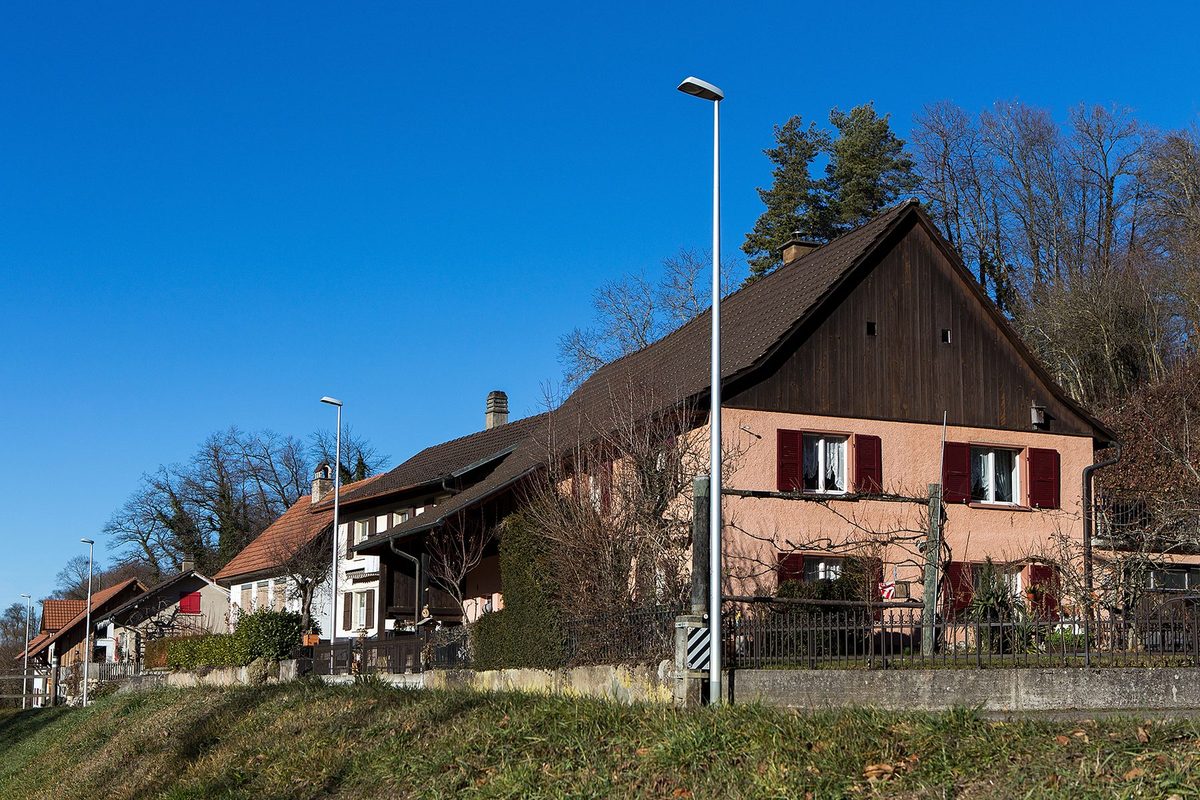
Origin of the name Fregiécourt
The village appears in 1136 as « Frigiscurth ». The former German name is said to have been « Friedlinsdorf ». Where does the name come from? That is still unknown.[1]
Founding of Fregiécourt
Neither the founder nor the date of foundation of the village is known. The site was occupied long before its first mention in 1136: the remains of a Neolithic dolmen and a probable Merovingian burial ground survive. In the Middle Ages, Fregiécourt shared the fate of the advocacy of Ajoie, which became part of the Prince-Bishopric of Basel at the end of the 13th century. From the 16th century the village belonged to the mairie of Alle. A mainly agricultural village, it is known for its cherry and damassine (plum) trees. Fregiécourt is today part of the municipality of La Baroche (merger of 1 January 2009).[1]
History of Fregiécourt
Neolithic. A dolmen is built, of which a remnant survives.[1]
Early Middle Ages. Probable Merovingian burial ground.[1]
1136. First mention: « Frigiscurth ».[1]
late 13th century. The advocacy of Ajoie, whose fate Fregiécourt shares, is incorporated into the Prince-Bishopric of Basel.[1]
1379. A chapel dedicated to Saints Imier and Hubert is mentioned.[1]
1482. After the extinction of the house of Asuel (late 15th century), Lucelle Abbey and the Bishop of Basel share the tithe of Fregiécourt.[1]
16th century. Fregiécourt belongs to the mairie of Alle.[1]
1611. Together with Miécourt, Fregiécourt is detached from the parish of Charmoille.[1]
1612. The chapel is rebuilt.[1]
1802. Fregiécourt rejoins the parish of Charmoille.[1]
1815-1978. After the French period (departments of Mont-Terrible, then Haut-Rhin), Fregiécourt belongs to the Bernese bailiwick, then district, of Porrentruy.[1]
1836. Fregiécourt adopts the status of a mixed municipality.[1]
2009. On 1 January, Fregiécourt merges with Asuel, Charmoille, Miécourt and Pleujouse into the municipality of La Baroche.
Population of Fregiécourt
Sources and references: [1]
| 1818 | 237 |
| 1850 | 350 |
| 1900 | 240 |
| 1950 | 190 |
| 2000 | 133 |
| 2008 | 158 |
Historic sites in Fregiécourt
Chapel of Saints Imier and Hubert. Chapel dedicated to Saints Imier and Hubert, mentioned in 1379 and rebuilt in 1612. Cultural property of regional significance (federal PCP inventory).[1][2]
Cherry and damassine orchards. Fregiécourt is a mainly agricultural village, known for its cherry and damassine (plum) trees.[1]
Remains in Fregiécourt
Neolithic dolmen. The remnant of a Neolithic dolmen bears witness to human presence on the territory long before the village's first mention.[1]
Merovingian burial ground. A burial ground from the Merovingian period probably existed on the territory of the former municipality.[1]
Sources
- Dictionnaire historique de la Suisse, « Fregiécourt » (Dominique Prongué), version du 10.06.2020
- Office fédéral de la protection de la population (OFPP), Inventaire PBC, liste cantonale du canton du Jura (état au 1.1.2026)
- République et Canton du Jura, Gouvernement, message au Parlement relatif à la révision de la législation en matière de fusion de communes (30 mars 2011)
- geo.admin.ch (swisstopo), recherche de lieux « Fregiécourt »
Other villages near Fregiécourt
Missing information, or do you have a source? Suggest a correction or addition. Every submission is checked before it's published.
Suggest a change