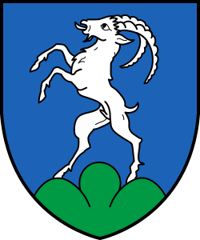
Grône
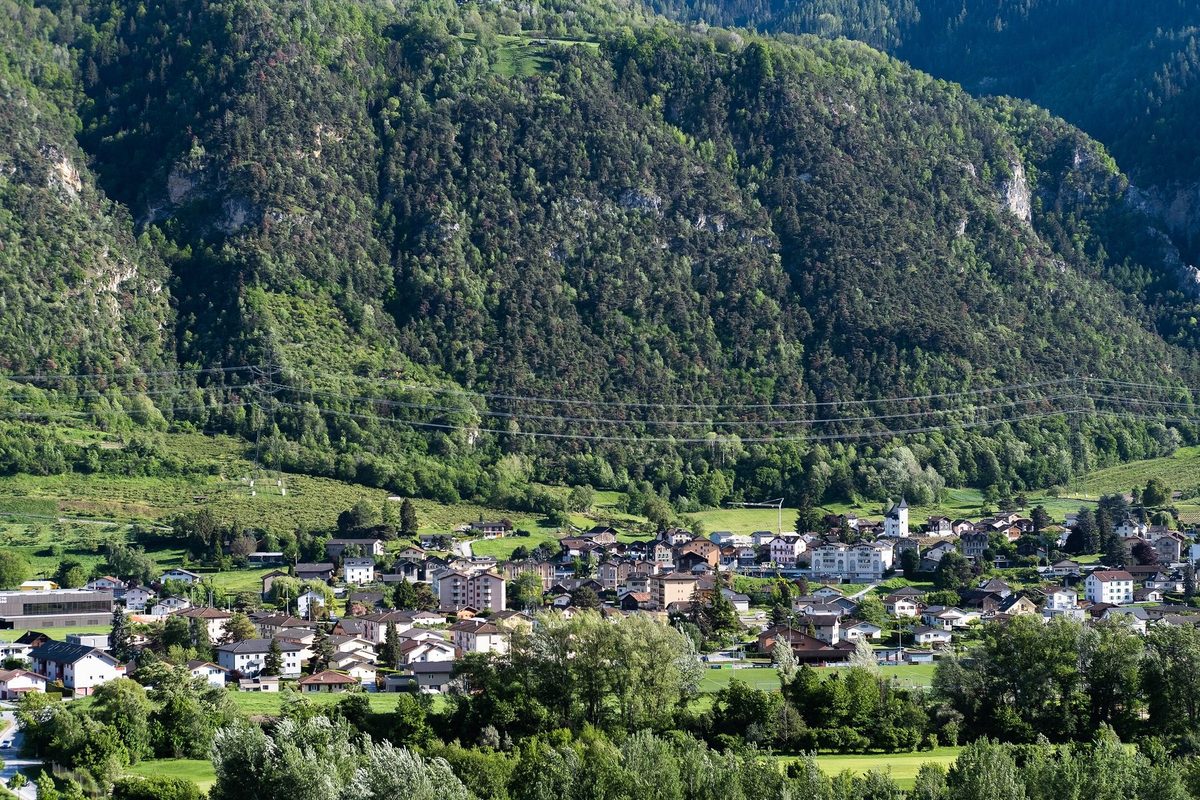
Origin of the name Grône
The form « in Gruona » is attested in the 11th century. The old German name is « Grün ». The origin of the name is uncertain: it may refer to a watercourse, with a Celtic suffix, but this is not confirmed.[1]
Founding of Grône
The territory of Grône keeps traces of occupation in Roman times. People settled on the slope, as the plain was subject to frequent flooding by the Rhône. The municipality groups some ten hamlets, including Loye, Erdesson, Daillet and Itravers. By the end of the 13th century Loye already formed a community in the same way as Grône. In the 10th century Grône belonged to the lordship of Granges. As a strategic place it suffered greatly from the conflicts between the great families fighting for control of Valais, and the community had to maintain the valley road on its territory. Once a municipality, Grône bought back the fiefs of the burghers of Sion, which marked the start of its development and the delimitation of its territory.[1]
History of Grône
10th century. Grône belongs to the lordship of Granges.[1]
11th century. Mentioned as « in Gruona ». Grône is a parish from this century.[1]
around 1245-1250. Pierre de la Tour-Morestel has a castle built.[1][2]
1292. Loye is mentioned as a community on the same footing as Grône.[1]
1417. Destruction of the castle of Morestel.[1]
1603. The lordship of Granges is sold to the burghers of Sion and becomes a castellany.[1]
1733. Building of the church's Baroque tower, still standing.[1]
1798. Abolition of the castellany of Granges.[1]
1802. Grône buys back the fiefs of the burghers of Sion.[1]
1912. Severe fire at Merdesson, later rebuilt under the name Erdesson.[1]
1912-1918. Rebuilding of the church of Notre-Dame.[1]
20th century. During the two world wars, anthracite mines are worked on the municipality's territory.[1]
1948. The Pouta-Fontana nature reserve is placed under protection.[1]
1957. Closure of the coal mine, on 11 November (date uncertain).
Population of Grône
Sources and references: [1][3]
| 1850 | 348 inhabitants |
| 1900 | 741 inhabitants |
| 1950 | 1'242 inhabitants |
| 2000 | 1'866 inhabitants |
| 2025 | 2'597 |
Historic sites in Grône
Church of Notre-Dame. Grône has been a parish since the 11th century. The church dedicated to Notre-Dame was rebuilt in 1912-1918, keeping its Baroque tower of 1733.[1]
Pouta-Fontana nature reserve. Wetland on the Rhône plain, protected since 1948.[1]
Hamlets of Loye, Erdesson, Daillet and Itravers. Hillside hamlets; Loye is mentioned as a community from 1292, and Erdesson, formerly Merdesson, was rebuilt after the fire of 1912.[1]
Remains in Grône
Castle of Morestel. Castle built around 1245-1250 by Pierre de la Tour-Morestel and destroyed in 1417.[1][2]
Sources
- Dictionnaire historique de la Suisse, « Grône » (Bernard Monnet, version du 06.03.2008)
- Commune de Grône et Grône-Loye Tourisme, « Brochure d'informations » (château de Morestel, Pouta Fontana)
- Office fédéral de la statistique (OFS), STATPOP, chiffres provisoires au 31.12.2025, via citypopulation.de
- geo.admin.ch, recherche de lieux (coordonnées)
Localities of the municipality with a page
Other villages near Grône
Missing information, or do you have a source? Suggest a correction or addition. Every submission is checked before it's published.
Suggest a change