Isérables
Origin of the name Isérables
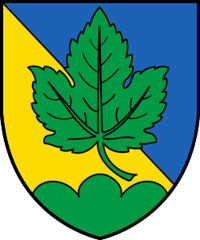
The name appears as « Aserablos » in 1227, then « Heyserablo » in 1250, « Yserablo » in 1324, « Asserablo » in 1340 and « Iserablo » in 1414. It reportedly derives from the maple (acer campestre), through the Late Latin acerabulu.[1][2]
Founding of Isérables
Iron Age bracelets (2nd century BC), Roman coins and cists (1st-2nd century AD) show that this slope was lastingly inhabited. In the Middle Ages Isérables formed a lordship that passed from the de la Tour (around 1225) to the du Châtelard family (1249). The latter reportedly sold its rights to the inhabitants bit by bit in the late 14th and the 15th century. From 1490 to 1798 the lordship belonged to the episcopal mensa of Sion. For worship the village depended on Leytron until 1264, then on Riddes until 1801, when it became an independent parish. Who founded Isérables is not known.[1]
History of Isérables
2nd century BC. Iron Age bracelets.[1]
1st-2nd century. Roman coins and cists, perhaps linked to the cult of Sabazius.[1]
Around 1225. The lordship belongs to the de la Tour.[1]
1227. Mentioned as « Aserablos ».[1]
1249. The lordship is held by the du Châtelard family.[1]
1264. Isérables, until then attached to Leytron, now belongs to the parish of Riddes.[1]
1319. In July Thomasset Grossi du Châtelard frees four inhabitants in return for compensation.[2]
1490-1798. Isérables is part of the episcopal mensa of Sion.[1]
Around 1554. Written franchises are granted to the inhabitants. They are confirmed on 20 March 1624 by Bishop Hildebrand Jost.[2]
1613. Construction of the chapel of Saint-Théodule, later enlarged and converted into a church.[2]
1691. A fire destroys the village in 1691 (or 1690).[1][2]
1801. Isérables becomes an independent parish.[1]
1881. Another fire; the village is partly rebuilt in stone.[1][2]
1942. One of the canton's first cable cars replaces the mule track to Riddes.[1][2][3]
1957. Opening of the Ebauches watch factory, followed by other assembly firms in 1965, 1970 and 1976.[1]
1960. A road replaces the cable car as the main link.[1]
1970. First ski lifts, up to 2'400 m above sea level.[1]
1979. Inauguration of a road tunnel linking the village with the valley.[2]
1999. New restoration of the church of Saint-Théodule, after that of 1962-1964.[1]
Population of Isérables
Sources and references: [1][6]
| 1802 | 285 |
| 1850 | 799 |
| 1900 | 1'052 |
| 1950 | 1'213 |
| 2000 | 914 |
| 2025 | 793 |
Historic sites in Isérables
Church of Saint-Théodule. Former chapel enlarged and converted into a church, restored in 1962-1964 and in 1999. The building dates from 1613 and was enlarged in 1827.[1][2]
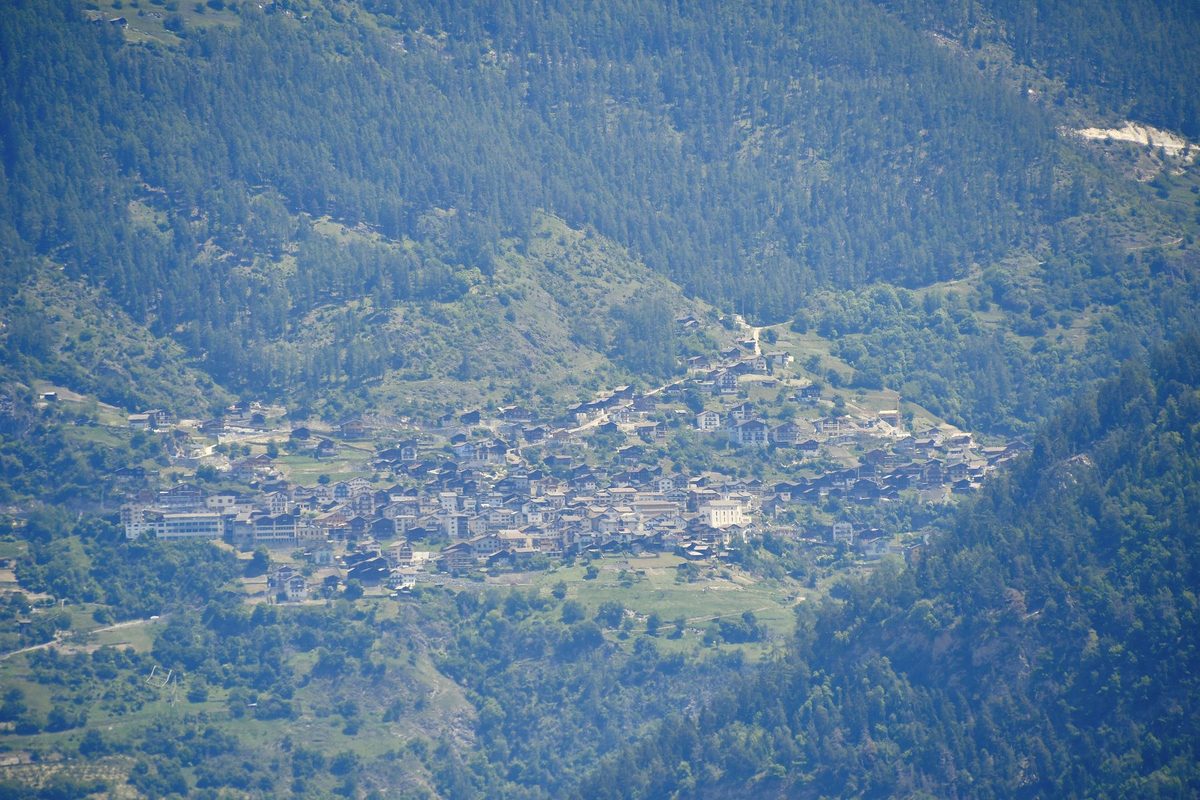
Raccards and terraced fields. The terraced fields around the village produced potatoes and cereals, stored in raccards (granaries). Until the 19th century the municipality was considered the granary of Martigny.[1]
Riddes-Isérables cable car. Opened in 1942, one of the first in the canton, it replaced the mule track. The cabin climbs the 600 m difference in height in a few minutes.[1][3]
Isérables museum. Founded in 1966 by a group of enthusiasts and moved to new premises in 2003 by the Fondation Pro Aserablos, it takes the slope as its theme, along with the importance of wheat and the symbol of the cradle.[4][5]
Bulle and Combe de Teur. The hamlet of Bulle, on a rise overlooking the main access, and the group of isolated raccards of the Combe de Teur, which has largely kept its original appearance.[2]
Sources
- Dizionario storico della Svizzera, « Isérables » (Werner Bellwald), version du 16.08.2005
- Inventaire fédéral des sites construits à protéger en Suisse (ISOS), « Isérables », 2e version, décembre 1997
- Le Temps, « Quand plaine et montagne se prennent à rêver de téléphérique » (téléphérique Riddes-Isérables de 1942)
- Université de Lausanne, Centre interdisciplinaire de recherche sur la montagne, partenaires régionaux : « Musée d'Isérables »
- museums.ch, « Musée d'Isérables »
- Office fédéral de la statistique (OFS), STATPOP, chiffres provisoires au 31.12.2025, via citypopulation.de
- geo.admin.ch, service de recherche de swisstopo (Isérables)
Other villages near Isérables
Missing information, or do you have a source? Suggest a correction or addition. Every submission is checked before it's published.
Suggest a change