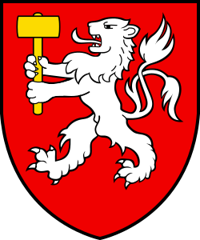
Martigny
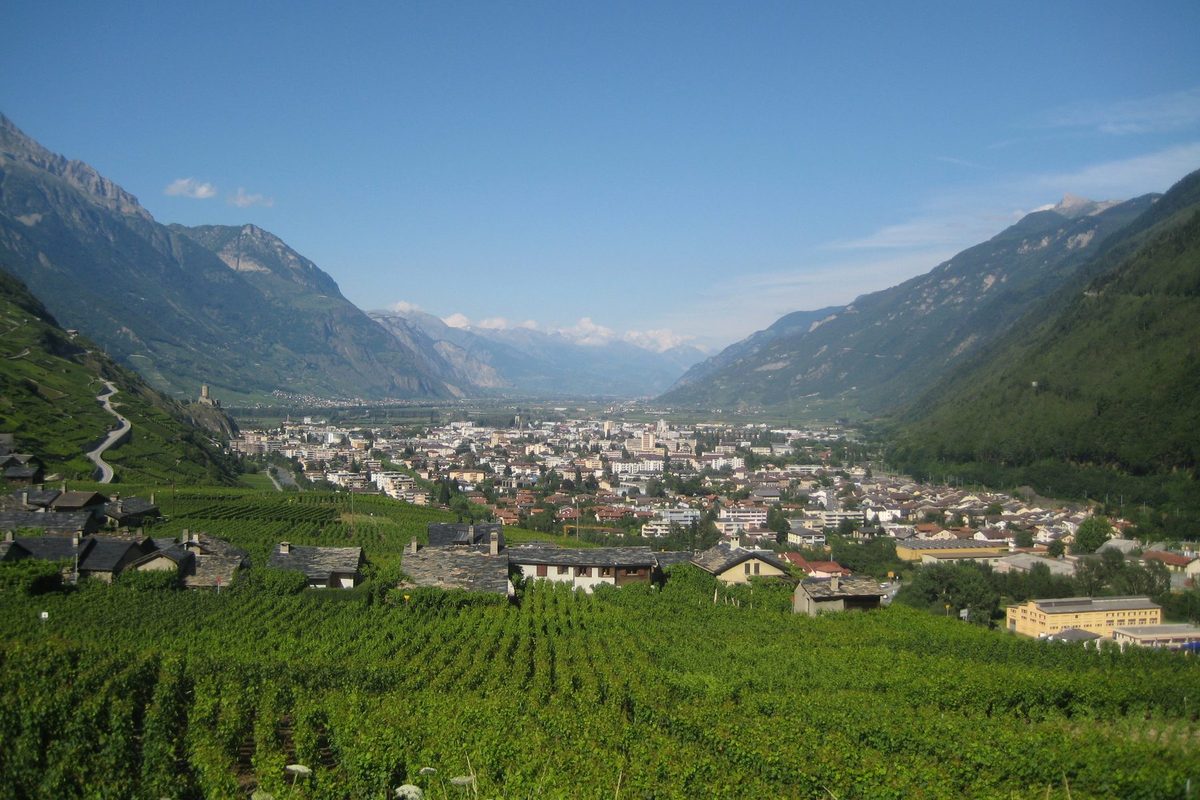
Origin of the name Martigny
Martigny appears after 1018 as « Martiniacum ». In German it was formerly called « Martinach ». The meaning of the name is unknown.[1]
Founding of Martigny
Martigny lies on the left bank of the Rhône, on the alluvial fan of the Dranse, where the Great St Bernard route to Italy crosses the Col de la Forclaz route to France. Before the town there was the Gaulish settlement of Octodurus, then the Forum Claudii Vallensium, the Roman chief town of the civitas of the Valaisans. The first known bishop of Valais is attested here at the end of the 4th century. The episcopal see moved to Sion between 549 and 585. In the Middle Ages the locality obtained liberties from the bishop of Sion, then from the count of Savoy, under whose protection it had passed. After the conquest of Lower Valais by the seven dizains, the castellany was attached to the government of Saint-Maurice. The large municipality broke up in the 19th century, then partly came back together in the 20th and 21st centuries.[1][2]
History of Martigny
381. Theodul (or Theodore), the first known bishop of Valais, is attested at Octodurus.[2]
after 1018. First mention in the form « Martiniacum ».[1]
1163. The bishop of Sion cedes the church of Martigny to the provostry of Mont-Joux (Great St Bernard).
1338. Liberties granted by the bishop of Sion.[1]
1351. The castellany comes under the protection of the House of Savoy.[1]
1392. Martigny-Bourg holds market and fair rights.
1399. Liberties granted by the count of Savoy: the community elects its syndics, but not its judges.[1]
1475. Conquest of Lower Valais by the seven dizains. The castellany is attached to the government of Saint-Maurice.[1]
1518. Georges Supersaxo sets fire to La Bâtiaz castle, which was reportedly never rebuilt.[4]
1595. Severe floods; the pilgrimage chapel of Notre-Dame-de-Compassion is built at La Bâtiaz.
1645-1687. The Baroque church of Notre-Dame-des-Champs is built.
1800. Bonaparte and the Army of Italy stay in Martigny during the War of the Second Coalition.
1835-1845. Break-up of the municipality: Martigny-Ville (1835), Charrat (1836), Martigny-Bourg and Martigny-Combe (1841), La Bâtiaz (1845) become independent.
1844. On 21 May the battle of the Trient, a few kilometres away, ends in defeat for the Jeune Suisse.
1878. Station on the Simplon line.[1]
1906. A tram links the station to the Bourg (until 1957). The Martigny-Châtelard line towards Chamonix opens.
1956. Incorporation of La Bâtiaz.[1]
1964. Incorporation of Martigny-Bourg.[1]
1978. The Fondation Pierre Gianadda is created, built around a Gallo-Roman fanum preserved in situ.[7]
2021. Merger with Charrat.[1]
Population of Martigny
Sources and references: [1][8]
| 1850 | 2'545 |
| 1900 | 3'550 |
| 1950 | 5'915 |
| 1970 | 10'478 |
| 2000 | 14'361 |
| 2010 | 15'746 |
| 2020 | 17'980 |
| 2025 | 22'509 (with Charrat) |
Historic sites in Martigny
Church of Notre-Dame-des-Champs. Ceded in 1163 by the bishop of Sion to the provostry of Mont-Joux, the church probably stands on the site of the early cathedral. Dedicated to Mary in 1177, it has borne the title Notre-Dame-des-Champs since 1420. The present Baroque building dates from 1645-1687.
Chapel of Notre-Dame-de-Compassion (La Bâtiaz). Pilgrimage chapel built in 1595 at La Bâtiaz, a former municipality reincorporated into Martigny in 1956.
Martigny-Bourg. Old market town with market and fair rights since 1392, an independent municipality from 1841 to 1964. Its town hall dates from 1842.
Town hall. Built in 1866 as the town hall of Martigny-Ville, it is now that of Martigny.
Fondation Pierre Gianadda. Founded in 1978 and built around a Gallo-Roman fanum preserved in situ, it houses among other things a Gallo-Roman museum and a motor museum.[7]
Remains in Martigny
Roman amphitheatre. Small amphitheatre (76 x 63.7 m) built at the beginning of the 2nd century. From 1980 its enclosure wall was consolidated and the arena cleared. It now hosts events and cow fights (combats de reines).[2][5][6]
Gallo-Roman fanum. Gallo-Roman temple preserved in situ, around which the Fondation Pierre Gianadda was built in 1978.[7]
La Bâtiaz castle. Fortress built around 1258-1268 and completed in 1281 by the bishop of Sion Pierre d'Oron. Its round tower is attributed to Count Peter II of Savoy, though this is not certain. Set on fire in 1518 by Georges Supersaxo, the castle was reportedly never rebuilt. Its ruins are a cultural property of national importance.[3][4]
Sources
- Dictionnaire historique de la Suisse, « Martigny (commune) » (Albano Hugon, version du 13.08.2021)
- Dictionnaire historique de la Suisse, « Forum Claudii Vallensium » (François Wiblé, version du 21.10.2009)
- Office fédéral de la protection de la population (OFPP), Inventaire PBC, liste cantonale du Valais (objets A et B, état au 1.1.2026)
- Château de la Bâtiaz, « Dossier de presse » (janvier 2024) (chronologie du château)
- Martigny Tourisme, « Roman amphitheatre »
- François Wiblé, « Activité archéologique à Martigny en 1981 » (juin 1982)
- Association des musées suisses (museums.ch), « Fondation Pierre Gianadda »
- Office fédéral de la statistique (OFS), STATPOP, chiffres provisoires au 31.12.2025, via citypopulation.de
- geo.admin.ch, recherche d'adresses (coordonnées de la place Centrale)
Localities of the municipality with a page
Other villages near Martigny
Missing information, or do you have a source? Suggest a correction or addition. Every submission is checked before it's published.
Suggest a change