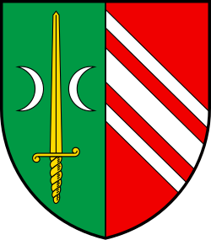
Meyrin
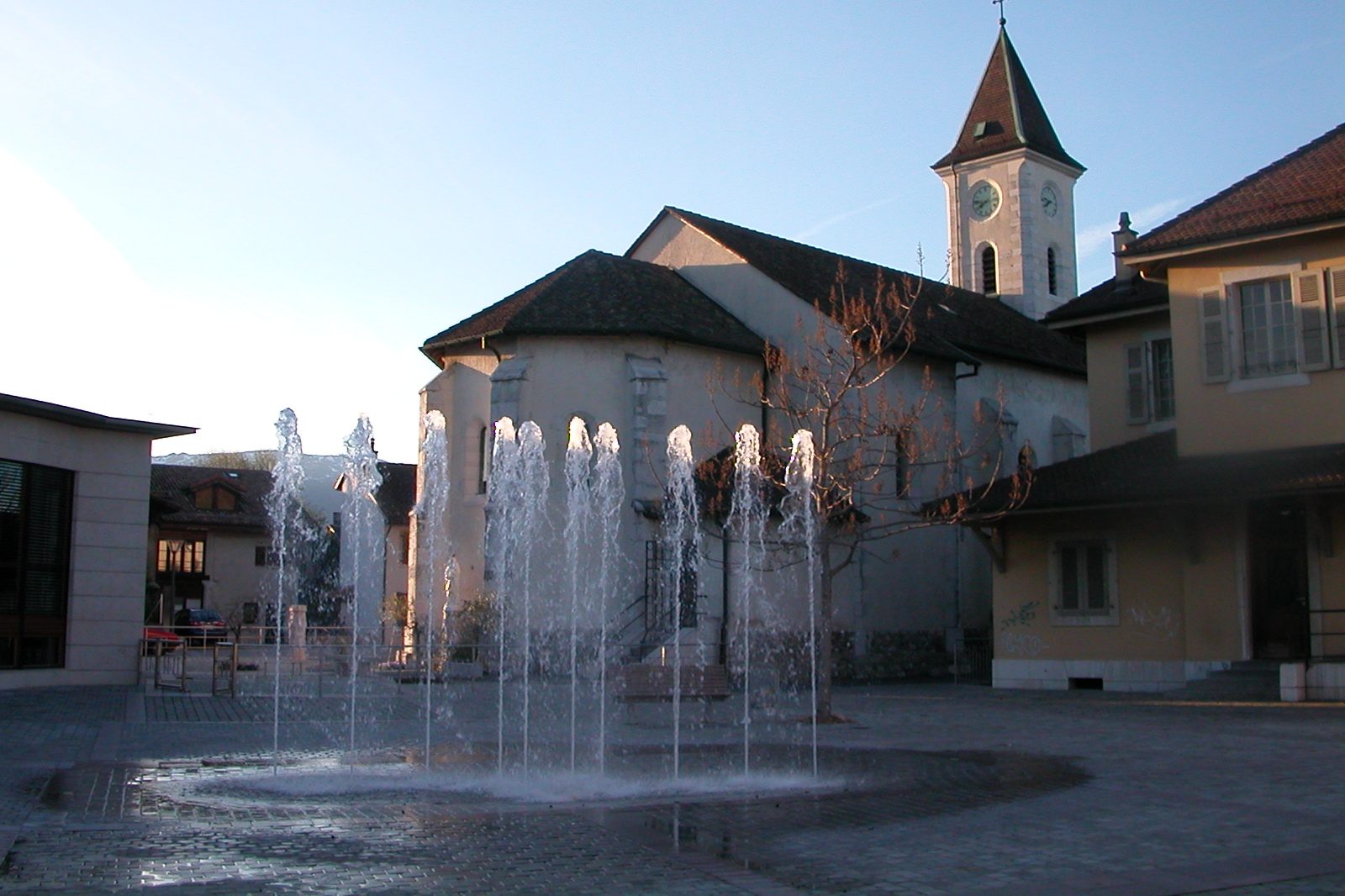
Origin of the name Meyrin
The name appears in 1153 as « Mairin ». What the name means is not yet known.[1]
Founding of Meyrin
Nobody knows who founded the village. The site was occupied long before it, though: a La Tène grave yielded jewellery, a cemetery was in use from the 1st to the 6th century, and a tile works and a pottery workshop operated between the 1st and 3rd centuries. Meyrin enters the written record as the centre of a farming estate, with a parish that depended on the priory of Saint-Jean. The village then belonged to the barony of Gex and shared its fate between Savoy, Bern and France before joining the canton of Genève.[1]
History of Meyrin
1153. First mention (« Mairin »). The parish of Meyrin depends on the priory of Saint-Jean.[1]
1355. Meyrin, part of the barony of Gex, held in fief by the count of Genève, passes to Savoy (Treaty of Paris).[1]
late 15th century. Mention of the church of Saint-Julien.[1]
1530. Episode of the struggles between Genève and the Knights of the Spoon (chevaliers de la Cuiller).[1]
1536. Bernese occupation: the Reformation is imposed and Meyrin forms a single parish with Le Grand-Saconnex, Pregny, Mategnin and Vernier. The de Meyrin and Nergaz families had built fortified houses before this date.[1]
1567. Return to Savoy.[1]
1601. The Treaty of Lyon assigns the Pays de Gex to France.[1]
1621. Return to Catholicism under French auspices. The church of Saint-Julien is recovered.[1]
1662. Demolition of the Protestant temple. Persecution of the Protestants, many of whom take refuge in Genève.[1]
1790. Creation of the political municipality, heir to the old community.[1]
1813-1814. Austrian occupation from August 1813 to March 1814, with looting and fires.[1]
1815. Final union with the canton of Genève.[1]
1839. Rebuilding of the church of Saint-Julien.[1]
1858. Opening of the Paris-Lyon-Méditerranée railway line.[1]
1875. The church passes to the Christ Catholic Church. It returns to the Roman Catholics in 1901.[1]
1920. Airfield at Cointrin.[1]
1954. CERN settles in Meyrin.[1]
1961. Construction of the first satellite town in Switzerland.[1]
1969. Creation of the Zimeysa industrial zone.[1]
1976. Construction of an ecumenical parish centre.[1]
Population of Meyrin
Sources and references: [1][2]
| 1550 | 54 hearths (households) |
| 1667 | 150 inhabitants (approximately) |
| 1850 | 597 |
| 1900 | 856 |
| 1950 | 2'063 |
| 1970 | 14'255 |
| 2000 | 19'548 |
| 2020 | 24'892 |
| 2025 | 27'365 |
Historic sites in Meyrin
Church of Saint-Julien. Church mentioned at the end of the 15th century, recovered by the Catholics in 1621, rebuilt in 1839. Christ Catholic from 1875 to 1901.[1]
Maison de la Tour. Fortified house of the Nergaz family, built before 1536, which still stands.[1]
Satellite town. First satellite town in Switzerland, built from 1961.[1]
CERN. European Organization for Nuclear Research, based in Meyrin since 1954.[1]
Alpine garden. Garden developed from 1966.[1]
Remains in Meyrin
La Tène grave. Jewellery found in a grave of the La Tène period.[1]
Ancient cemetery and workshops. Cemetery used from the 1st to the 6th century. Remains of a tile works and a pottery workshop in operation from the 1st to the 3rd century.[1]
Sources
- Dictionnaire historique de la Suisse, « Meyrin » (Martine Piguet)
- Office cantonal de la statistique (OCSTAT), Mémento statistique du canton de Genève 2026, tableau Population résidante par commune, en 2025
Localities of the municipality with a page
Other villages near Meyrin
Missing information, or do you have a source? Suggest a correction or addition. Every submission is checked before it's published.
Suggest a change