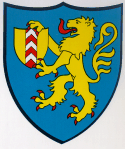
Savagnier
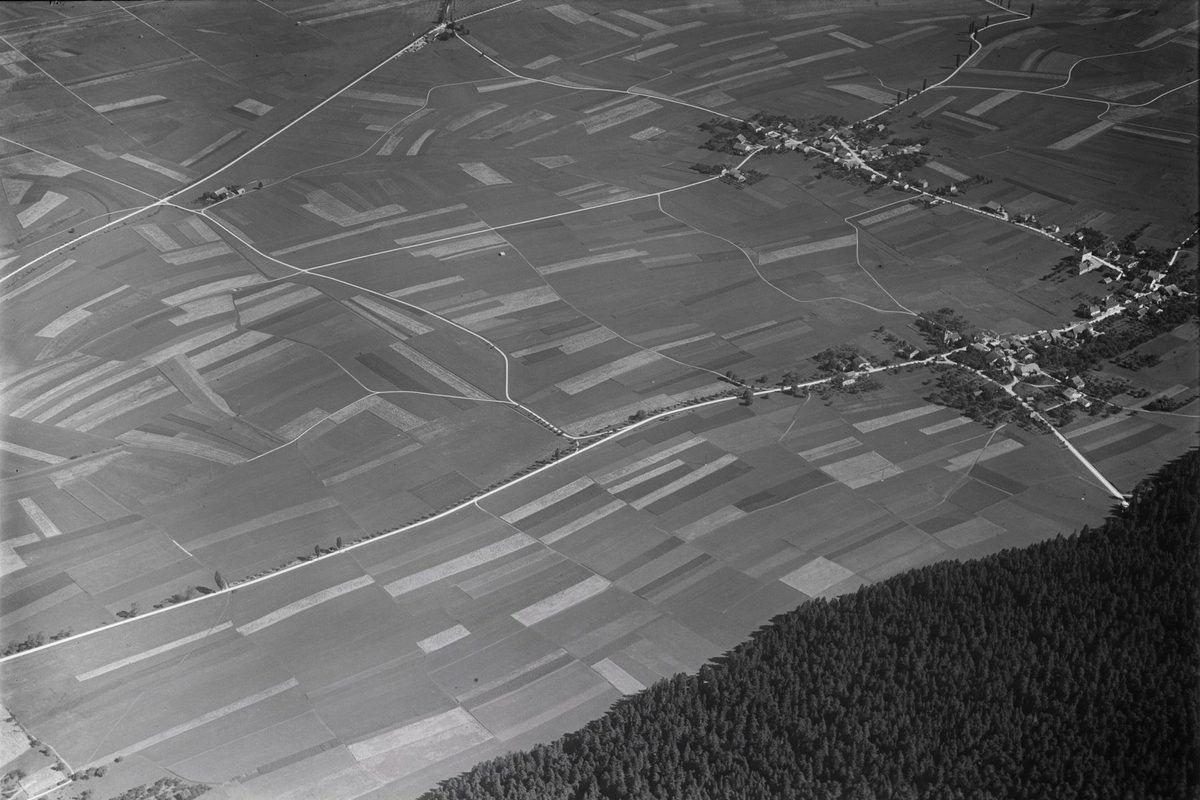
On the Seyon, below the slope of Chaumont, two hamlets, Grand-Savagnier and Petit-Savagnier, united into one community from 1498.
Entry based on 12 sources · Our method · Reusable text (CC BY-SA)
Origin of the name Savagnier
The place appears in 1143 as « Savaigner ». The name is said to come from the Latin « silva », forest, though this is not established. The inhabitants are called Sylvagniens.[1]
Founding of Savagnier
Probable remains of a Roman villa are reported, and aerial prospecting has spotted between Savagnier and Fontaines the plans of at least five buildings and traces of isolated Roman farms, not yet confirmed by excavation. The medieval village grew up on the Seyon, below the slope of Chaumont, as two hamlets, Grand-Savagnier and Petit-Savagnier, whose communities were united from 1498. The abbey of Fontaine-André and the chapter of Neuchâtel owned property there from the 12th century. Savagnier belonged to the lordship and later the mairie of Valangin. In the 16th century some inhabitants depended on the lords of Colombier, probably through the buying back of tithes at the Reformation. In church matters the village belonged to the parish of Dombresson until 1876. Who founded Savagnier remains unknown.[1][2][5]
History of Savagnier
Roman period. Probable remains of a villa. Aerial prospecting spots between Savagnier and Fontaines the plans of at least five buildings and traces of isolated farms.[1][5]
1143. First written mention, in the form « Savaigner ».[1]
12th century. The abbey of Fontaine-André and the chapter of Neuchâtel own property in Savagnier.[1]
1453. Mention of the chapel of Saint-Nicolas, a daughter church of the parish of Dombresson.[1]
1498. The communities of Grand-Savagnier and Petit-Savagnier are united.[1]
1518. The chapel of Saint-Nicolas becomes a baptismal church.[1]
1531. The Reformation is introduced in the parish of Dombresson, to which Savagnier belongs. The village then has 28 hearths.[1][2]
1547. Concession for the exploitation of the forests.[1]
1592. The lordship of Valangin, to which Savagnier belongs, is joined to Neuchâtel.[8]
1650-1653. Rebuilding of the temple: the masons David and Pierre Savoie, the carpenters Joab Matthey and his son Jonas, then Abraham Bourquin for the roof, panelling, pews, galleries and pulpit. A stained-glass window with the arms of Prince Henri II d'Orléans-Longueville marks its completion in 1653.[1][4]
1689 and 1691. The community buys estates in the Erguël, outside the principality.[1]
1696. A « village house » holds the school, the butcher's shop and the inn.[1]
1704. The joiner Jean Juillard installs a new pulpit in the temple.[4]
1717. Lightning damages the bell tower, which is repaired and raised.[4]
1866. Construction of the schoolhouse.[1]
1876. Savagnier becomes an independent parish, separate from Dombresson.[1][2]
1896-1899. Drainage of the land.[1]
1948. Restoration of the temple by the architect François Wavre. Five gravestones of the Girard family (1670-1718) are reset inside.[4]
1968. A bus line to Neuchâtel opens.[1]
1980. Savagnier becomes a residential area.[1]
1 January 2013. Savagnier merges with Boudevilliers, Cernier, Chézard-Saint-Martin, Coffrane, Dombresson, Engollon, Fenin-Vilars-Saules, Fontainemelon, Fontaines, Le Pâquier, Les Geneveys-sur-Coffrane, Les Hauts-Geneveys, Montmollin and Villiers to form the municipality of Val-de-Ruz.[1][6]
Population of Savagnier
Sources and references: [1]
| 1531 | 28 hearths (households) |
| 1750 | 435 |
| 1850 | 624 |
| 1900 | 599 |
| 1950 | 517 |
| 2000 | 903 |
| 2012 | 1'219 |
Families of Savagnier
Citizen families before 1800. Fourteen families, with no precise date: Aubert, Bourquin, Clerc, Cosandier, Coulet, de Marval (from Neuchâtel), Fivaz, Gaberel, Girard, Humbert, Jeanperrin, Matthey, Maumary and Vuilliomenet. The church keeps five tombstones of the Girard family.[12]
In the 19th century. The Radzinski appear with no precise date. Four families were registered in the last years of the century: the Berger and the Küenzli in 1890, the Stucky in 1892 and the Maillefer in 1894.[12]
From 1901 to 1962. Eighteen registrations. In 1902 three families arrived together: the Herren from Mühleberg BE, the Hämmerly from Brüttelen BE and the Möckli from Basadingen TG. They were followed by the Piemontesi from Italy (1904), the Lienher from Austria (1905), the Meillard from Mézières VD (1906), the Zehnder (1907), then the Beck from Rohrbach BE and the Ceppi from Morbio Superiore TI (1908). Italy also gave the Beltrami and the Tettamanti in 1922, then the Cometti in 1946. The Giauque from Prêles BE were registered in 1924, the Grossenbacher from Lützelflüh BE and the Sova, from Czechoslovakia, in 1926, the Müller in 1945 and the Seewer in 1948. The last family, in 1954, was the Collinet, from Belgium.[12]
Economy of Savagnier, past and present
Timber. For a long time Savagnier worked its forests and processed timber, with a sawmill. As early as 1547 the village obtained a concession to exploit the woods.[1]
Fields and workshops. The village land was drained between 1896 and 1899. Savagnier became residential in the 1980s, yet at the start of the 21st century farming and crafts were still its main activities.[1]
Historic sites in Savagnier
The temple. The former chapel of Saint-Nicolas, mentioned in 1453 and a baptismal church from 1518, was rebuilt in 1650-1653. The temple keeps its choir, the 1653 stained-glass window with the arms of Prince Henri II d'Orléans-Longueville and the pulpit installed in 1704 by Jean Juillard. Struck by lightning in 1717, it was restored in 1948 by the architect François Wavre.[1][4]
Grand-Savagnier and Petit-Savagnier. The village consists of two hamlets, united in a single community from 1498: Grand-Savagnier and Petit-Savagnier.[1]
The Petit-Savagnier inn. An old postcard shows an inn at Petit-Savagnier at the beginning of the 20th century. As early as 1696 the « village house » held an inn, along with the school and the butcher's shop.[1][7]
Remains in Savagnier
Traces of Roman villas. Probable remains of a Roman villa are reported at Savagnier. Aerial prospecting by airship in dry weather revealed between Savagnier and Fontaines, through the colour and height of the crops, the plans of at least five buildings and traces of isolated Roman farms. They have not yet been excavated.[1][5]
The Girard family gravestones. The temple keeps five gravestones of the Girard family, dated 1670 to 1718, reset during the 1948 restoration.[4]
The 1653 heraldic window. Installed when the rebuilding of the temple was completed, it bears the arms of Prince Henri II d'Orléans-Longueville, then sovereign of Neuchâtel.[4]
Protected heritage in Savagnier
Cultural property of regional significance (B objects)[11]
- Temple
Sources
- Dictionnaire historique de la Suisse, « Savagnier » (Maurice Evard)
- Dictionnaire historique de la Suisse, « Dombresson » (Maurice Evard)
- État de Neuchâtel, arrêté du 6 février 2013 portant homologation des résultats du recensement cantonal de la population du 31 décembre 2012
- Paroisse réformée évangélique du Val-de-Ruz, « Temple de Savagnier »
- Dendrochronologie.ch, « De Savagnier à Fontaines (NE), à la recherche des traces de villas romaines »
- Commune de Val-de-Ruz, « La commune en bref »
- notreHistoire.ch, carte postale ancienne de l'Auberge du Petit-Savagnier
- George-Auguste Matile, Histoire de la Seigneurie de Valangin jusqu'à sa réunion à la Directe en 1592 (1852)
- habitants.ch, gentilé des habitants de Savagnier (Sylvagniens, Sylvagniennes)
- Association Chemins-Chouettes, « Villages vaudruziens : blasons, noms, surnoms »
- Federal Office for Civil Protection (FOCP), Swiss Inventory of Cultural Property (PCP), list for the canton of Neuchâtel (as of 1.1.2026)
- Register of Swiss Surnames, 3rd edition (1989), search Commune "Savagnier", Canton NE
Published by Sébastien Jörg ·
Other villages near Savagnier
Missing information, or do you have a source? Suggest a correction or addition. Every submission is checked before it's published.
Suggest a change