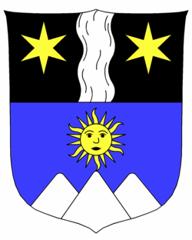
Ausserbinn
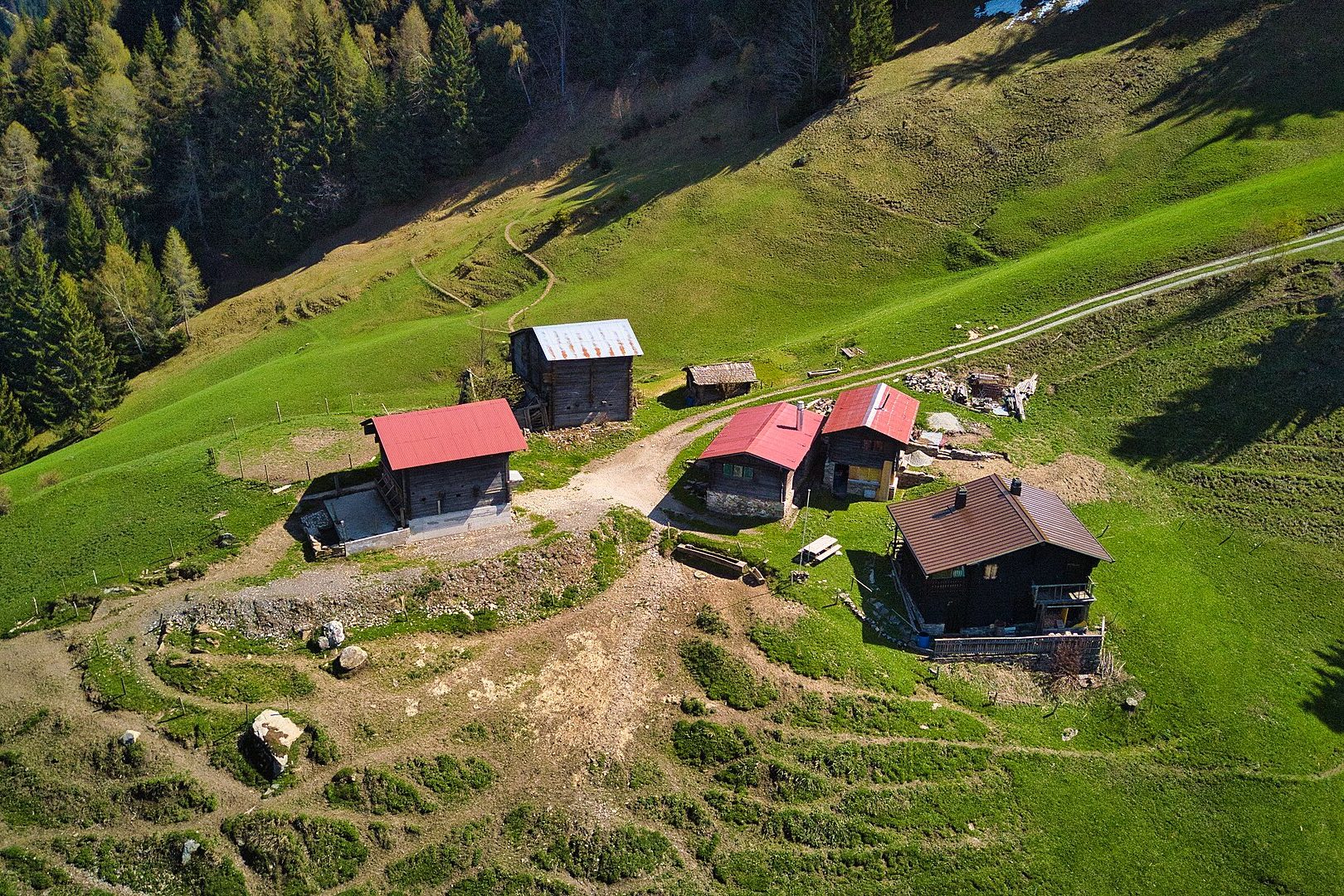
Origin of the name Ausserbinn
The village is mentioned in 1374 as « Buyn exterior » and in 1378 as « Usserbun ». The name designates the outer part of the Binn valley, where it lies. In the Upper Valais dialect it is reportedly called « Üsserbi ».[1]
Founding of Ausserbinn
Celtic and Gallo-Roman graves attest settlement in the La Tène period and in Roman times on this slope of the outer (lower) part of the Binn valley (Binntal), at about 1'300 m. The village lay on the route leading from the Goms valley to Italy over the Albrun pass. It developed separately from the inner Binn valley, but belonged to the same quarter of the dizain as Ernen and to the parish of Ernen, which bought out the episcopal dues in 1445 and 1449. A peasant corporation headed by two procurators was formed in 1568. The chapel of St Theodule was built in 1678. The municipality and the burgher community separated only in 1948. A village school operated from 1950 to 1970. An observatory has been in operation since 1979, and the hotels offered about 200 beds at the end of the 20th century. A former municipality, Ausserbinn has been part of the municipality of Ernen, together with Mühlebach and Steinhaus, since 1 October 2004.[1][2][3]
History of Ausserbinn
La Tène period. Celtic graves attest a first settlement.[1]
Roman period. Gallo-Roman graves show continued settlement.[1]
1374. First mention as « Buyn exterior ».[1]
1378. Mentioned as « Usserbun ».[1]
1445-1449. The parish of Ernen buys out the episcopal dues (1445 and 1449).[1]
1568. Formation of a peasant corporation headed by two procurators.[1]
1678. Construction of the chapel of St Theodule.[1]
1948. Separation of the municipality and the burgher community.[1]
1950-1970. The village has its own school.[1]
1979. An astronomical observatory begins operating.[1]
2004. On 1 October the municipality of Ausserbinn is dissolved and joined, with Mühlebach and Steinhaus, to the municipality of Ernen. Ausserbinn, which had rejected the merger, appeals in vain to the Federal Supreme Court.[1][3][5]
Population of Ausserbinn
Sources and references: [1]
| 1816 | 35 |
| 1850 | 55 |
| 1900 | 42 |
| 1950 | 59 |
| 2000 | 47 |
Historic sites in Ausserbinn
Chapel of St Theodule. Built in 1678; its Rosary altar, by an unknown artist, is said to date from the same period, though this is uncertain.[1]
Observatory. An astronomical observatory has operated in Ausserbinn since 1979.[1]
Remains in Ausserbinn
Celtic and Gallo-Roman graves. These burials show settlement in the La Tène period and in Roman times.[1]
Sources
- Dictionnaire historique de la Suisse, « Ausserbinn » (Philipp Kalbermatter, trad. Michel Thévenaz, version du 04.01.2017 ; résumé lu)
- Dictionnaire historique de la Suisse, « Ernen » (Edwin Pfaffen, trad. Walter Weideli, version du 04.01.2017 ; résumé lu)
- Office fédéral de la statistique, Répertoire officiel des communes, mutation n° 2303 (01.10.2004)
- geo.admin.ch, recherche de lieux (coordonnées)
- Tribunal fédéral, ATF 131 I 91, arrêt 1P.559/2004 du 19.01.2005, commune d'Ausserbinn contre Conseil d'Etat et Grand Conseil du Valais (fusion imposée, recours rejeté), via le recueil DFR de l'Université de Berne
Other villages near Ausserbinn
Missing information, or do you have a source? Suggest a correction or addition. Every submission is checked before it's published.
Suggest a change