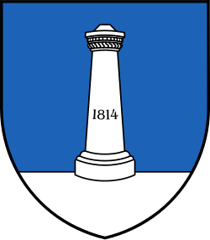
Cologny
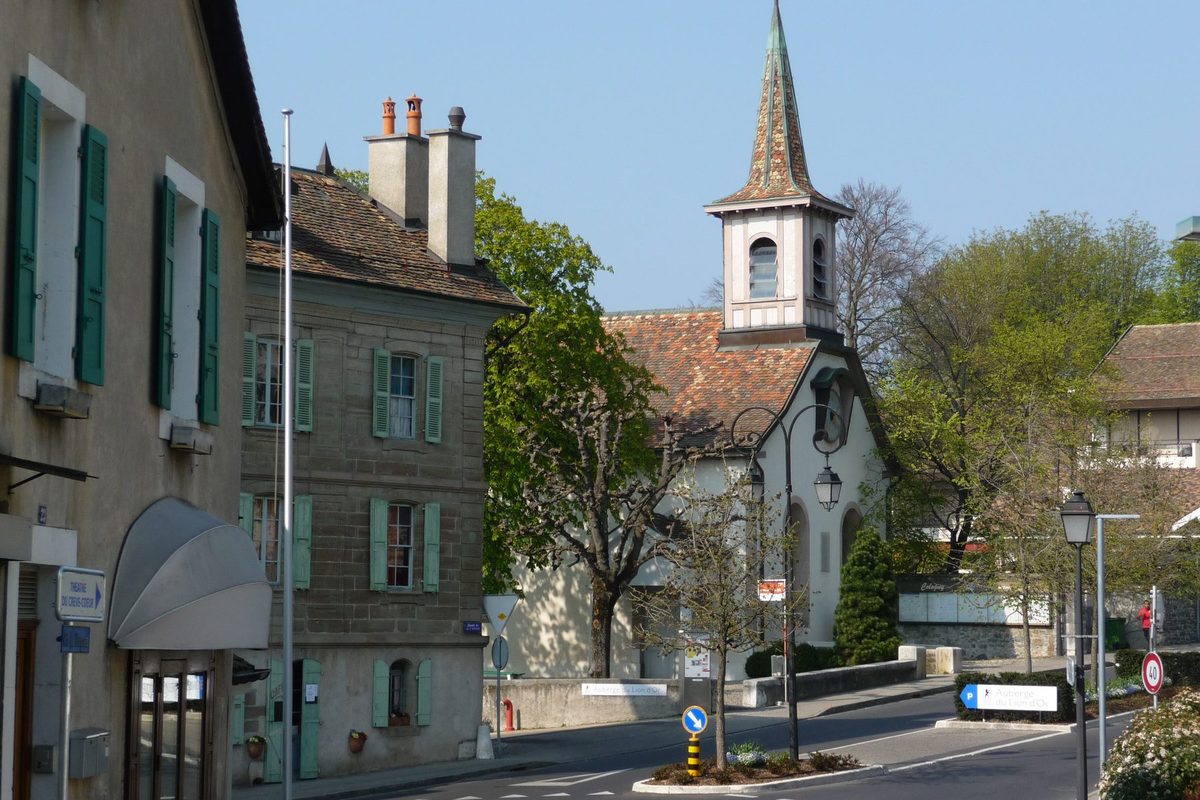
Origin of the name Cologny
The name appears in 1208 as « Colognier ». No explanation has yet been found for this name. In the late 16th and early 17th centuries, Genevan printers gave « Colonia Allobrogum » as their place of publication, to get around a sales ban in France.[1][2]
Founding of Cologny
Nobody knows who founded Cologny. The shore was nevertheless settled very early, as the Neolithic pile-dwelling sites at La Belotte show. When the village appears in the records, it belongs to the chapter of Saint-Pierre in Genève, which disputed jurisdiction over it with the Counts of Geneva. With the Reformation the territory passed to Genève. Long a farming village, Cologny was dotted with fine country houses from the 18th century onwards and became one of the richest municipalities in the canton.[1][2]
History of Cologny
Neolithic. Pile-dwelling settlements at La Belotte.[1][2]
1208. First mention, in the form « Colognier ». The territory belongs to the chapter of Saint-Pierre in Genève.[1][2]
1366. After disputes over jurisdiction, an agreement sets out the respective rights of the chapter and the Counts of Geneva.[1]
1406. The parish of Cologny (church of Saint-Pierre) is united with that of Vandoeuvres.[1]
1536. The parish becomes Protestant; with the Reformation the territory passes to Genève.[1][2]
1538. In the treaty of May 1538 between Bern and Genève, Cologny is included in the territory of the Franchises.[1]
Late 16th-early 17th century. Genevan printers give « Colonia Allobrogum » as their place of publication to get around a sales ban in France.[1]
1727. The parish becomes independent again.[1]
18th century. Construction of the first fine country houses, including the manor house at Chemin Lefort 5, built in the first half of the century for the banker Gédéon Mallet.[1]
1754. Under the Treaty of Turin the Duke of Savoy gives up his rights over Ruth and La Belotte in favour of Genève.[1]
1798. Annexation of Genève by France.[1]
1800. First meeting of the municipal council of Cologny, on 9 December.[1]
1814. Swiss Confederate troops land at Port-Noir.[1][2]
1816. Lord Byron and Percy Shelley stay in Cologny, Byron at the Villa Diodati. Mary Shelley writes her novel « Frankenstein » there.[1][2]
1831. Les Eaux-Vives separate from the parish of Cologny.[1]
1951. The library of the collector Martin Bodmer (Bibliotheca Bodmeriana) moves to Cologny.[2]
1965-1975. The number of farmers falls from eight to two.[1]
2003. Opening of the Musée Bodmer, designed by Mario Botta.[1][2]
Population of Cologny
Sources and references: [1][3]
| 1850 | 541 |
| 1900 | 773 |
| 1950 | 1'339 |
| 1990 | 3'801 |
| 2000 | 4'697 |
| 2025 | 6'149 |
Historic sites in Cologny
Villa Diodati. Lord Byron stayed here in 1816. The same year Mary Shelley wrote « Frankenstein » in Cologny.[1][2]
Fondation Martin Bodmer. The library of the collector Martin Bodmer (Bibliotheca Bodmeriana) has been in Cologny since 1951. The Musée Bodmer, designed by Mario Botta, opened in 2003.[1][2]
Port-Noir. Landing place of the Swiss Confederate troops in 1814, now a marina and sailing harbour.[1][2]
Manor house at Chemin Lefort 5. Built in the first half of the 18th century for the banker Gédéon Mallet.[1]
La Belotte and Ruth. Hamlets of the municipality, over which the Duke of Savoy gave up his rights in favour of Genève in 1754.[1]
Remains in Cologny
Pile dwellings of La Belotte. Neolithic lakeshore settlements on the shore at La Belotte.[1][2]
Sources
- Dictionnaire historique de la Suisse, « Cologny » (Jacques Barrelet)
- Historisches Lexikon der Schweiz, « Cologny » (Jacques Barrelet)
- Office cantonal de la statistique (OCSTAT), Mémento statistique du canton de Genève 2026, tableau Population résidante par commune, en 2025
- Office fédéral de topographie swisstopo, service de recherche geo.admin.ch (coordonnées)
Localities of the municipality with a page
Other villages near Cologny
Missing information, or do you have a source? Suggest a correction or addition. Every submission is checked before it's published.
Suggest a change