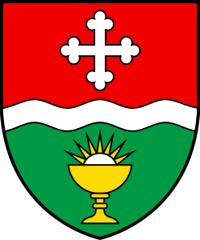
Ferden
Origin of the name Ferden
Mentioned in 1380 in the form « Verdan ». In the Upper Valais dialect the name is said to be « Fäärdan ». The etymology is unexplained.[1]
Founding of Ferden
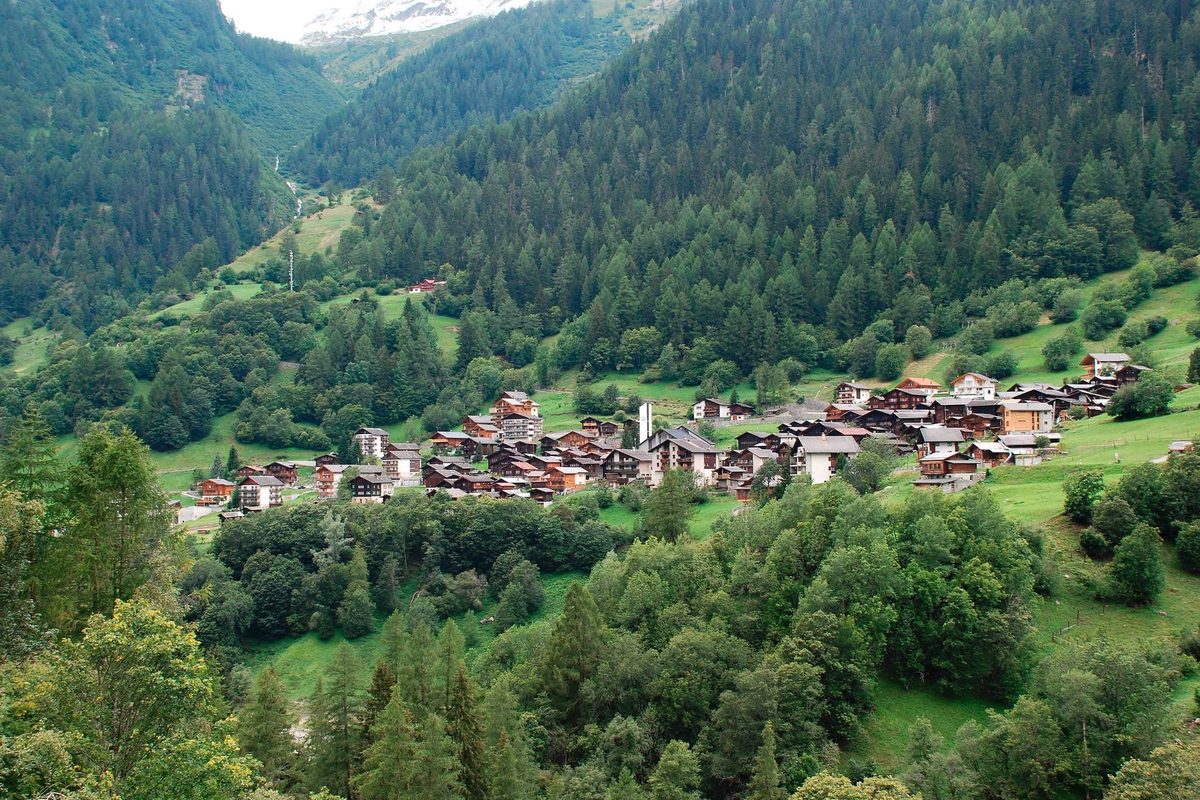
Besides the village of Ferden, the municipality includes the alpine pastures of Faldum, Resti and Kummen. Goppenstein also lies within its territory. Its history is closely linked to that of the Lötschental. Late medieval records mention more than a dozen scattered settlements and farmsteads. Ferden later developed into a clustered village. Its prosperity rested on forest ownership, productive farming (alpine pastures) and its location at the southern foot of the Lötschenpass, a pass of supra-regional importance until the 18th century. At Goppenstein lead mines were worked from the 15th century. During the construction of the Lötschberg tunnel (1906-1913) Goppenstein briefly became the most populous place in the canton after Sion. Between the wars tourism and cottage industry (weaving) provided income. Ferden separated from the valley parish (priory of Kippel) in 1956. The custom of the Osterspende, the distribution of Ziger, bread and wine on Easter Monday, is well known there.[1]
History of Ferden
Bronze Age. Bronze Age bows have been found at the Lötschenpass.[1]
1380. Mentioned in the form « Verdan ».[1]
15th century. Lead mining begins at Goppenstein.[1]
Late Middle Ages. Records mention more than a dozen scattered settlements and farmsteads in the area.[1]
1685. Chapel of St Barbara on the village square.[1]
18th century. End of the supra-regional importance of the Lötschenpass, at whose foot the village lies.[1]
1906-1913. Construction of the Lötschberg tunnel, an international transport axis. Goppenstein briefly becomes the most populous place in the canton after Sion.[1]
1920. Construction of a valley road suitable for vehicles.[1]
1956. Ferden separates from the valley parish (priory of Kippel). A new church is built.[1]
2003. Only two full-time farms remain, farming having declined since the 1950s.[1]
Population of Ferden
Sources and references: [1][3]
| 1850 | 178 inhabitants |
| 1900 | 249 inhabitants |
| 1950 | 349 inhabitants |
| 2000 | 286 inhabitants |
| 2010 | 261 inhabitants |
| 2025 | 248 inhabitants |
Historic sites in Ferden
Village square and St Barbara chapel. On the village square stand the old Chapel of St Barbara of 1685 and representative wooden houses of the 17th and 18th centuries.[1]
Parish church. New church built after Ferden separated from the parish of Kippel in 1956.[1]
Goppenstein. Site of the lead mines worked from the 15th century. The south portal of the Lötschberg tunnel, built from 1906 to 1913, is reportedly also here.[1][2]
Lötschenpass. Pass at whose southern foot Ferden lies, of supra-regional importance until the 18th century.[1]
Alpine pastures of Faldum, Resti and Kummen. Pastures within the municipality, the basis of the productive farming that made the village prosperous.[1]
Remains in Ferden
Bronze Age bows from the Lötschenpass. Bronze Age bows have been discovered at the Lötschenpass.[1]
Lead mines of Goppenstein. Lead mines worked at Goppenstein from the 15th century.[1][2]
Sources
- Dictionnaire historique de la Suisse (version allemande originale), « Ferden » (Werner Bellwald, version du 11.01.2005)
- Office fédéral de la protection de la population (PBC), « Révision Inventaire PBC 2021 : liste cantonale du canton du Valais » (état au 1.1.2026)
- Office fédéral de la statistique (OFS), STATPOP, chiffres provisoires au 31.12.2025, via citypopulation.de
- geo.admin.ch, recherche de lieux (coordonnées)
Localities of the municipality with a page
Other villages near Ferden
Missing information, or do you have a source? Suggest a correction or addition. Every submission is checked before it's published.
Suggest a change