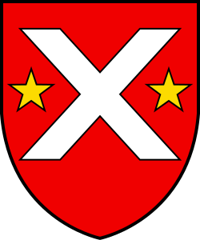
Kippel
Origin of the name Kippel
The village is mentioned in 1437 in the form « kypil ». In the Upper Valais dialect it is said to be called « Chiipl ». Where does the name come from? That is still unknown.
Founding of Kippel
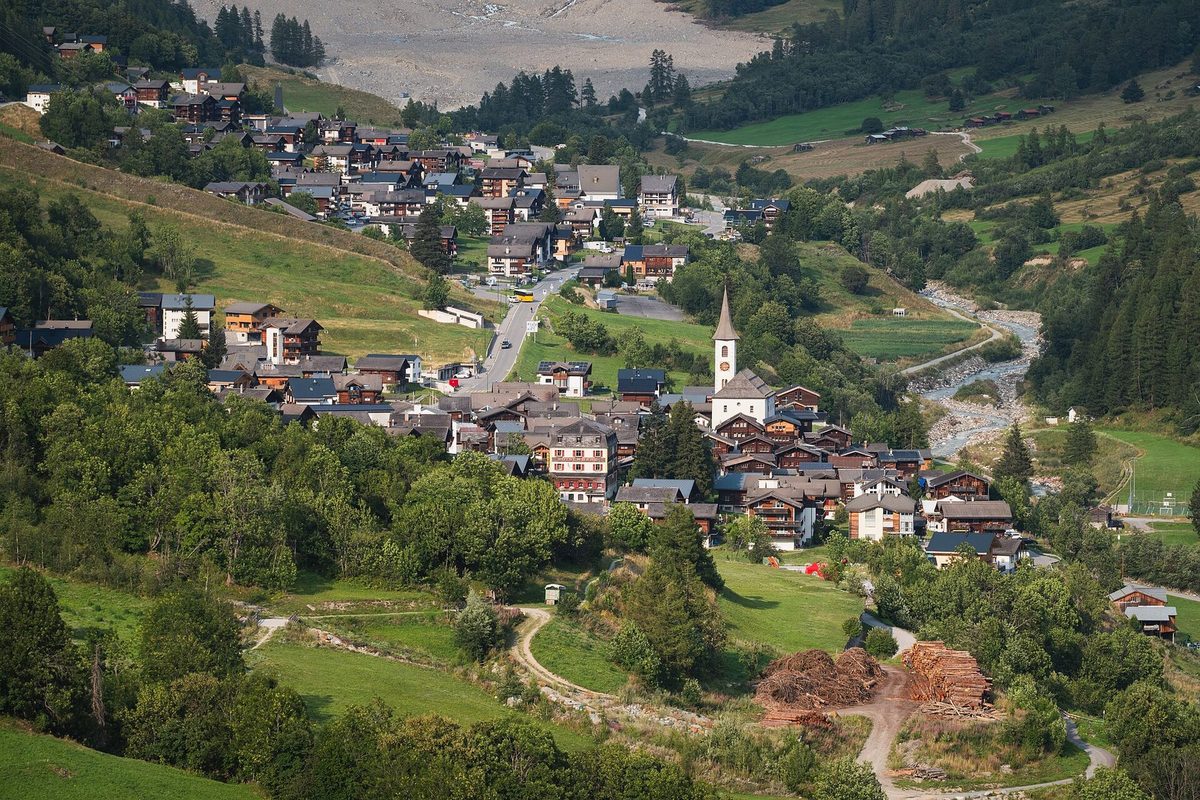
Kippel lies in the upper Lötschental. Celto-Roman graves may point to an early permanent settlement. For centuries Kippel was the secular and religious centre of the valley: its church, attested archaeologically from the 12th century and in writing in 1233, was the parish church of all the valley's municipalities until 1899 and, from 1233, a priory of the Abbey of Abondance in Savoy. A smithy served the whole valley. The village centre is shaped by traditional Valais wooden houses from the mid-16th to the mid-18th century, of exceptional density and quality. Until around 1950 self-sufficient mountain farming (livestock, dairying, crop growing) dominated, disappearing within three to four decades. The Bernese painter Albert Nyfeler, who settled in Kippel, and the parish priest Johann Siegen (1886-1982) made the valley and its customs known, such as processions with soldiers' parades and masked runs.[1]
History of Kippel
Celto-Roman period. Graves from this period may point to a permanent settlement.[1]
12th century. First church, attested by archaeology.[1]
1233. The church is mentioned; it becomes a priory of the Abbey of Abondance in Savoy.[1]
1437. Mentioned in the form « kypil ».
1556. Roman Ruffiner builds a Gothic church, of which the tower and ossuary survive.[1]
1740. Construction of the Baroque nave and choir.[1]
1899. End of its role as parish church for all the valley's municipalities.[1]
1908. Opening of the Hotel Lötschberg, one of the first tourist buildings in the valley, followed around 1910 by the Ebener inn.[1]
1923. An avalanche destroys the smithy that served the whole valley.[1]
1960. Opening of a chairlift and a ski tow to the Hockenalp (closed in the late 1970s). Kippel hosts the valley's lower secondary school.[1]
1977. A complete renovation of the church destroys the gateway that marked the sacred precinct.[1]
1982. Opening of the Lötschentaler Museum.[1]
1980s. Kippel has since recorded 35'000 to 45'000 overnight stays a year in hotels and other accommodation.[1]
Population of Kippel
Sources and references: [1][2]
| 1802 | 115 inhabitants |
| 1850 | 168 inhabitants |
| 1900 | 248 inhabitants |
| 1950 | 363 inhabitants |
| 2000 | 368 inhabitants |
| 2025 | 334 inhabitants |
Historic sites in Kippel
Church and priory. Church attested from the 12th century, priory of the Abbey of Abondance from 1233 and parish church of the whole valley until 1899. Tower and ossuary of 1556 by Roman Ruffiner, Baroque nave and choir of 1740, complete renovation in 1977.[1]
Village centre. Traditional Valais wooden houses from the mid-16th to the mid-18th century, of exceptional density and quality.[1]
Lötschentaler Museum. Valley museum, in Kippel since 1982.[1]
Hotel Lötschberg and Ebener inn. The first tourist buildings in the valley (1908 and around 1910).[1]
Remains in Kippel
Celto-Roman graves. Burial finds that may point to a permanent settlement in the Celto-Roman period.[1]
Tower and ossuary of 1556. Surviving parts of the Gothic church built by Roman Ruffiner.[1]
Sources
- Dictionnaire historique de la Suisse (version allemande originale), « Kippel » (Werner Bellwald, version du 16.10.2008)
- Office fédéral de la statistique (OFS), STATPOP, chiffres provisoires au 31.12.2025, via citypopulation.de
- geo.admin.ch, recherche de lieux (coordonnées)
Other villages near Kippel
Missing information, or do you have a source? Suggest a correction or addition. Every submission is checked before it's published.
Suggest a change