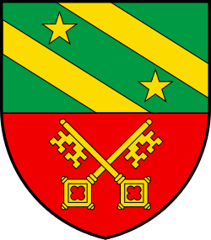
Lancy
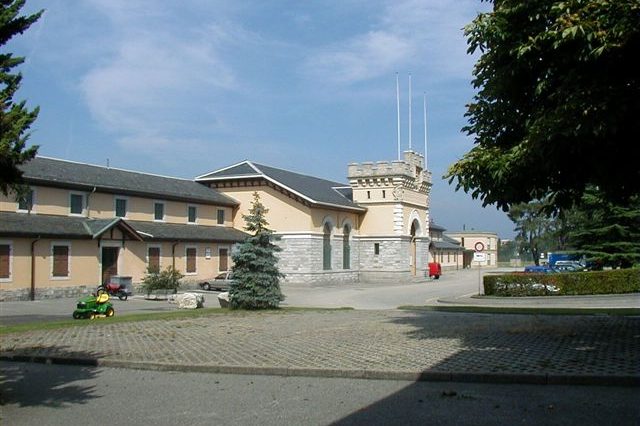
Origin of the name Lancy
The name appears in 1097 as « Lanciaco », linked to the family of the same name. What the name means is not yet known.[1]
Founding of Lancy
Nobody knows who founded the village. The site was nevertheless settled early: Neolithic remains found at La Praille in 1936 and other finds attest an early and continuous settlement, and Roman traces line the road from Genève to Lyon via Carouge and Seyssel. Lancy appears in 1097, linked to the family of the same name. In the Middle Ages the fiefs of the parish were shared between the Lancy, the Sacconay, the Ternier (castle of La Bâtie-Meillé) and the cathedral chapter of Genève. Much later, the tramway, the garden cities and the La Praille area turned this Savoyard municipality into a town.[1]
History of Lancy
1097. First mention of Lancy, linked to the family of the same name.[1]
1275. Mention of a church of Notre-Dame, whose ruins still appear on a land register of 1710.[1]
1317. The Ternier own the castle of La Bâtie-Meillé. The fiefs of the parish are shared between the Lancy, the Sacconay, the Ternier and the cathedral chapter of Genève.[1]
1366. Tile works are attested; lime kilns operate until the 16th century.[1]
1589. During the war between Genève and Savoy, Savoyard troops occupy Lancy, which Genève razes in reprisal in 1593.[1]
1664. Bishop Jean d'Arenthon d'Alex founds the chapel of the Enfant-Jésus at Pesay, demolished around 1755.[1]
1731-1732. The parish priest of Confignon has the church of La Trinité built at Grand-Lancy, replacing a chapel built in 1699-1707.[1]
1780. Carouge leaves the parish; Lancy grows by adding Saint-Georges and Petit-Lancy, previously attached to Onex.[1]
1792-1813. Lancy, a Savoyard municipality, is French.[1]
1798. Charles Pictet-de Rochemont buys an estate where he breeds merino sheep and grows maize.[1]
1816. Lancy is joined to Genève by the Treaty of Turin.[1]
1817-1819. Pictet-de Rochemont has the manor house built by Jean-Pierre and Jean-Samuel Noblet. It has been the town hall since 1957.[1]
1829. The wooden Gué bridge links Grand-Lancy and Petit-Lancy. A stone arch replaces it in 1835.[1]
1873. Kulturkampf: the Roman Catholics are driven out of La Trinité, where the Christ Catholics settle.[1]
1889. The tramway serves the municipality. The Saint-Georges shooting range dates from the same year.[1]
1899. Completion of the Epargne garden city at Petit-Lancy.[1]
1919-1921. The Saint-Georges plateau hosts the first permanent airfield of the canton, with a Genève-Paris route.[1]
1941-1949. The La Praille goods station is built, after the wetlands were drained (1935-1938).[1]
1963. Lancy becomes a town, with more than 10'000 inhabitants.[1]
2003. Opening of the Stade de Genève at La Praille.[1]
Population of Lancy
Sources and references: [1][2]
| early 15th century | 40 hearths (households) |
| 1482 | 27 hearths (households) |
| 1518 | 24 hearths (households) |
| around 1800 | 508 |
| 1850 | 778 |
| 1900 | 1'918 |
| 1950 | 5'792 |
| 2000 | 25'688 |
| 2010 | 27'247 |
| 2020 | 33'030 |
| 2025 | 37'669 |
Historic sites in Lancy
Castle of La Bâtie-Meillé. Castle owned by the Ternier in 1317, turned into a private boarding school in 1853.[1]
Church of La Trinité. Church built in 1731-1732 at Grand-Lancy by the parish priest of Confignon. During the Kulturkampf, in 1873, it passed to the Christ Catholics.[1]
Lancy town hall. Manor house built in 1817-1819 for Charles Pictet-de Rochemont by Jean-Pierre and Jean-Samuel Noblet, with the maison de l'Horloge added around 1830; town hall since 1957.[1]
Epargne garden city. Garden city completed in 1899 at Petit-Lancy.[1]
Pont du Gué and Pont de Lancy. The wooden Gué bridge (1829), replaced by a stone arch in 1835, links Grand-Lancy and Petit-Lancy. The Pont de Lancy by the engineer Pierre Trembley doubled it in 1954 above the Aire valley.[1]
Stade de Genève. Stadium opened in 2003 at La Praille.[1]
Remains in Lancy
Neolithic remains of La Praille. Neolithic remains found in 1936 at La Praille.[1]
Fortified houses of La Tour and La Bottière. Fortified houses rebuilt several times, the last medieval remains in the municipality.[1]
Sources
- Dictionnaire historique de la Suisse, « Lancy » (Dominique Zumkeller)
- Office cantonal de la statistique (OCSTAT), Mémento statistique du canton de Genève 2026, tableau Population résidante par commune, en 2025
Localities of the municipality with a page
Other villages near Lancy
Missing information, or do you have a source? Suggest a correction or addition. Every submission is checked before it's published.
Suggest a change