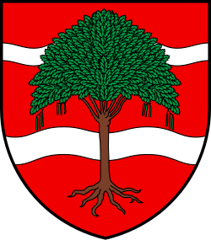
Onex
Origin of the name Onex
The name appears in 1292 as « Onay ». Its origin has not yet been explained.[1]
Founding of Onex
Nobody knows who founded the village. The site was nevertheless occupied in Roman times: remains were found there in 1972 and 1975. Between 1061 and 1080 Count Gerold of Genève gave the territory to the cathedral chapter of Genève. A chapel of Saint-Martin is attested there in the early 15th century. Passing in turn to Genève and to Savoy, and for a time united with Bernex and Confignon, Onex became an independent municipality in the mid-19th century. It remained a farming village of a few hundred inhabitants until the mid-20th century, when the Cité-Nouvelle turned it into a town.[1]
History of Onex
1061-1080. Count Gerold of Genève gives the territory of Onex to the cathedral chapter of Genève.[1]
1292. First mention of the name, in the form « Onay ».[1]
1412. A chapel dedicated to Saint Martin is attested.[1]
16th century. After the Reformation the lands pass to the Seigneurie of Genève. The chapel, rebuilt in 1724, is used for Protestant worship.[1]
1754. After the Treaty of Turin, Onex returns to Savoy and to Catholicism.[1]
1793. When France annexes Savoy, Bernex, Onex and Confignon form a single political municipality.[1]
1816. Joined to the canton of Genève by the Treaty of Turin, with the Communes réunies.[1]
1850. Separation from Bernex.[1]
1851. Separation from Confignon: Onex becomes an independent municipality.[1]
1853-1854. Construction of a Protestant chapel, the first temple built in Genève after the Restoration on land that had belonged to the Kingdom of Sardinia.[1]
1865-1893. A hydraulic machine by Charles Schmiedt supplies water to Onex, Bernex, Confignon and Lancy.[1]
1884. The tramway runs along the route de Chancy.[1]
1960. Sale of about 110'000 m² to the Cité-Nouvelle foundation for social housing. The population rises from 2'128 inhabitants in 1960 to 13'524 in 1970.[1]
2000. Nine tenths of the working population are commuters. In 2005 the service sector accounts for almost 90 % of jobs.[1]
Population of Onex
Sources and references: [1][2]
| 1860 | 261 |
| 1900 | 279 |
| 1950 | 958 |
| 1960 | 2'128 |
| 1970 | 13'524 |
| 2000 | 16'419 |
| 2025 | 19'141 |
Historic sites in Onex
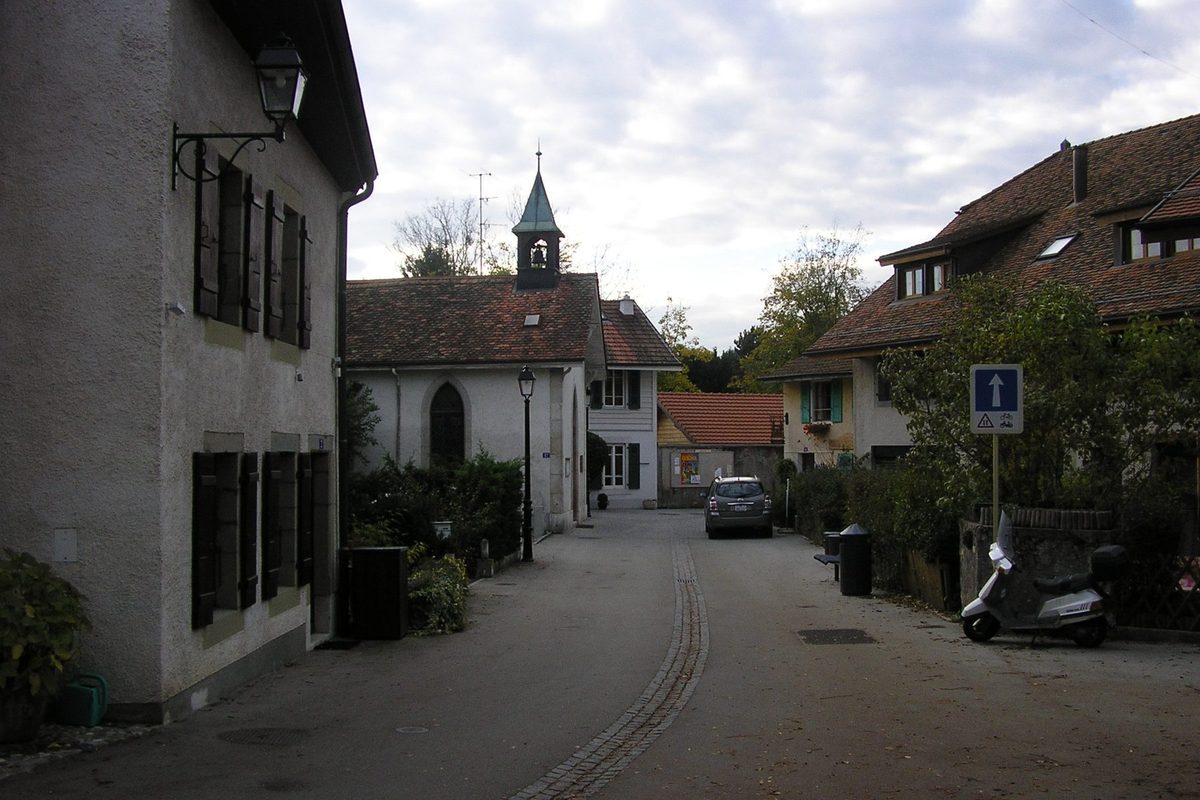
Chapel of Saint-Martin. Chapel attested in 1412, rebuilt in 1724 and used for Protestant worship after the Reformation.[1]
Protestant chapel of 1853-1854. Temple built in 1853-1854, the first built in Genève after the Restoration on formerly Sardinian land.[1]
Cité-Nouvelle. Social housing district built from 1960 on about 110'000 m² sold to the Cité-Nouvelle foundation.[1]
Remains in Onex
Roman remains. Remains from the Roman period found in 1972 and 1975.[1]
Sources
- Dictionnaire historique de la Suisse, « Onex » (Jacques Barrelet)
- Office cantonal de la statistique (OCSTAT), Mémento statistique du canton de Genève 2026, tableau Population résidante par commune, en 2025
Localities of the municipality with a page
Other villages near Onex
Missing information, or do you have a source? Suggest a correction or addition. Every submission is checked before it's published.
Suggest a change