Ormont-Dessous
In the central Grande-Eau valley, Le Sépey, La Forclaz and a church at Cergnat recorded from 1279. At Les Mosses a sledge lift launched winter tourism in 1938.
Entry based on 12 sources · Our method · Reusable text (CC BY-SA)
Origin of the name Ormont-Dessous
The name is recorded in 1200 as « Ormont » and in 1564 as « Bas-Ormont ». The old German name is « Ormund ». In German the valley was also called « Ulmenthal ». The etymology of Ormont has not yet been explained.[1][2]
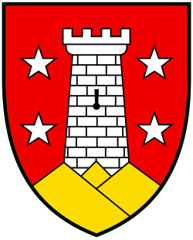
Coat of arms of Ormont-Dessous
Gules a tower embattled argent on a mount or, between four mullets of the second. On a red field, a white crenellated tower stands on a yellow mountain, framed by four white stars. Adopted in 1921, the arms recall with the tower the former castle of Aigremont. The mountain refers to the Mont d'Or, the central point of the municipality, and the stars to the four "seytes", the parts of the municipality.[8][9]
Founding of Ormont-Dessous
When the municipality came into being, and who founded it, is not known. The oldest permanent settlements are at Le Sépey, La Forclaz and Cergnat, where the parish church of Saint-Maurice is recorded from 1279. In the Middle Ages the Ormonts valley depended on the abbey of Saint-Maurice, then passed under the rule of various vassals of the House of Savoy (Pontverre, Saillon, Thomé). The municipality covers the central part of the Grande-Eau valley: besides the villages of Le Sépey and La Forclaz, it has large areas of scattered settlement at Cergnat, Matélon, La Comballaz and Les Voëttes.[1][2]
History of Ormont-Dessous
1200. First written mention of the name « Ormont ».[1]
1279. The parish church of Saint-Maurice at Cergnat is recorded.[1]
14th century. At the beginning of the century Aymon de Pontverre builds a castle on the Aigremont promontory.[1]
around 1400. The young men of La Forclaz receive the Perche mountain pasture, then worked as a cooperative until 1974.[1]
1425. Aigremont castle passes to the Gruyère family.[5]
1475. The Bernese take possession of the region during the Burgundian Wars; Aigremont castle is destroyed. The Ormonts become one of the four mandements of the government of Aigle (1475-1798).[1][2]
1480. The Ormonts parish, served by the church of Saint-Maurice at Cergnat, splits into the parishes of Ormont-Dessus and Ormont-Dessous, a separation made final at the Reformation.[2]
1529. The Reformation is imposed despite strong resistance from the population.[2]
1564. Mention of the form « Bas-Ormont ».[1]
1674. The municipality's customary law begins to be written down. The municipality is divided into four « seytes »: Le Sépey, Cergnat, La Forclaz and Les Voëttes.[1]
1798. The Ormonans fight the revolutionary troops. From then on the Ormonts form a circle of the Aigle district.[2]
1832-1886. The Ormonts are the seat of a prefecture.[2]
1839. Opening of the road from Aigle to Le Sépey, which ends the valley's isolation.[2]
1840. An inn opens.[1]
around 1860. Spa tourism begins at La Comballaz.[1]
1914. The Aigle-Sépey-Diablerets railway line opens.[2]
1938. A sledge lift (funiluge) is installed at Les Mosses, the start of winter tourism. A ski lift follows in 1951.[1]
1974. End of the cooperative use of the Perche mountain pasture.[1]
2008. The municipality has 42 farming and forestry holdings.[1]
Population of Ormont-Dessous
Sources and references: [1][3]
| 1764 | 1'437 |
| 1798 | 1'689 |
| 1850 | 1'574 |
| 1900 | 1'746 |
| 1950 | 1'237 |
| 1970 | 884 |
| 2000 | 1'075 |
| 2025 | 1'261 |
Families of Ormont-Dessous
Citizen families before 1800. Forty-two families, almost all with no date of registration. Only the Cathélaz family has a date: 1660.[10]
In the 19th century. The Massard family, from Rossinière VD, with no precise date.[10]
From 1901 to 1962. Forty-four entries, including twenty-two families from Italy. The Pernollet family, from France, opens the list in 1906. A few more distant origins appear: the Epplé from the United States (1912), the de Tcherdynzeff from the Soviet Union (1931), the Godard from Belgium (1953) and the Quenim from Portugal (1959). In 1962 the last to be registered were the Allegra, from Italy, and the Nicole of Le Chenit VD.[10]
Notable people of Ormont-Dessous
Henri Alexis Tardent (1853-1929). Born in Le Sépey, Henri Alexis Tardent attended primary school in Ormont-Dessous before teaching French and German in Russia. He emigrated to Australia in 1887, becoming an agronomist, journalist and Labour politician. In 1897 he was put in charge of setting up a state experimental farm at Westbrook near Toowoomba.[12]
Economy of Ormont-Dessous, past and present
Cattle and fairs. Ormont-Dessous lives from farming and forestry, with 42 farms in 2008. In 2005 the primary sector still provided 39% of jobs. Le Sépey has held fairs since 1441, and cattle markets regularly bring together farmers from the whole district.[1][9]
From spa to skiing. A first inn opened in 1840. Around 1860 spa tourism began at La Comballaz. Les Mosses grew into a winter sports resort from the 1950s. In 2005 the service sector, mostly tied to tourism, provided almost 46% of jobs. The Les Mosses-La Lécherette ski area offers about 40 kilometres of slopes, and more than 100 with the link to Leysin.[1][9]
Disasters and major events in Ormont-Dessous
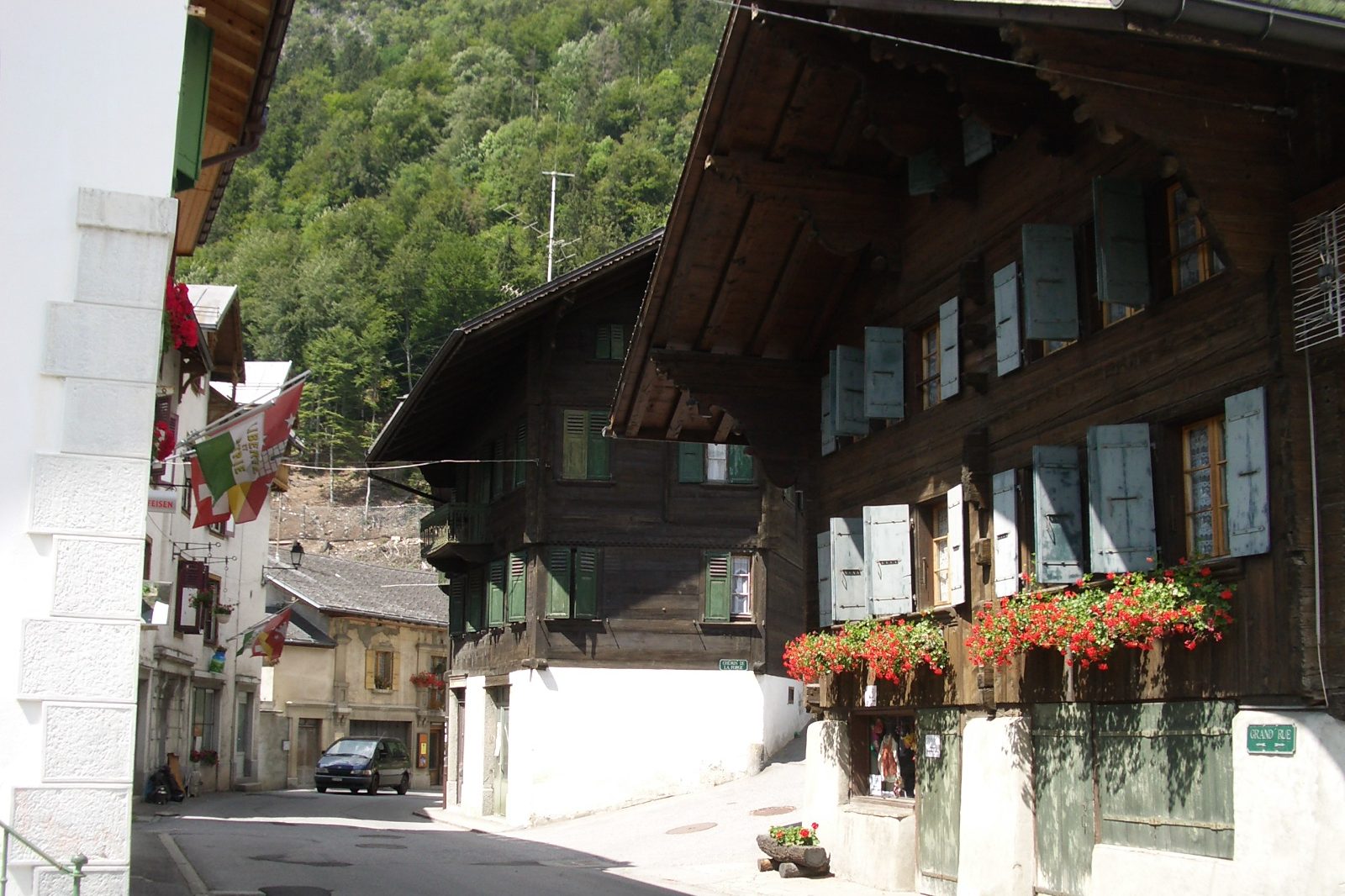
The Le Sépey fire of 1900. Fire destroyed part of the village of Le Sépey. Several 17th-century chalets escaped the flames.[9]
Historic sites in Ormont-Dessous
Saint-Maurice church at Cergnat. Parish church recorded from 1279, which served the whole Ormonts valley until the parishes separated in 1480.[1][2]
Aigremont promontory. Site of the castle built in the early 14th century by Aymon de Pontverre and destroyed in 1475.[1]
Pont des Planches. Bridge over the Grande-Eau, listed as a Swiss cultural property of national significance.[4]
La Comballaz. Hamlet where spa tourism began around 1860.[1]
Les Mosses. Pass linking the Ormonts with the Pays-d'Enhaut, where winter tourism developed with a sledge lift in 1938 and a ski lift in 1951.[1]
Protected heritage in Ormont-Dessous
Cultural property of national significance (A objects in the PCP inventory)[7]
- Pont des Planches
Cultural property of regional significance (B objects)[7]
- Cergnat, grenier-vestiaire
- Cergnat, maison de l'Aigle noir
- Cergnat, église réformée Saint-Maurice
- Les Voëttes, ruines du château d'Aigremont - Moyen Age
Legends of Ormont-Dessous
The guardian sprite of Les Planches. At Les Planches people said a sprite guarded a chalet: if anyone touched the cheese, it rapped their fingers, so the house could be left unlocked.[6]
Traditions and festivals in Ormont-Dessous
The Peck-à-Batz. In Le Sépey the inhabitants go by the nickname Peck-à-Batz.[9]
The sled dog race. The Les Mosses and La Lécherette plateau hosts an international sled dog race, organised by SOS Chiens Polaires. Events range from sprint to skijoring, starting and finishing at the Arsat.[11]
Sources
- Dictionnaire historique de la Suisse, « Ormont-Dessous »
- Dictionnaire historique de la Suisse, « Ormonts, Les »
- Statistique Vaud, « Population résidante permanente au 31 décembre 2025 »
- Office fédéral de la protection de la population, Inventaire PBC, liste du canton de Vaud (état au 1.1.2026)
- Swisscastles.ch, « Château d'Aigremont »
- Alfred Cérésole, Légendes des Alpes vaudoises, ill. Eugène Burnand, Lausanne, 1885, p. 47
- Federal Office for Civil Protection (FOCP), Swiss Inventory of Cultural Property (PCP), list for the canton of Vaud (as of 1.1.2026)
- IPI, Swissreg, emblems database: coat of arms of Ormont-Dessous (no. 101289)
- Official Gazette of the Canton of Vaud (FAO), "Alphabet des communes vaudoises: Ormont-Dessous"
- Register of Swiss Surnames, 3rd edition (1989), search Commune "Ormont-Dessous", Canton VD
- Alpes vaudoises, "International sled dog race", Col des Mosses
- Dictionnaire historique de la Suisse, « Tardent, Henri Alexis », version du 18.08.2025
Published by Sébastien Jörg ·
Localities of the municipality with a page
Other villages near Ormont-Dessous
Missing information, or do you have a source? Suggest a correction or addition. Every submission is checked before it's published.
Suggest a change