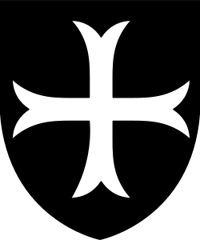
Salgesch
Origin of the name Salgesch
The village appears in the 11th century as « Salconio », then around 1225 as « Salquenum ». In French it is called Salquenen. Where does the name come from? That is still unknown.
Founding of Salgesch
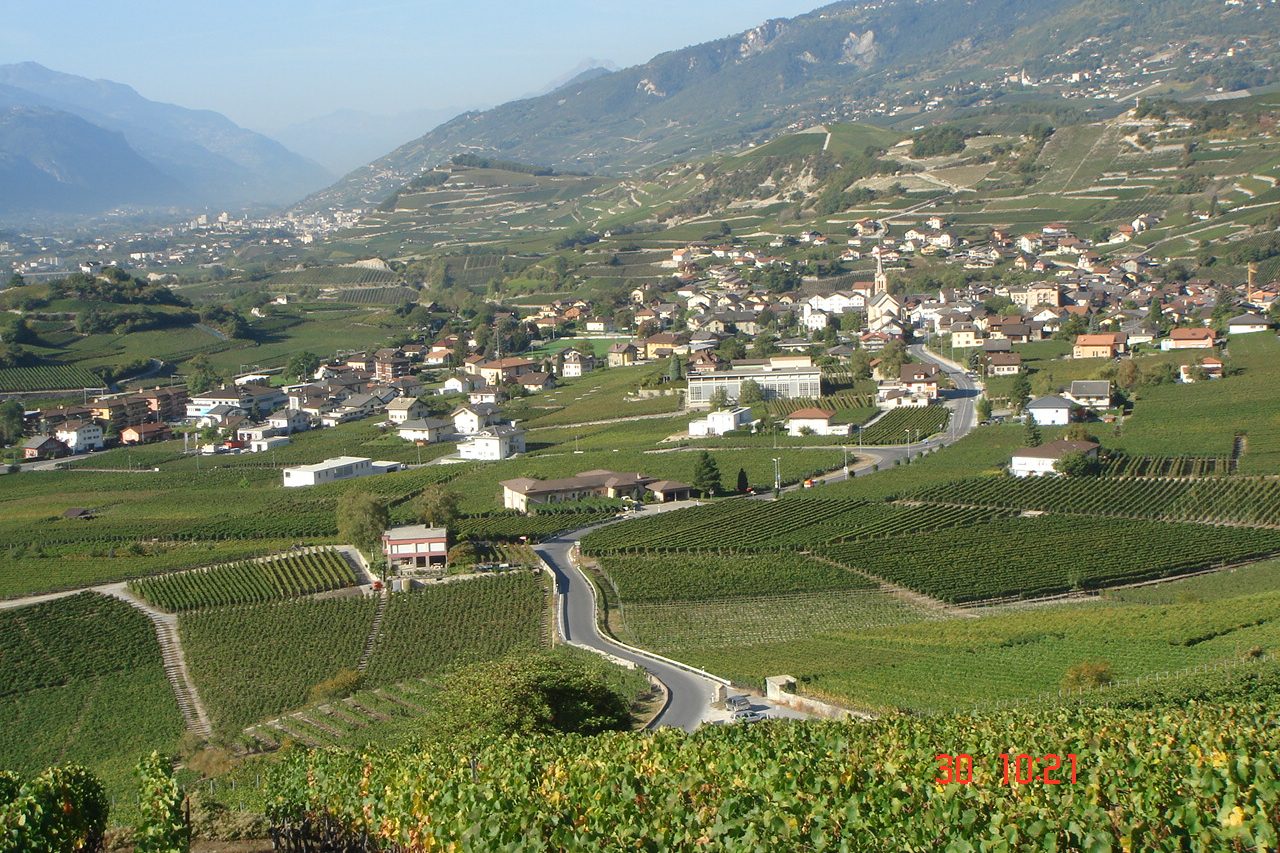
Salgesch (Salquenen), the westernmost German-speaking village in Valais, lies on the right side of the Rhône valley, facing the Pfyn forest (Pfynwald), away from the valley road. Bracelets and fibulae of bronze, iron and silver and Roman coins found in graves show that the site has been inhabited at least since the Iron Age. It lay in the territory of the Seduni. A Roman-period cult site on the Biel was later converted into a pilgrimage chapel of St John the Baptist. From the early 13th century Salgesch had a hospital, run until 1655 by a rector of the Order of St John and subordinate to the commandery of Conflans in Savoy. The community adopted a first written farmers' ordinance in 1520 and built its burghers' house in 1561. Under the Ancien Régime it belonged to the mensa of the bishop of Sion. After the Second World War the farming village became a wine village.
History of Salgesch
Iron Age. Bracelets, fibulae and Roman coins found in graves near the village and on the Biel show settlement at least since this period. The site lies in the territory of the Seduni.
Roman period. A cult site exists on the Biel. It is later converted into a pilgrimage chapel of St John the Baptist.
11th century. First mention as « Salconio ».
around 1225. The name appears as « Salquenum ».
13th century. From the beginning of the century Salgesch has a hospital, which lasts more than 400 years, run by a rector of the Order of St John and subordinate to the commandery of Conflans in Savoy.
1412. Boundary settlement with Varen, renewed in 1468 and 1664. Further agreements follow with Sierre (1484) and Leuk (1553 and 1804).
1520. First written farmers' ordinance (Bauernzunft), supplemented in 1575 with rules on the use of the Pfyn forest.
1537. The pilgrimage chapel is built.
1561. The burghers' house is built, a sign of the burghers' self-confidence.
1655. Kaspar Stockalper vom Thurm acquires the possessions of the Order of St John in Valais.
1680. Stockalper sells the pilgrimage chapel and the rights in Salgesch to the municipality.
1685. Salgesch separates from Leuk and becomes a parish. The rectory becomes the parsonage.
1687. The Gothic pilgrimage chapel is enlarged and becomes the parish church.
1808. The municipality buys out the episcopal tithes for 1'212 crowns.
1887. The neo-Gothic parish church of St John the Baptist is built to plans by Joseph de Kalbermatten.
after 1945. The farming village becomes a wine village, with over 40 wineries and 203 ha of vineyards.
1997. On 17 December the Valais cantonal government (Conseil d'Etat) places the Pfyn area (Sierre, Salgesch, Varen and Leuk) under nature and landscape protection.[2]
2006. The « Der Hof » wine centre opens.
Population of Salgesch
Sources and references: [3]
| 1800 | 250 inhabitants (around 1800) |
| 1850 | 406 inhabitants |
| 1900 | 671 inhabitants |
| 1950 | 1'166 inhabitants |
| 2000 | 1'198 inhabitants |
| 2025 | 1'777 |
Historic sites in Salgesch
Church of St John the Baptist. Neo-Gothic parish church built in 1887 to plans by Joseph de Kalbermatten, replacing the Gothic chapel enlarged in 1687.
The Biel and the chapel of St John the Baptist. Hill with a Roman-period cult site, later converted into a pilgrimage chapel. The chapel of 1537 was sold to the municipality by Kaspar Stockalper in 1680.
Burghers' house. Built in 1561, it shows the self-confidence of the burghers of Salgesch.
Valais Vine and Wine Museum. Part of the museum is housed in one of the oldest houses in the village core.
Pfyn forest (Pfynwald). Forest whose use has been regulated since 1575. A permanent exhibition makes Salgesch the centre of the Pfyn-Finges nature park.
Remains in Salgesch
Iron Age graves. Graves near the village and on the Biel that yielded bracelets and fibulae of bronze, iron and silver, as well as Roman coins.
Mörderstein rock shelter. Rock shelter in the Pfyn forest where surveys carried out in 2002 for the A9 motorway revealed traces of one of the oldest settlements in the region, probably around 4700 BC.
Sources
- Dictionnaire historique de la Suisse (version allemande), « Salgesch » (Anton Riva, version du 20.06.2012)
- Canton du Valais, Conseil d'Etat, « Entscheid betreffend den Schutz des Gebietes von Pfyn in Siders, Salgesch, Varen und Leuk » (17.12.1997), via LexFind
- Office fédéral de la statistique (OFS), STATPOP, chiffres provisoires au 31.12.2025, via citypopulation.de
- geo.admin.ch, recherche de lieux (coordonnées)
Localities of the municipality with a page
Other villages near Salgesch
Missing information, or do you have a source? Suggest a correction or addition. Every submission is checked before it's published.
Suggest a change