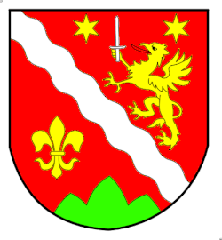
Turtmann
Origin of the name Turtmann
The village appears in 1050 as « Curtmannonis », then in 1210 as « Torthemanei » and « Tortemagny ». In French it is called Tourtemagne. Where does the name come from? That is still unknown.[1]
Founding of Turtmann
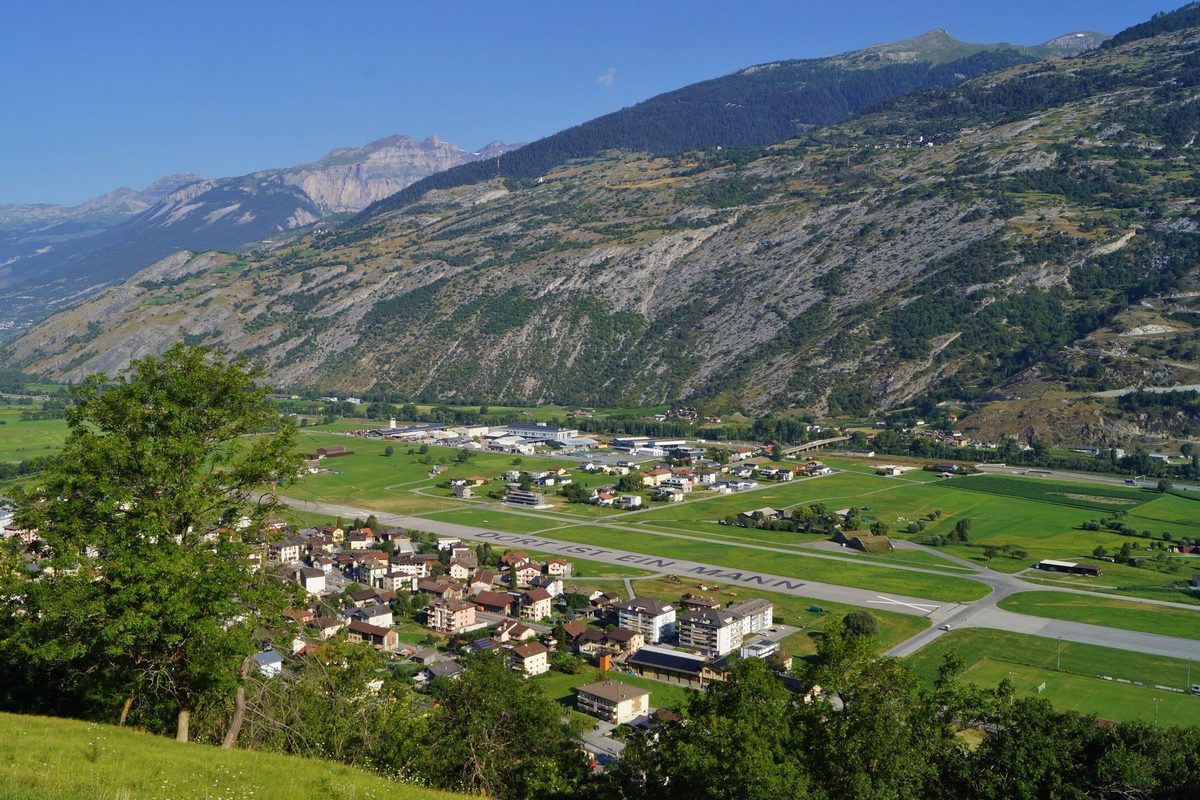
Turtmann lies on the plain, on the left bank of the Rhône, at the mouth of the valley of the same name. The former municipality also included the hamlets of Tännu and Ried. In the 13th century the village belonged to a count (« comitis de Tortemagny » in 1210 and 1267). Guillaume de Curia and his sons Henri and Pierre (1210), the major Aymon de Loèche (1250), the bishop of Sion (1383) and Pierre de Rarogne, lord of Anniviers (1427), held property there. Manor houses were built in Turtmann in the 16th and 17th centuries. In church matters the village first belonged to Leuk, before forming a parish with Ergisch from 1663 to 1861. It lived from livestock, crop farming, alpine farming in the Turtmanntal, vineyards and horse breeding until late in the 20th century. Industry and crafts then gained in importance. Turtmann is now in the municipality of Turtmann-Unterems (merger of 1 January 2013).[1][3]
History of Turtmann
1050. First mention as « Curtmannonis ».[1]
1210. Forms « Torthemanei » and « Tortemagny ». A count of Tortemagny is mentioned. Guillaume de Curia and his sons Henri and Pierre hold property there.[1]
1250. The major Aymon de Loèche holds property in Turtmann.[1]
1383. The bishop of Sion holds property in Turtmann.[1]
1427. Pierre de Rarogne, lord of Anniviers, holds property in Turtmann.[1]
1451. A small church is recorded. The village then belongs to the parish of Leuk.[1]
1479. Turtmann forms an association of communes with Unterems.[1]
1515. Communal statutes, supplemented in 1535 and replaced in 1586.[1]
1663. Turtmann forms a parish with Ergisch, until 1861.[1]
around 1670. Gaspard Stockalper de la Tour begins building his house in Turtmann. Work stops after his fall in 1678.[1]
1723. A chaplaincy is established.[1]
1864-1866. The new parish church of St Joseph is built in historicist style. The old church is demolished in 1865, but its ossuary is preserved.[1]
1879. End of Turtmann's post relay on the Brig-Sion road.[1]
Second World War. A military airfield is created.[1]
2003. The military airfield closes.[1]
2013. On 1 January, Turtmann merges with Unterems to form the municipality of Turtmann-Unterems.[1][3]
Population of Turtmann
Sources and references: [1]
| 1798 | 253 inhabitants |
| 1850 | 433 inhabitants |
| 1900 | 519 inhabitants |
| 1950 | 751 inhabitants |
| 2000 | 992 inhabitants |
Historic sites in Turtmann
Parish church of St Joseph. Historicist church built in 1864-1866 to replace the old church, demolished in 1865.[1]
House of Gaspard Stockalper. Gaspard Stockalper de la Tour began building his house in Turtmann around 1670. Work stopped after his fall in 1678. Manor houses had already been built in the village in the 16th and 17th centuries.[1]
Turtmanntal. Valley that opens out at the village, where the community carried on its alpine farming.[1]
Former military airfield. Created during the Second World War, it remained in use until 2003.[1]
Remains in Turtmann
Ossuary of the old church. The ossuary of the old church, demolished in 1865 after St Joseph's church was built, has been preserved.[1]
Sources
- Dictionnaire historique de la Suisse, « Tourtemagne » (Alois Grichting, version du 05.01.2017)
- Dictionnaire historique de la Suisse, « Unterems » (Alois Grichting, version du 05.01.2017) (association de communes de 1479)
- Office fédéral de la statistique (OFS), Répertoire officiel des communes de Suisse, mutation n° 3398 (fusion de Turtmann et Unterems en Turtmann-Unterems, 01.01.2013)
- geo.admin.ch, recherche de lieux (coordonnées)
Localities of the municipality with a page
Other villages near Turtmann
Missing information, or do you have a source? Suggest a correction or addition. Every submission is checked before it's published.
Suggest a change