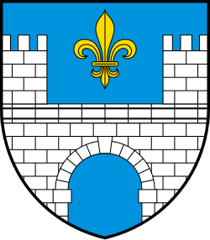
Aire-la-Ville
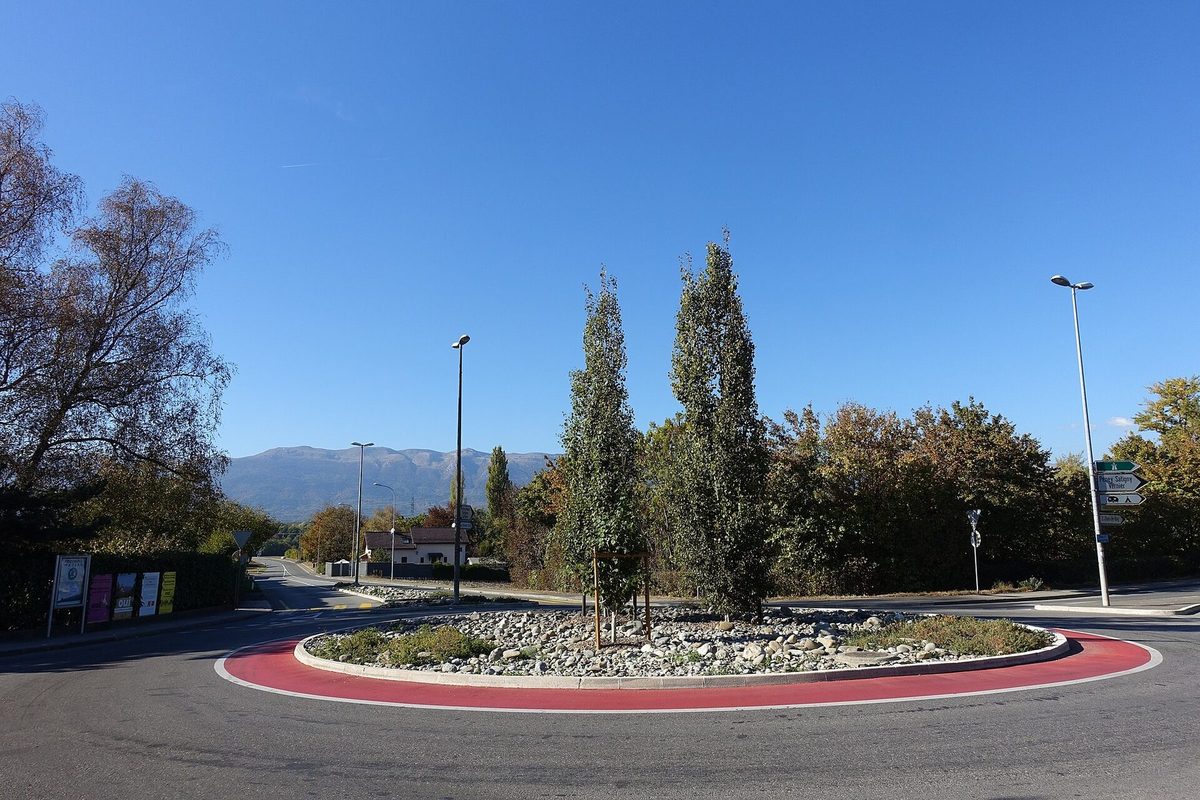
Origin of the name Aire-la-Ville
The name appears in 1429 as « Aeria Villa », then is written « Haire-la-Ville » in 1666. Where does the name come from? That is still unknown.[1]
Founding of Aire-la-Ville
Nobody knows who founded Aire-la-Ville. The site was nevertheless occupied in Roman times by a villa rustica, and graves from late Antiquity and the early Middle Ages have been found there. In the Middle Ages the fief passed between several families of the region, and the lordship depended on the castle of Ternier. Aire-la-Ville then changed masters several times, between Bern, Savoy and France, before joining Genève. In the 17th and 18th centuries the Genevan Fabri family held the seigneurial title. The village, with its clustered settlement, has remained rural.[1]
History of Aire-la-Ville
Roman period. A villa rustica occupies the site, where graves from late Antiquity and the early Middle Ages have also been found.[1]
Middle Ages. The locality belongs to the parishes of Bernex, then Cartigny. The lordship depends on the castle of Ternier and passes from the count of Genève to the house of Savoy.[1]
1429. First mention of the name, as « Aeria Villa », and of a community of inhabitants.[1]
15th century. A chapel of Saint-Amand is recorded.[1]
1536. Start of the Bernese occupation. Aire-la-Ville is attached to the Reformed parish of Bernex.[1]
1564. End of the Bernese occupation: the locality returns to Savoy and to Catholicism and belongs to the parishes of Bernex, then Vernier.[1]
1601. Aire-la-Ville passes to France.[1]
1666. The name is written « Haire-la-Ville ».[1]
1693. The locality has 149 inhabitants.[1]
1726. Construction of the church of Saint-Louis.[1]
1760. Aire-la-Ville returns to Savoy.[1]
1816. End of Savoyard rule: Aire-la-Ville is joined to the canton of Genève.[1]
1853. A bridge over the Rhône replaces the ferry that linked Aire-la-Ville with Peney.[1]
1942. Land consolidation.[1]
1966. The Les Cheneviers incineration plant goes into service.[1]
1970-1980. Construction of a housing estate of villas, home to many commuters.[1]
1990. 5 % of the working population works in the primary sector and 78 % in the service sector; 60 % of the inhabitants are Catholic.[1]
Population of Aire-la-Ville
Sources and references: [1][2]
| 1693 | 149 |
| 1850 | 243 |
| 1900 | 186 |
| 1930 | 159 |
| 1950 | 169 |
| 2000 | 736 |
| 2010 | 1'121 |
| 2020 | 1'156 |
| 2025 | 1'161 |
Historic sites in Aire-la-Ville
Church of Saint-Louis. Catholic church built in 1726. The municipality has remained mostly Catholic.[1]
Mill. Mill in existence since the Middle Ages, still used to press walnuts and grind oats.[1]
Peney bridge. Bridge over the Rhône built in 1853 to replace the ferry that linked Aire-la-Ville with Peney, on the other bank.[1]
Les Cheneviers plant. Incineration plant put into service in 1966 in the municipality.[1]
Remains in Aire-la-Ville
Roman villa rustica. Remains of a Roman-period villa rustica found in the municipality.[1]
Ancient graves. Graves from late Antiquity and the early Middle Ages.[1]
Sources
- Dictionnaire historique de la Suisse, « Aire-la-Ville » (Martine Piguet)
- Office cantonal de la statistique (OCSTAT), Mémento statistique du canton de Genève 2026, tableau Population résidante par commune, en 2025
- geo.admin.ch, service de recherche de swisstopo (coordonnées)
Localities of the municipality with a page
Other villages near Aire-la-Ville
Missing information, or do you have a source? Suggest a correction or addition. Every submission is checked before it's published.
Suggest a change