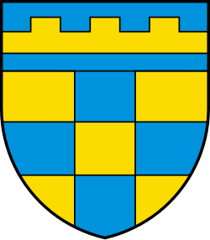
Avully
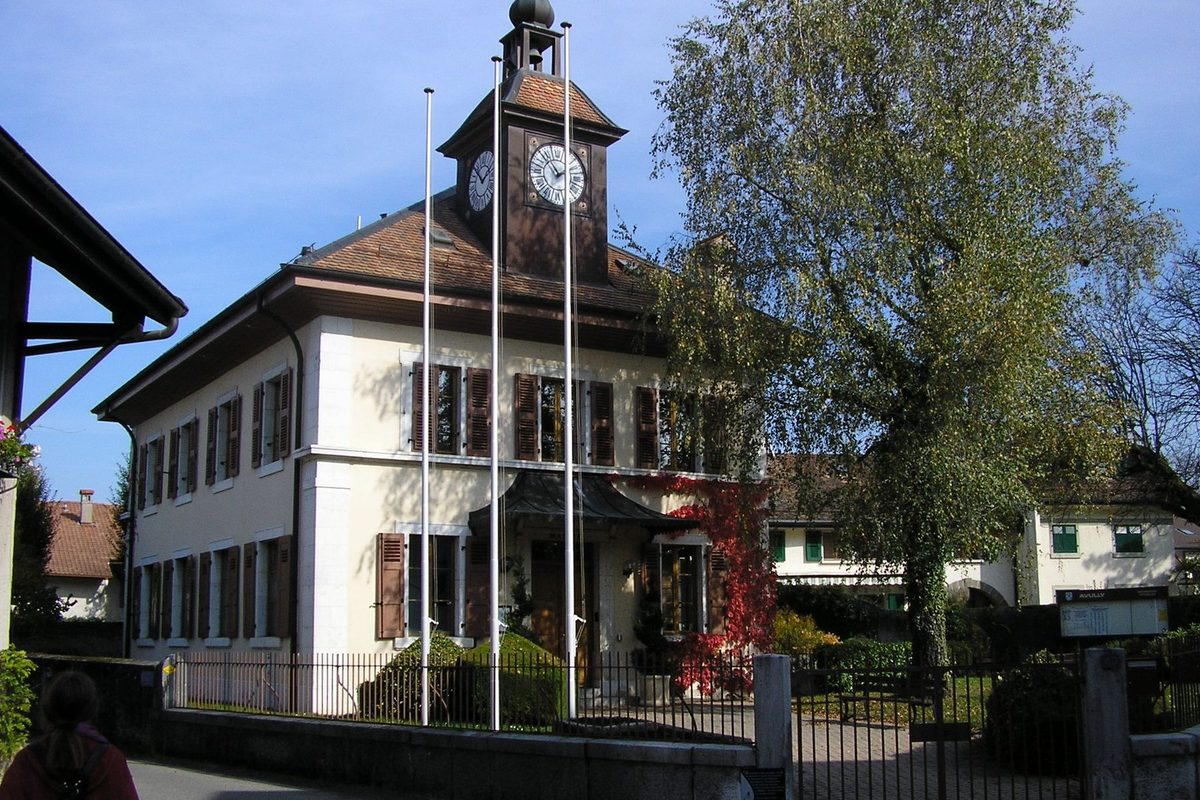
Origin of the name Avully
The name appears in 1220 as « Avulie ». Where does the name come from? That is still unknown.[1]
Founding of Avully
Who founded Avully is not known. The village enters history when the counts of Genève granted land to the priory of Saint-Victor. High justice then changed hands several times, from the counts of Genève to Savoy, to Bern and back to Savoy, but the other rights stayed with the priory. Assigned to France together with Chancy and Aire-la-Ville, Avully lived under the regime of the Saint-Victor lands, with limited sovereignty: appeal justice and the execution of convicts belonged to the King of France, the rest to Genève. Like the other Genevan communities, the community of inhabitants was dissolved during the Revolution, and Avully became one of the fifteen districts of the countryside. The present municipality, which joins Avully-Village, Epeisses, Eaumorte and Gennecy, was created by a French law of 1800.[1]
History of Avully
Roman period. A river port occupies the bend of the Rhône north of Epeisses. It is used until the 18th century.[1]
1220. First mention of the name, as « Avulie ». The counts of Genève grant land to the priory of Saint-Victor.[1]
1291. A bridge over the Rhône is mentioned.[1]
1321. The bridge is destroyed and replaced by a ferry.[1]
1402. High justice passes from the counts of Genève to the counts of Savoy.[1]
1536. High justice passes to Bern. The parish of Chancy, to which Avully belongs, adopts the Reformation.[1]
1544. The « Départ de Bâle » assigns the benefice of the parish to Genève.[1]
1567. High justice returns to Savoy.[1]
1601. The Treaty of Lyon, which ends the war between Savoy and France, assigns Avully to France, together with Chancy and Aire-la-Ville.[1]
1604. Henry IV grants Avully to Genève. The Parliament of Burgundy refuses to register this donation.[1]
1716. Avully is attached to the parish of Cartigny; the temple is built.[1]
1749. The Treaty of Paris ends the regime of the Saint-Victor lands with limited sovereignty.[1]
1794. The community of inhabitants is dissolved. Avully becomes one of the fifteen districts of the Genevan countryside.[1]
1800. The French law of 17 February 1800 creates the present municipality.[1]
1838. Avully separates from Cartigny and forms its own parish.[1]
1857. The La Plaine bridge replaces the ferry over the Rhône.[1]
1873. A bridge over the Nant des Crues and a hillside road improve the link with Cartigny.[1]
1925. The Chancy-Pougny hydroelectric plant goes into service.[1]
1970-1990. The population grows with the Gennecy rental housing complex and the renovation of farmhouses by city dwellers.[1]
Population of Avully
Sources and references: [1][2]
| 1850 | 305 |
| 1900 | 368 |
| 1950 | 307 |
| 1960 | 469 |
| 1970 | 1'041 |
| 2000 | 1'736 |
| 2025 | 1'765 |
Historic sites in Avully
Temple of Avully. Temple built in 1716, the year Avully was attached to the parish of Cartigny. Avully has formed its own parish since 1838.[1]
Epeisses. Village of the municipality; to the north, in the bend of the Rhône, lay a river port used from Roman times to the 18th century.[1]
Gennecy. Village of the municipality, whose rental housing complex accounts for much of the population growth from 1970 to 1990.[1]
Chancy-Pougny plant. Hydroelectric plant on the Rhône, put into service in 1925.[1]
Remains in Avully
Epeisses river port. A river port occupied the bend of the Rhône north of Epeisses, from Roman times to the 18th century. What remains visible of it is not known.[1]
Sources
- Dictionnaire historique de la Suisse, « Avully » (Catherine Santschi)
- Office cantonal de la statistique (OCSTAT), Mémento statistique du canton de Genève 2026, tableau Population résidante par commune, en 2025
- geo.admin.ch, service de recherche de swisstopo (coordonnées)
Localities of the municipality with a page
Other villages near Avully
Missing information, or do you have a source? Suggest a correction or addition. Every submission is checked before it's published.
Suggest a change