Avusy
Origin of the name Avusy
The name appears in 1260 as « Avussie ». Other documents place its first appearance on 20 June 1302, when the lands between the Mont-de-Sion, the Salève and the Rhône were divided. Where it comes from is not yet known.[1][2]
Founding of Avusy
Nobody knows who founded the village. It enters history as church land: in 1260 Count Amadeus II of Geneva entrusted the priory of Saint-Victor with the seigneurial rights in several villages of the Champagne, including Avusy, Athenaz and Sézegnin, keeping only high justice for himself. From the late 14th century the d'Avusy, de la Grave, de Rougemont and Mestral families held fiefs here. The lords de la Grave had a fortified house at Champlong. After the Reformation Avusy shared the political and religious fate of Chancy, Avully and Cartigny, until the treaties of 1754 and 1816 passed it first to Sardinia and then to Geneva. Today's municipality brings together Avusy-Village, Athenaz, Sézegnin and the hamlet of Champlong.[1][2][3]
History of Avusy
13th-15th century. The hamlet of Seingier is mentioned. It no longer exists today.[1]
1260. Count Amadeus II of Genève entrusts the priory of Saint-Victor with the seigneurial rights in villages of the Champagne, including Avusy (« Avussie »), Athenaz and Sézegnin, reserving only high justice.[1]
1302. The name Avusy appears on 20 June, at the division of the lands between the Mont-de-Sion, the Salève and the Rhône.[2]
Late 14th century. The families d'Avusy, de la Grave, de Rougemont and Mestral hold fiefs in the locality.[1]
1481-1482. The chapel of Saint-André, a dependency of Chancy, appears in the pastoral visitation.[1]
1564. The fortified house of the lords de la Grave at Champlong is partly destroyed by the commoners of Cartigny.[1]
1590. The Bernese partly destroy the fortified house of Champlong, leaving its enclosure wall standing.[1]
1602. During the Escalade, reinforcements from Sézegnin are said to have arrived after the fighting, reportedly giving rise to the Genevan expression « renfort de Sézegnin ».
1749. By the Treaty of Paris, Genève obtains Chancy and Avully, whose fate Avusy had shared until then.[1]
1754. By the Treaty of Turin, Genève obtains Cartigny but cedes Avusy to the Kingdom of Sardinia. The inhabitants may nevertheless practise the Protestant religion, and a Catholic parish is established.[1]
1758. Construction of the church of Saint-Charles-Borromée.[1]
1816. The Treaty of Turin attaches Avusy to the canton of Genève. The locality forms the municipality of Avusy-Laconnex-Soral with Laconnex and Soral.[1][2][3]
1848. The Grand Council creates the municipality of Avusy, the present municipality. Laconnex and Soral remain together.[2][3]
1850. The Grand Council separates Laconnex and Soral.
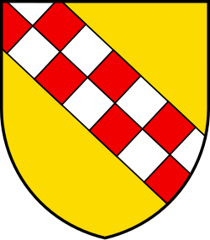
1924. Adoption of the municipal coat of arms, reportedly taken from that of the de la Grave family.
1990. A quarter of the working population works in agriculture, mainly viticulture, and a third in the service sector.[1]
Population of Avusy
Sources and references: [1][4]
| 1850 | 510 |
| 1900 | 452 |
| 1950 | 343 |
| 1980 | 504 |
| 2000 | 1'177 |
| 2025 | 1'428 |
Historic sites in Avusy
Church of Saint-Charles-Borromée. Catholic church built in 1758, after the establishment of the Catholic parish in 1754, when Avusy passed to the Kingdom of Sardinia.[1]
Champlong. Hamlet of the municipality where the fortified house of the lords de la Grave stood, partly destroyed in 1564 and again in 1590.[1]
Sézegnin. Village of the municipality, included in the donation of 1260. The Genevan expression « renfort de Sézegnin », said to date from the Escalade of 1602, takes its name. The village was listed in the Federal Inventory of Swiss Heritage Sites (ISOS). It was removed in the 2021 update.[1][6]
Athenaz. Village of the municipality, named with Avusy and Sézegnin in the donation of 1260 to the priory of Saint-Victor.[1]
Sézegnin necropolis. Necropolis of Sur le Moulin, dated from the late 4th to the early 8th century, which must have held at least 1'000 graves, 710 of them preserved. Excavated from 1973 to 1979, it was then destroyed by a gravel pit.[7]
Remains in Avusy
Fortified house of Champlong. Fortified house of the lords de la Grave, partly destroyed in 1564 by the commoners of Cartigny and again in 1590 by the Bernese, who left its enclosure wall standing. What remains of it today is not known.[1]
Sources
- Dictionnaire historique de la Suisse, « Avusy » (Catherine Santschi)
- Commune d'Avusy, « L'histoire d'Avusy »
- Commune de Soral, « Histoire »
- Office cantonal de la statistique (OCSTAT), Mémento statistique du canton de Genève 2026, tableau Population résidante par commune, en 2025
- geo.admin.ch, service de recherche de swisstopo (coordonnées)
- République et canton de Genève, « Mise à jour de l'Inventaire fédéral des sites construits d'importance nationale à protéger en Suisse (ISOS) pour les cantons de Genève et des Grisons », 23.03.2021
- Dictionnaire historique de la Suisse, « Sézegnin » (Béatrice Privati), version du 25.11.2011
Localities of the municipality with a page
Other villages near Avusy
Missing information, or do you have a source? Suggest a correction or addition. Every submission is checked before it's published.
Suggest a change