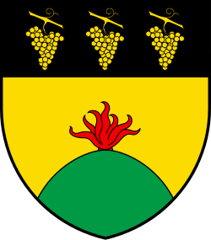
Bernex
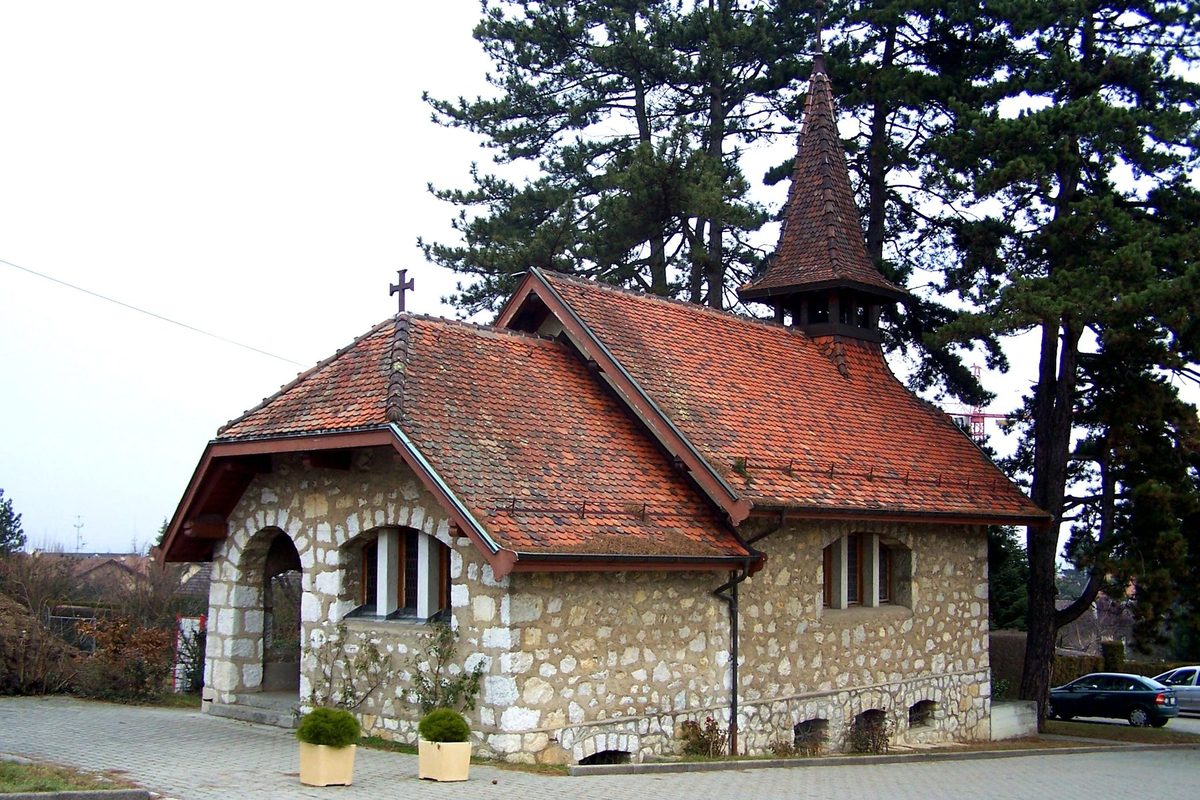
Origin of the name Bernex
In 1256 the name is written « Brenay ». Where does the name come from? That is still unknown.[1]
Founding of Bernex
Nobody knows who founded the village, but the site was occupied long before: in 1968 a Roman villa of the 1st-2nd century and post holes of early medieval huts were found at En Saules. The first religious centre was not in Bernex itself but at Vuillonnex, a settlement that has since vanished. The dead were buried there beside a small Gallo-Roman road, and two privileged graves became the site of a religious complex of Carolingian origin: a large church to the west and a smaller one to the east. Around the church of Saint-Matthieu, this centre became the seat of a deanery of the diocese of Geneva in the 12th century. The parish church of Saint-Maurice in Bernex is only attested from the 13th century. In the 14th century the lords of Lully, La Naz and Confignon, vassals of the counts of Geneva, held rights here, while a village community with certain liberties took shape in the 14th and 15th centuries. Much later, Geneva's strong growth after the Second World War turned Bernex into a residential municipality that has kept its rural character.[1]
History of Bernex
1st-2nd century. A Roman villa stands at the place called En Saules, where it is discovered in 1968.[1]
Early Middle Ages. Construction of the first building of the church of Saint-Matthieu at Vuillonnex, the first attested church. Huts are built at En Saules.[1]
9th-10th century. At Vuillonnex, two churches are built on the site of two privileged graves of the 9th century. For a time they stand side by side.[4]
11th-12th century. Around a hundred graves of the Vuillonnex cemetery date from this period. Burials continue around the churches until the early 16th century.[4]
12th century. The church of Vuillonnex is the seat of a deanery of the diocese of Genève.[1]
1256. First mention of the name, in the form « Brenay ».[1]
13th century. The parish church of Saint-Maurice in Bernex is attested.[1]
14th century. The lords of Lully, of La Naz and of Confignon, vassals of the counts of Genève, exercise rights in Bernex. In the 14th and 15th centuries a village community with certain liberties takes shape.[1]
1401. After the extinction of the counts of Genève, their seigneurial rights in Bernex pass to the counts, later dukes, of Savoy.[1]
1536. Bern conquers part of the former county of Genève and introduces the Reformation there. Bernex belongs to the Bernese bailiwick of Ternier until 1567.[1]
1567. The Treaty of Lausanne of 1564 comes into force: Bern partly returns the occupied territories to the duke of Savoy, with a clause maintaining Reformed worship where it had been introduced.[1]
1589. Charles Emmanuel of Savoy revokes the treaty and has a Catholic priest installed in Bernex. Reformed worship survives with difficulty and interruptions.[1]
1600. Merger of the Catholic parishes of Bernex, Confignon and Vuillonnex.[1]
1793. The annexation of Savoy by France leads to the creation of the municipality of Bernex-Onex-Confignon.[1]
1816. Attachment to the canton of Genève.[1]
1850. Bernex separates from Onex and Confignon.[1]
1864-1865. Construction of the present Catholic church of Saint-Maurice, in neo-Gothic style. It is reportedly the work of Jean-François Charrière.
1889. The Genève-Bernex tram line brings the municipality closer to the city. The tram is replaced by buses in 1961.[1]
1896. Construction of the Chèvres hydroelectric power station, replaced in 1943 by that of Verbois.[1]
1899. Foundation of the cantonal institution for incurables, the Maison de Loëx.[1]
1959. Agricultural land is zoned for low-rise building. Between 1960 and 1980 the population grows by almost 400 %.[1]
1979. A building regulation aims to preserve the architectural coherence of the village and its green spaces.[1]
2011. On 10 December the tram returns to Bernex: line 14 of the Cornavin-Onex-Bernex tram (TCOB) reaches the P+R Bernex park-and-ride.[5][6]
2018-2019. New excavations at Vuillonnex, on the plot next to the religious complex, ahead of a large building project.[4]
Population of Bernex
Sources and references: [1][2]
| 1860 | 986 |
| 1888 | 895 |
| 1900 | 1'004 |
| 1960 | 1'679 |
| 1970 | 3'870 |
| 1980 | 8'055 |
| 2000 | 9'076 |
| 2010 | 9'226 |
| 2020 | 9'931 |
| 2025 | 11'208 |
Historic sites in Bernex
Church of Saint-Maurice. Parish church attested from the 13th century. The present neo-Gothic building reportedly dates from 1864-1865.[1]
Vuillonnex. Vanished locality where the first attested church stood, dedicated to Saint Matthew, seat of a deanery of the diocese of Genève from the 12th century.[1]
Maison de Loëx. Cantonal institution for incurables founded in 1899 in the hamlet of Loëx.[1]
Chèvres. Hamlet where the Chèvres hydroelectric power station was built in 1896, replaced in 1943 by that of Verbois.[1]
Lully and Sézenove. Hamlets of the municipality; the lords of Lully, vassals of the counts of Genève, exercised rights in Bernex in the 14th century.[1]
Remains in Bernex
Roman villa of En Saules. Roman villa of the 1st-2nd century discovered in 1968 at the place called En Saules, with post holes of early medieval huts.[1]
Religious complex of Vuillonnex. At the place called Saint-Mathieu, excavations uncovered the ruins of two churches and their cemetery. To the south, those of 2018-2019 revealed an unusual density of dug features: around a hundred graves of the 11th-12th century, silo pits and rows of post holes, the remains of earth and timber buildings from three phases of settlement, some probably from the time of the churches. A shallow V-profile ditch, apparently circular, partly encloses this area. It is thought to be older than these houses and very probably older than the churches. About 70 m away runs a stretch of Gallo-Roman road, probably part of a major route linking Genève (« Genua ») to Gaul.[4]
Sources
- Dictionnaire historique de la Suisse, « Bernex » (Jacques Barrelet), version allemande remaniée le 15.01.2026
- Office cantonal de la statistique (OCSTAT), Mémento statistique du canton de Genève 2026, tableau Population résidante par commune, en 2025
- geo.admin.ch, service de recherche de swisstopo (coordonnées)
- Office du patrimoine et des sites, Service cantonal d'archéologie, Anne de Weck, Rapport d'intervention « St-Mathieu de Vuillonnex (deuxième partie) », campagne Bx03-02 (fouilles 2018-2019)
- Conseil d'État de Genève, RD 1546, Rapport au Grand Conseil sur la loi sur le réseau des transports publics (LRTP H 1 50), 16.08.2023
- Grand Conseil de Genève, IUE 1298, interpellation urgente écrite sur la ligne de tram 14, déposée le 19.01.2012
Localities of the municipality with a page
Other villages near Bernex
Missing information, or do you have a source? Suggest a correction or addition. Every submission is checked before it's published.
Suggest a change