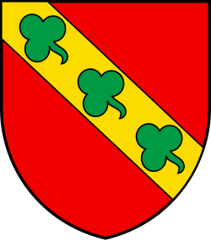
Collonge-Bellerive
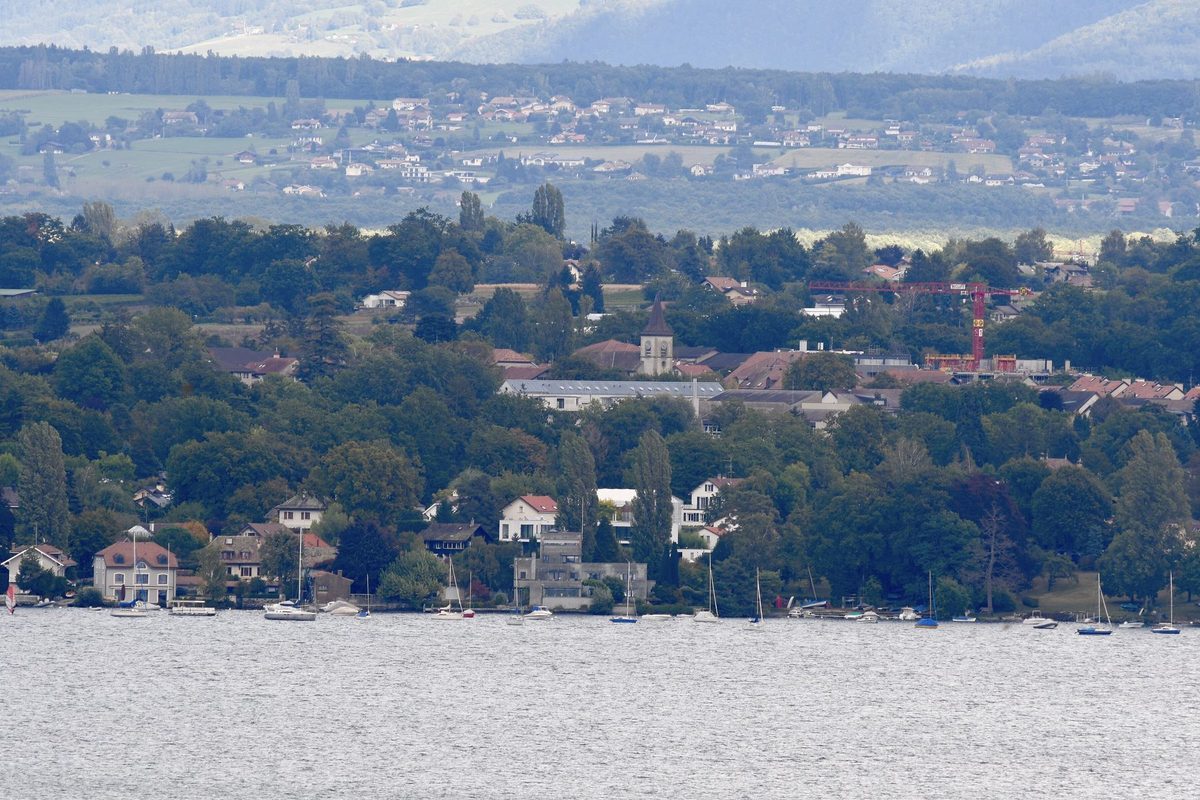
Origin of the name Collonge-Bellerive
Collonge appears in 1153 as « Collonges », Saint-Maurice in 1275 as « Sancto Mauricio ». The form « Collonge sur Bellerive » was reportedly used until 1799. What the name means is not yet known.[1]
Founding of Collonge-Bellerive
Nobody knows who founded the villages, but the shores have been inhabited since prehistory: three submerged lakeshore settlements lie level with the landing stage. The area has also yielded the remains of a Roman estate and a coin hoard buried during the Alemannic invasions. In the Middle Ages Collonge and Saint-Maurice formed parishes, while Vésenaz depended on Vandoeuvres. The Cistercian nunnery of Bellerive, founded in the 12th century, the lords of La Bâtie-Cholay, those of Veigy and the chapter of Saint-Pierre in Genève later shared the lordship. The territory belonged to the County of Geneva, then to Savoy. The French annexation of 1792 united the three village communities into a single municipality, which passed to Sardinia and then to the canton of Geneva.[1]
History of Collonge-Bellerive
Bronze Age. Submerged lakeshore settlements level with the landing stage, including Bellerive I (Late Bronze Age) and an Early Bronze Age settlement near the Pointe-à-la-Bise.[1]
277. A coin hoard, later found within the municipality, is buried during the Alemannic invasions.[1]
12th century. Foundation of the Cistercian nunnery of Bellerive.[1]
1153. First mention of Collonge and its parish, in the form « Collonges ».[1]
1275. First mention of Saint-Maurice, in the form « Sancto Mauricio ».[1]
14th century. The main lords are the abbey of Bellerive, the lords of La Bâtie-Cholay and of Veigy and the chapter of Saint-Pierre in Genève.[1]
1401. The territory, which belonged to the County of Geneva, passes to Savoy.[1]
15th century. A fortified house is mentioned in Vésenaz.[1]
1536. The parishes are united into a single Reformed parish. The abbey of Bellerive is destroyed.[1]
1598. Return to Catholicism.[1]
1668-1672. The Duke of Savoy has the castle of Bellerive built. Until 1792 it serves as a salt store and customs post.[1]
1792. French annexation: Collonge, Vésenaz and Saint-Maurice are united into a single municipality.[1]
1792-1806. Last rebuilding of the church of Saint-Léger in Collonge.[1]
1814. The territory passes to Sardinia.[1]
1816. Incorporation into the canton of Geneva.[1]
19th century. Houses are built by the lake and at La Capite. New cantonal roads Genève-Vésenaz, Vésenaz-Hermance and Vésenaz-Thonon.[1]
After 1945. Rapid urbanisation: the farmland of La Gabiule and La Californie gives way to villa districts.[1]
Early 21st century. More than half of the territory is built up. Farming, horticulture and market gardening continue.[1]
Population of Collonge-Bellerive
Sources and references: [1][2]
| 1816 | 572 |
| 1850 | 803 |
| 1900 | 950 |
| 1950 | 1'830 |
| 1990 | 4'769 |
| 2000 | 6'344 |
| 2010 | 7'621 |
| 2025 | 8'672 |
Historic sites in Collonge-Bellerive
Church of Saint-Léger in Collonge. Church of pre-Romanesque origin, altered or rebuilt four times, most recently in 1792-1806.[1]
Castle of Bellerive. Built in 1668-1672 by the Duke of Savoy, it served as a salt store and customs post until 1792.[1]
Vésenaz. Village of the municipality on the Genève-Thonon road, which depended on the parish of Vandoeuvres. A fortified house is mentioned here in the 15th century.[1]
Saint-Maurice. Village of the municipality, mentioned in 1275, united with Collonge and Vésenaz in 1792.[1]
Hamlets. Cherre, Bellerive, La Repentance and La Capite. La Pallanterie is an industrial zone with a mill and a wine cellar.[1]
Remains in Collonge-Bellerive
Bellerive lakeshore settlements. Three submerged prehistoric settlements level with the landing stage: Bellerive I (Late Bronze Age), one of the 56 Swiss lakeshore settlements on the Unesco World Heritage List. Bellerive II, small and heavily eroded, at a depth of about 3 m, which has yielded only stone objects. A third, Early Bronze Age settlement close to the shore at the Pointe-à-la-Bise.[1]
Roman estate. Remains of a Roman estate. A coin hoard buried during the Alemannic invasions of 277 was also found within the municipality.[1]
Sources
- Dictionnaire historique de la Suisse (version allemande), « Collonge-Bellerive » (Pierre Corboud, Georges Curtet)
- Office cantonal de la statistique (OCSTAT), Mémento statistique du canton de Genève 2026, tableau Population résidante par commune, en 2025
- Office fédéral de topographie swisstopo, service de recherche geo.admin.ch (coordonnées)
Localities of the municipality with a page
Other villages near Collonge-Bellerive
Missing information, or do you have a source? Suggest a correction or addition. Every submission is checked before it's published.
Suggest a change