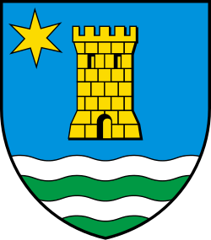
Meinier
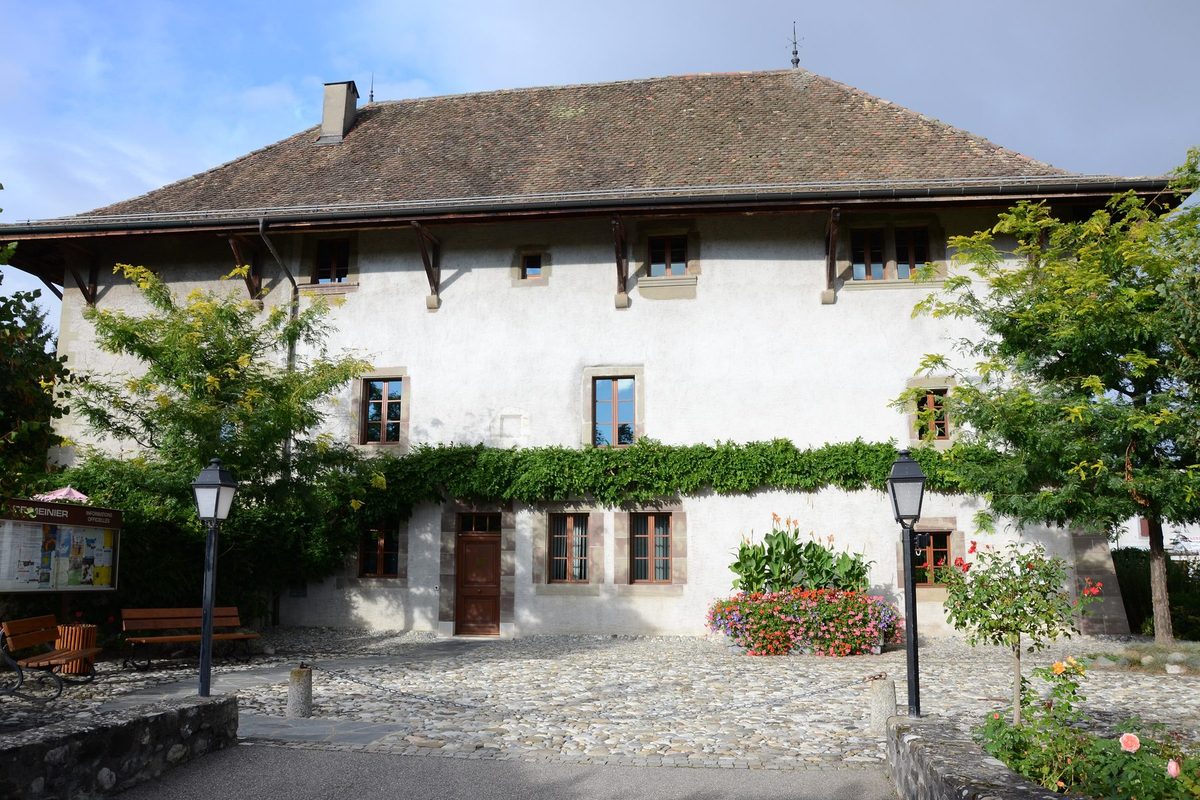
Origin of the name Meinier
The form « de maniaco » is found in 1153, then « Meignier » around 1344. What the name means is not yet known.[1]
Founding of Meinier
Nobody knows who founded the village. The ground bears traces of occupation going back to the 1st century BC. The church of Saints-Pierre-et-Paul was founded there in the early Middle Ages and in the 12th century appears among the possessions of the monastery of Saint-Jean-hors-les-Murs in Genève. In the Middle Ages several castles were built in this largely marshy area: Compois, held by the de Compey family, vassals of the Count of Savoy. Corsinge, built at the beginning of the 14th century by vassals of the Counts of Genève. Roillebot (Rouelbeau), built at the same time by the knight Humbert de Cholay, agent of the lords of Faucigny. Meinier remained Savoyard until 1816, apart from the Bernese annexation of 1536-1567, and formed a single municipality with Choulex from 1798 to 1816. That year the municipality of Meinier was constituted on the territory of the former parish.[1][2]
History of Meinier
1st century BC. First traces of occupation on the ground where the church will be built.[1]
Early Middle Ages. Foundation of the church of Saints-Pierre-et-Paul.[1]
1153. First mention in the form « de maniaco ». In the 12th century the church belongs to the monastery of Saint-Jean-hors-les-Murs in Genève.[1]
1256. Gérold de Compey, from a family of vassals of the Count of Savoy, gives the castle of Compois to his nephew Pierre.[1]
1318. First mention of the bastide of Rouelbeau, then a wooden fortified residence, built by the knight Humbert de Cholay for the lords of Faucigny. At the beginning of the 14th century vassals of the Counts of Genève build the castle of Corsinge.[1]
1339. After this date Humbert de Cholay rebuilds Rouelbeau in stone. The castle serves as a garrison post.[4]
around 1344. The name appears in the form « Meignier ».[1]
1355. Rouelbeau is ceded to Savoy.
1412. The parish counts 26 hearths; 40 hearths in 1518.[1]
1536. Bern annexes the bailiwick of Thonon (1536-1567) and introduces the Reformed religion in Meinier.[1]
17th century. At the beginning of the century Catholicism is restored.[1]
1683. Rouelbeau, which had passed to the Baron de Lullin, goes to Jacques de Loys, who lets it fall into ruin.
1798. Choulex and Meinier form a single municipality, until 1816. The ruins of Rouelbeau are later used as a quarry.[2]
1816. The municipality of Meinier is constituted on the territory of the former parish.[1]
20th century. At the beginning of the century the marshes of the municipality are drained and the first wine cellar of the canton is founded at La Pallanterie.[1]
1950. The population grows with the development of villa districts and the construction of apartment buildings in the village centre.[1]
2001. Start of the archaeological excavations at Rouelbeau, followed from 2005 by the redevelopment of the site and the restoration of the Seymaz and the Sionnet marshes.
Population of Meinier
Sources and references: [1][6]
| 1412 | 26 hearths (households) |
| 1443 | 35 hearths (households) |
| 1481 | 35 hearths (households) |
| 1518 | 40 hearths (households) |
| 1816 | 503 |
| 1900 | 479 |
| 1950 | 497 |
| 1970 | 1'288 |
| 2000 | 1'696 |
| 2025 | 2'111 |
Historic sites in Meinier
Church of Saints-Pierre-et-Paul. Parish church founded in the early Middle Ages on a site occupied since the 1st century BC, a possession in the 12th century of the monastery of Saint-Jean-hors-les-Murs in Genève. François de Sales consecrates the altar there on 11 October 1611. It was reportedly rebuilt entirely at the beginning of the 18th century, then restored in 1984.[1]
Castle of Compois. Castle of the de Compey family, vassals of the Count of Savoy. Gérold de Compey gives it in 1256 to his nephew Pierre.[1]
Castle of Corsinge. Castle built at the beginning of the 14th century by vassals of the Counts of Genève.[1]
La Pallanterie. Place where the first wine cellar of the canton is founded at the beginning of the 20th century.[1]
Hamlets. Meinier, Carre d'Amont, Carre d'Aval (Le Carre), Compois, Essert and Corsinge.[1][7]
Remains in Meinier
Ruins of Rouelbeau. Former castle of La Bâtie-Cholay, or Roillebot, in the marshy plain of the Seymaz: a wooden bastide mentioned in 1318, rebuilt in stone after 1339, ceded to Savoy in 1355, left to ruin after 1683 and used as a quarry after 1798. Excavated from 2001, the ruins have been presented to the public from 2005. In 1921 the site became the first monument placed under protection by the canton.[4]
Ancient traces. Traces of occupation going back to the 1st century BC on the ground of the church of Saints-Pierre-et-Paul.[1]
Legends of Meinier
The White Lady of Rouelbeau. According to tradition, a White Lady haunts the castle of Rouelbeau. She is said to be the repudiated wife of Humbert de Cholay.
Sources
- Dictionnaire historique de la Suisse, « Meinier » (Jean Terrier)
- Dictionnaire historique de la Suisse, « Choulex » (Dominique Zumkeller)
- Office fédéral de la protection de la population, Inventaire PBC, « Ruines de Rouelbeau » (KGS 02604)
- République et canton de Genève, archéologie genevoise, « Le château de Rouelbeau - Meinier »
- L'Echo Magazine, « Une ruine près de Genève » (château de Rouelbeau, non daté)
- Office cantonal de la statistique (OCSTAT), Mémento statistique du canton de Genève 2026, tableau Population résidante par commune, en 2025
- geo.admin.ch, service de recherche de swisstopo (coordonnées)
Localities of the municipality with a page
Other villages near Meinier
Missing information, or do you have a source? Suggest a correction or addition. Every submission is checked before it's published.
Suggest a change