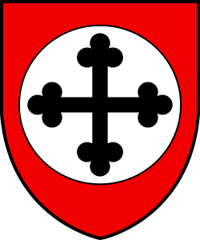
Eischoll
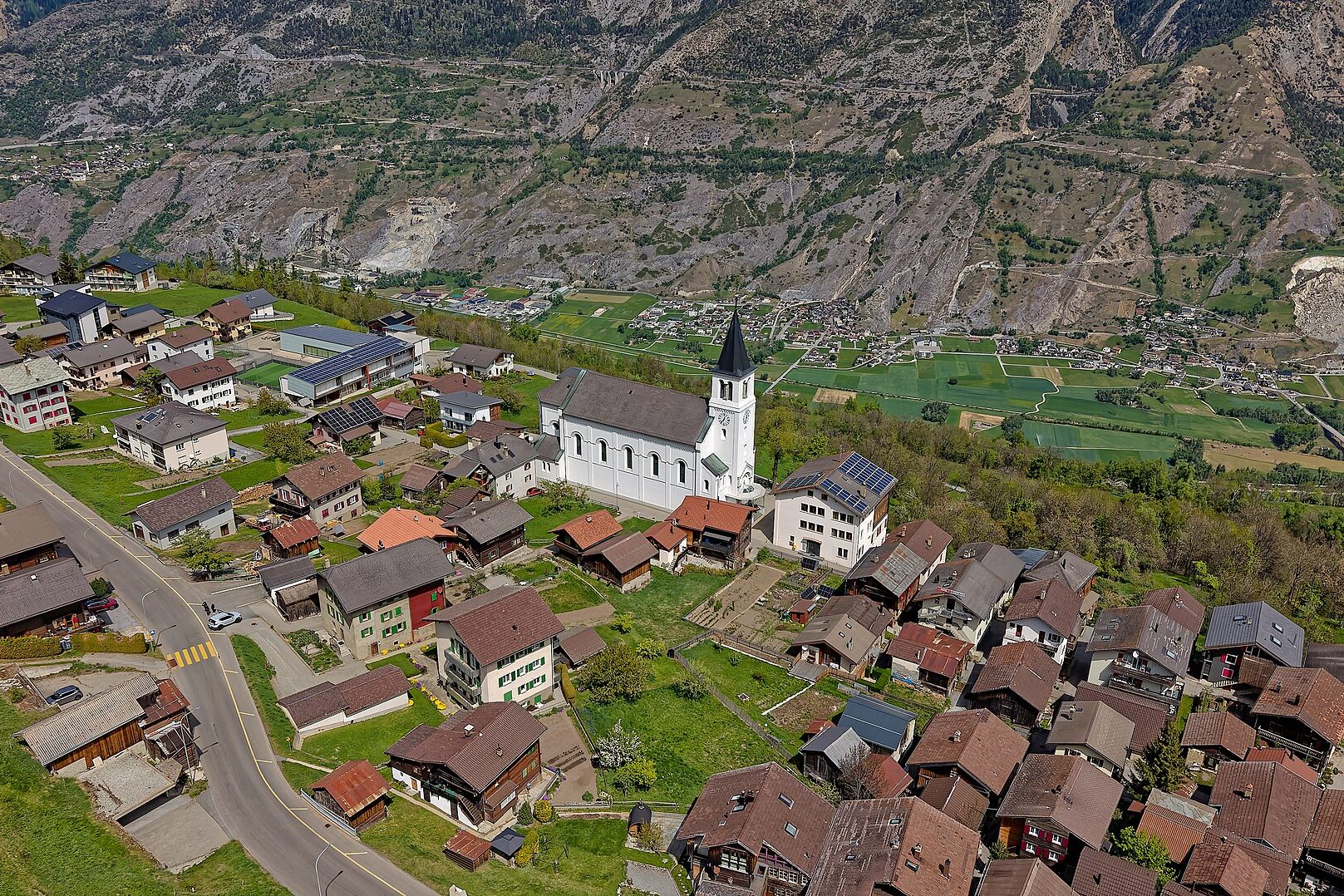
Origin of the name Eischoll
The village appears as « Oiselz » (1250), « Oysol » (1336) and « Eysoll » (1418). The origin of the name has not yet been explained.[1]
Founding of Eischoll
Eischoll is a village at an altitude of 1'230 metres on a stepped terrace on the left bank of the Rhône, in the Rarner Schattenberge. Until 1376 it depended on the lords de la Tour (Niedergesteln). Afterwards, until the buy-out of 1790, it was a subject territory of the five Upper Valais dizains, attached to the castellany of Niedergesteln. The communal statutes (« Bauernzunft ») were issued in 1538. Around 1730 Ried, Oberhäusern and Brunnen, the core of the present village, joined to form the municipality. Oberhäusern, the former main centre, remained inhabited until around 1900. Its communal house, dated 1656, fell into ruin in the 1920s. Eischoll belonged to the parish of Niedergesteln until 1766. After a fire in 1877, the village was largely rebuilt. Subsistence farming (livestock, dairy products, crops, fruit trees) predominated until the 1960s, supplemented by viticulture on the plain.[1]
History of Eischoll
1250. Recorded as « Oiselz ».[1]
1336. Recorded as « Oysol ».[1]
1376. End of dependence on the lords de la Tour (Niedergesteln). Eischoll becomes a subject territory of the five Upper Valais dizains, within the castellany of Niedergesteln.[1]
1418. Recorded as « Eysoll ».[1]
1538. Communal statutes (« Bauernzunft »).[1]
17th century. Deeds of purchase of vineyards in Salgesch.[1]
1656. Date borne by the communal house of Oberhäusern.[1]
around 1730. Ried, Oberhäusern and Brunnen join to form the present municipality.[1]
1766. Eischoll separates from the parish of Niedergesteln and becomes an independent parish.[1]
1790. Buy-out of the rights of the five dizains.[1]
1877. Fire; the village is largely rebuilt.[1]
1886. Construction of the neo-Romanesque church.[1]
around 1900. Oberhäusern, the former main centre, ceases to be inhabited.[1]
1920s. The communal house of Oberhäusern falls into ruin.[1]
1946. A cable car, the first in the Upper Valais, links the village to the Rhône valley.[1]
1966. First ski lift.[1]
1970. Completion of the road to the valley.[1]
2000. About two thirds of the working population work outside the village.[1]
2001. 35'416 tourist overnight stays.[1]
Population of Eischoll
Sources and references: [1][2]
| 1802 | 270 inhabitants |
| 1850 | 340 inhabitants |
| 1900 | 460 inhabitants |
| 1950 | 523 inhabitants |
| 2000 | 500 inhabitants |
| 2025 | 460 inhabitants |
Historic sites in Eischoll
Parish church. Neo-Romanesque church built in 1886, which marks the village skyline.[1]
Oberhäusern. Former main centre of the municipality, inhabited until around 1900. Its communal house, dated 1656, fell into ruin in the 1920s.[1]
Hamlets of Zuben, Ried, Lohn, Breyen and Tscherggen. Hamlets that today contain only farm buildings and chalets.[1]
Cable car. Opened in 1946, the first cable car in the Upper Valais, it links the village to the Rhône valley.[1]
Sources
- Historisches Lexikon der Schweiz, « Eischoll » (Werner Bellwald, version du 14.11.2005)
- Office fédéral de la statistique (OFS), STATPOP, chiffres provisoires au 31.12.2025, via citypopulation.de
- geo.admin.ch, recherche de lieux (coordonnées)
Localities of the municipality with a page
Other villages near Eischoll
Missing information, or do you have a source? Suggest a correction or addition. Every submission is checked before it's published.
Suggest a change