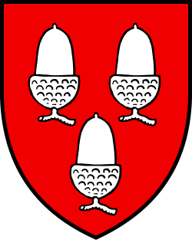
Essert-Pittet
«Fouette-Grenouilles» (frog-whippers): the inhabitants' nickname reportedly recalls the habit of beating the water of the ponds at night to silence the frogs.
Entry based on 6 sources · Our method · Reusable text (CC BY-SA)
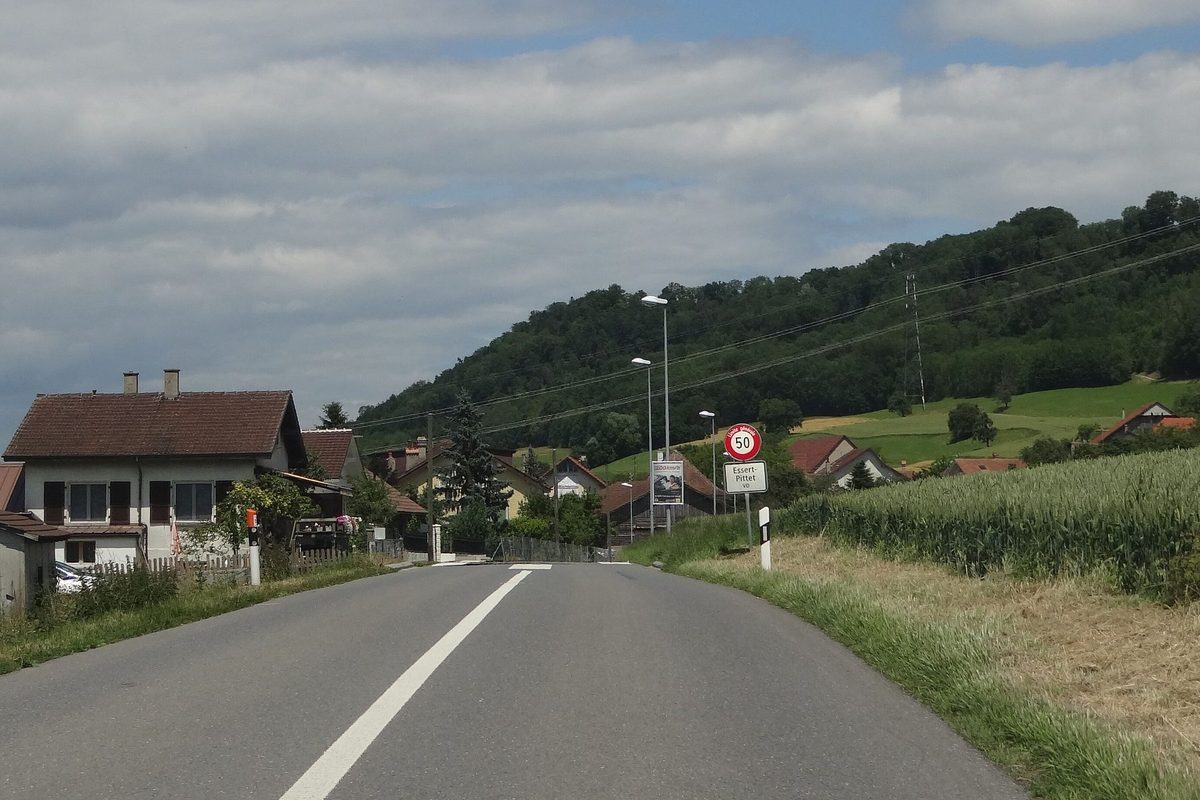
Origin of the name Essert-Pittet
The name is said to come from the word «essert», land cleared for cultivation. The place is mentioned in 1100 as «Exertus», then in 1453 as «Essers». The form «Essert-Pittet» appears before 1764. Where the second element, «Pittet», comes from is not known.[1][2]
Founding of Essert-Pittet
The village enters history in 1100, through a donation in favour of the Romainmôtier priory. In the 13th century it belonged to the seigneury of Belmont. Essert-Pittet formed a commune before 1448, then became a separate seigneury in the 15th century.[1][2][3]
History of Essert-Pittet
Roman period. Numerous Roman remains, including tiles and coins, have been found in the area, as well as medieval remains.[1]
1100. First mention of the locality, under the name «Exertus», in a donation in favour of the Romainmôtier priory.[1][2]
13th century. The village becomes part of the seigneury of Belmont.[1][2][3]
before 1448. Essert-Pittet is constituted as a commune.[1][2][3]
1453. The place is mentioned under the name «Essers».[1]
15th century. Essert-Pittet is raised to a seigneury in its own right, distinct from Belmont.[1][2]
after 1536. After the Bernese conquest of the Pays de Vaud, the seigneury passes to the de Hennezel family, who will keep it until the end of the Ancien Régime.[1][2][3]
1609. Louis de Hennezel has a château built on his lands.[1][2]
before 1764. The village takes the name «Essert-Pittet».[1]
1705-1708 and 1746. The village church, which had replaced an old chapel dedicated to Saint John the Baptist, is rebuilt.[1][2]
early 19th century. The de Hennezel family château is destroyed by fire.[1][2]
1798-2007. Essert-Pittet belongs to the district of Yverdon.
1855. Opening of a station on the Yverdon-Bussigny railway line.[1][2]
1981-1990. The construction of the A1 (1981) and A9 (1990) motorways helps stop the village's demographic decline, easing the settlement of new residents while maintaining local farming and market gardening activity.[1][2]
2008. The commune is assigned to the district of Jura-Nord vaudois on 1 January 2008.
September 2015. On 13 September the merger of Essert-Pittet with Chavornay and Corcelles-sur-Chavornay is approved by vote in all three communes.[3]
1 January 2017. The merger takes effect: Essert-Pittet becomes a locality of the new commune of Chavornay.[1][2][3][4]
Population of Essert-Pittet
Sources and references: [1][2]
| 1764 | 91 |
| 1850 | 124 |
| 1900 | 123 |
| 1950 | 143 |
| 1970 | 117 |
| 1980 | 95 |
| 2000 | 125 |
Families of Essert-Pittet
Citizen families before 1800. Buriquet, Dupuis and Miéville, without a precise date.[6]
In the 19th century. The Blanchong family (from Germany) obtains citizenship in 1892.[6]
From 1901 to 1962. Several families come from abroad: from France (Laval in 1902 and Lamy and Monard in 1924), from Germany (Höflin in 1923) and from Italy (Zaffaroni in 1953). From Switzerland come the Burri family from Wahlern BE (1956) and the Buriquet family from Eriswil BE (1961). The last family registered, in 1961, is the Buriquet family.[6]
Notable people of Essert-Pittet
Louis de Hennezel. Lord of Essert-Pittet, he had a castle built there in 1609. The building burned down in the early 19th century.[1]
Economy of Essert-Pittet, past and present
Fields and market gardening. In the 19th century the draining of the Orbe plain strengthened the village's farming and market gardening. A motorway junction crosses its territory.[1]
Historic sites in Essert-Pittet
The Essert-Pittet church. Religious building rebuilt in 1705-1708, then again in 1746, on the site of an old chapel dedicated to Saint John the Baptist.[1][2]
Essert-Pittet railway station. Station opened in 1855 on the Yverdon-Bussigny railway line.[1][2]
Remains in Essert-Pittet
Remains of the Hennezel château. The château that Louis de Hennezel had built in 1609 burned down in the early 19th century. Its exact location and what remains of it are not yet known.[1][2]
Roman remains. Numerous Roman remains, including tiles and coins, have been unearthed in the territory of the former commune.[1]
Medieval remains. Medieval remains are also reported in the area, though their nature is not known.[1]
Legends of Essert-Pittet
The «Fouette-Grenouilles» nickname. The inhabitants of Essert-Pittet are said to bear the nickname «Fouette-Grenouilles» (frog-whippers), shared with those of Chevilly and Denens. It reportedly recalls the practice of beating the water of ponds to silence the frogs at night, though this is not certain.
Sources
- Philippe Heubi, « Essert-Pittet », Dictionnaire historique de la Suisse, version du 11.01.2017
- Historisches Lexikon der Schweiz, Artikel «Essert-Pittet» (version allemande)
- Conseil d'État du canton de Vaud, exposé des motifs et projet de décret sur la fusion des communes de Chavornay, Corcelles-sur-Chavornay et Essert-Pittet (n° 259), novembre 2015
- Canton de Vaud, Loi sur le découpage territorial (LDecTer, RSV 132.15) du 30 mai 2006
- État de Vaud, communiqué du 12.07.2007, « Les préfètes et les préfets sont attribués aux nouveaux districts »
- Register of Swiss Surnames, 3rd edition (1989), search Commune "Essert-Pittet", Canton VD
Published by Sébastien Jörg ·
Other villages near Essert-Pittet
Missing information, or do you have a source? Suggest a correction or addition. Every submission is checked before it's published.
Suggest a change