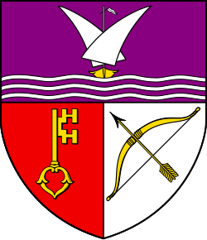
Les Eaux-Vives
Origin of the name Les Eaux-Vives
The name is that of a place below Montchoisy where numerous springs gushed out, supplying Genève with drinking water. It is attested in 1442 in the Latin form « Fontium Vivorum ».[1]
Founding of Les Eaux-Vives
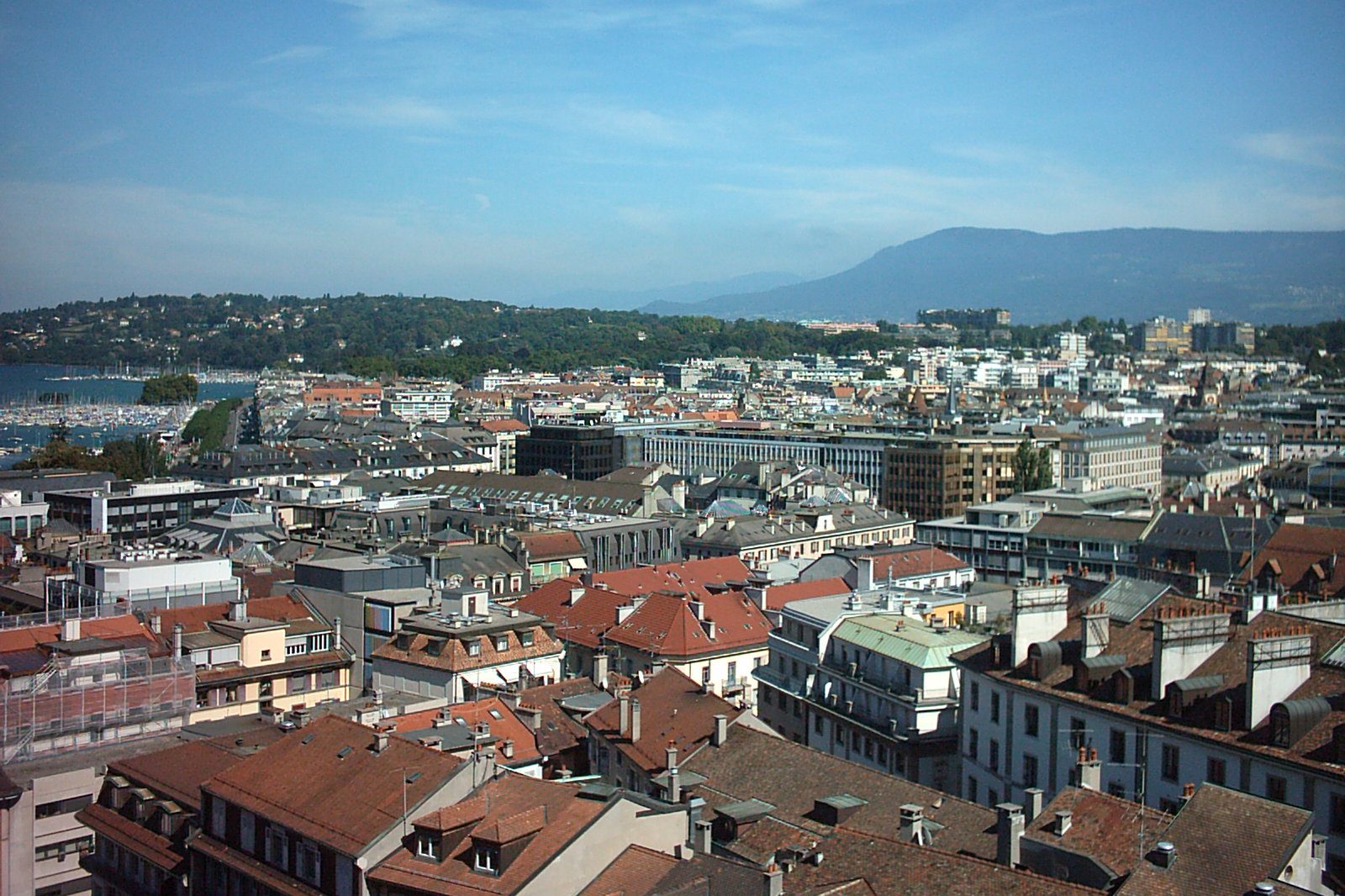
Before becoming a district, Les Eaux-Vives was a place on the left bank of the lake, rich in springs. The area was occupied early: lakeside settlements in the Neolithic and the Bronze Age, a villa in Roman times. Before the Reformation it belonged to the parish of La Madeleine. The suburbs built in front of the walls of Genève were razed by the townspeople in the 1530s and 1540s. The 18th century repopulated them, notably around the calico-printing works. After the annexation of Genève by France in 1798, Les Eaux-Vives became a political municipality, comprising the districts of Contamines, Florissant, Malagnou, Montchoisy, Villereuse and Vollandes. Its voters opposed its merger into the municipality of Genève, in vain.[1][2]
History of Les Eaux-Vives
Neolithic and Bronze Age. Lakeside settlements on the shore.[1]
1st century. A Roman villa is built in the second half of the century on the site of the present Parc La Grange.[1]
12th century. The Templars found a church that gives its name to the faubourg du Temple.[1]
1442. Mention of the place in the form « Fontium Vivorum ».[1]
1444. Conrad Witz paints The Miraculous Draught of Fishes for the Saint-Pierre altarpiece: the oldest known depiction of Les Eaux-Vives.[1]
1529. Statutes of the Société de l'exercice du jeu de l'arc.[1]
1530-1540. The suburbs are destroyed by the townspeople for the defence of the city.[1]
1727. Les Eaux-Vives are attached to the parish of Cologny. A pastor's post is created there in 1831.[1]
1785. The calico-printing works, including that of Jean-Philippe Petit, begin to decline; they disappear around 1830-1835.[1]
1800. The municipal council of the new political municipality meets for the first time on 28 December.[1]
1836-1838. Construction of the port de la Scie.[1]
1850. Demolition of the fortifications of Genève begins.[1]
1864. Opening of the Rive-Chêne-Bougeries tramway.[1]
1888. The French build the Vollandes station, terminus of the Annemasse-Genève line. The same year, the Roman villa is discovered in the present Parc La Grange.[1]
1913. After the bankruptcy of the Luna Park, the municipality buys the Parc des Eaux-Vives.[7]
1930. The constitutional law of 22 March, approved by the people of the canton on 18 May, decides the merger. The voters of Les Eaux-Vives had rejected it by 1'256 no to 1'212 yes.[1]
1931. The merger is carried out on 10 July: Les Eaux-Vives become a district of the City of Genève until 1958.[1][2]
Population of Les Eaux-Vives
Sources and references: [1][3]
| 1850 | 2'000 |
| 1900 | 11'872 |
| 1930 | 20'917 (or 21'685; last figure before the merger) |
Historic sites in Les Eaux-Vives
Parc La Grange. William Favre bequeathed this estate to the City of Genève, date uncertain, and it became a public park. A Roman villa was discovered there in 1888. Cultural property of national importance (federal PCP inventory).[1][6]
Parc des Eaux-Vives. Private property until 1898, then an amusement park. The municipality bought it in 1913, after the bankruptcy of the Luna Park.[7]
Temple des Eaux-Vives. Built in 1842 by Jacques-Louis Brocher.[4]
Mairie des Eaux-Vives. The former town hall of the municipality was reportedly built in 1905-1909 by Léon Werner Bovy. Cultural property of regional importance (federal PCP inventory).[6]
Remains in Les Eaux-Vives
Roman villa in the Parc La Grange. A villa from the second half of the 1st century AD, discovered in 1888 in the present Parc La Grange.[1]
Lakeside settlements. Remains of Neolithic and Bronze Age lakeside villages on the shore.[1]
Sources
- Dictionnaire historique de la Suisse, « Eaux-Vives, Les » (Jacques Barrelet), version de 1998 remaniée le 07.02.2018
- Ville de Genève, Compte rendu de l'administration municipale pendant l'année 1931 (1932)
- Bureau de statistique du canton de Genève, Rapport du Bureau de statistique pendant l'année 1931 (1932), tableau 4
- Dictionnaire historique de la Suisse, « Brocher, Jacques-Louis » (Armand Brulhart), version de 1997 remaniée le 18.02.2010
- Inventaire fédéral des biens culturels (PBC), fiche 2484 « Parc La Grange », texte de la Société d'histoire de l'art en Suisse (Guide artistique de la Suisse)
- Office fédéral de la protection de la population, Inventaire PBC, liste cantonale GE (état au 1.1.2026) : n° 2484, parc et campagne de la Grange, objet A ; n° 2544, mairie des Eaux-Vives, objet B
- Ville de Genève, « Anecdotes du quartier Eaux-Vives Cité »
- geo.admin.ch, service de recherche de swisstopo (coordonnées)
Other villages near Les Eaux-Vives
Missing information, or do you have a source? Suggest a correction or addition. Every submission is checked before it's published.
Suggest a change