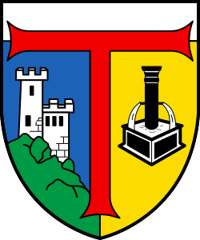
Törbel
Origin of the name Törbel
The place is recorded in 1034 as « Dorbia ». The etymology is unexplained. In Upper Valais dialect the name is said to be « Terbil ».[1]
Founding of Törbel
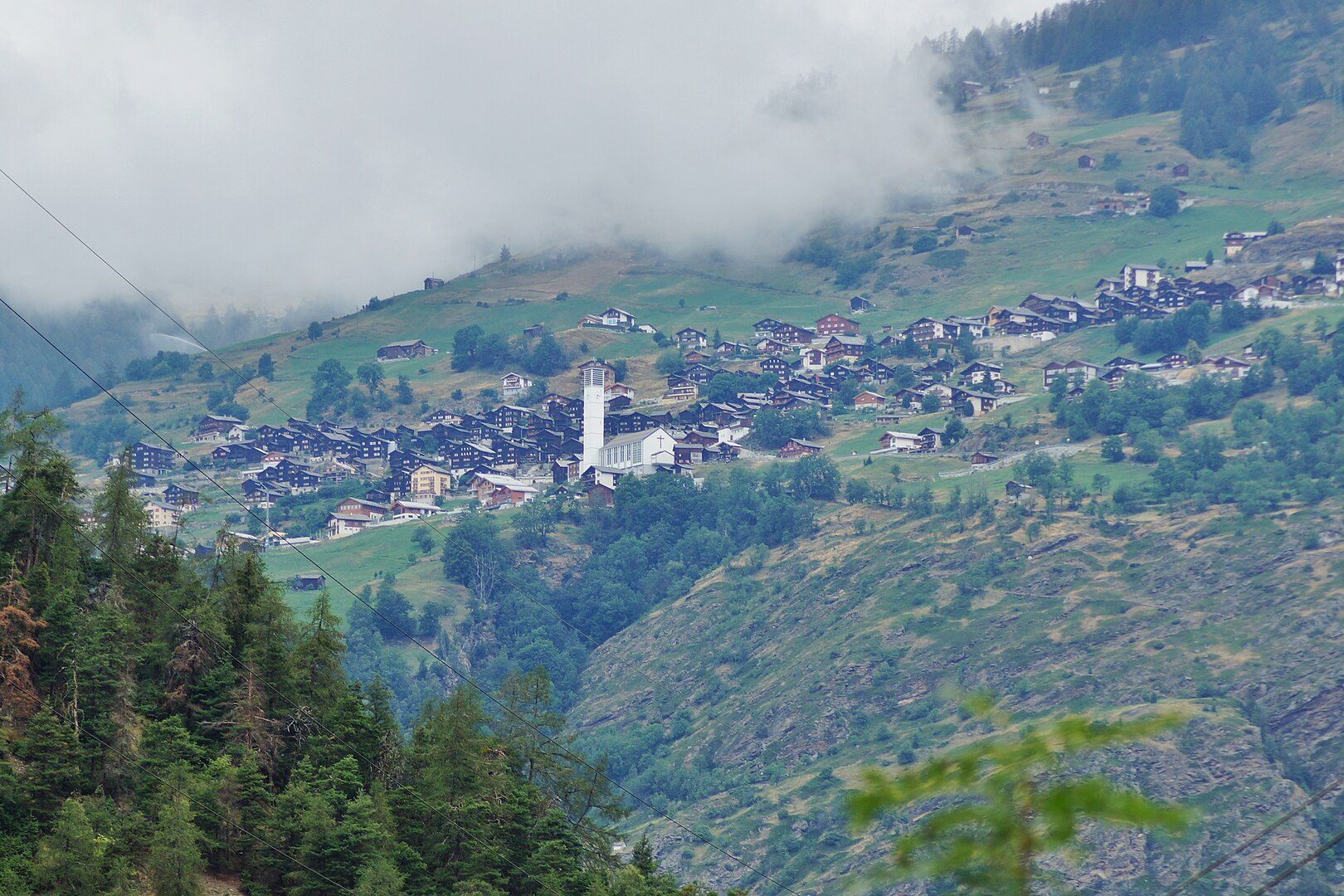
Törbel lies in the Visp valley (Vispertal), high above Stalden. The municipality includes Törbel, Burgen, Feld, Brunnen and six other hamlets. Cup-marked stones and cist graves show early settlement. In 1333 the community bought tithe rights from free village nobles. Water use was regulated in 1392 and 1400, and the Bauernzunft (communal organisation) was founded in 1463. In 1514 Törbel acquired the Oberaar alp from the Hasli valley (Haslital), which it sold on to the Bernese power company (Bernische Kraftwerke) in 1948. Attached to the parish of Visp in the 13th century, then to Stalden from 1535, Törbel became a dependent parish in 1649 and a full parish in 1686. The economy rested on farming, notably the use of common land, and later on tourism at the Moosalp and on industry in Visp, especially Lonza.[1]
History of Törbel
1034. Recorded as « Dorbia ».[1]
13th century. Törbel belongs to the parish of Visp.[1]
1333. Tithe rights are bought from free village nobles.[1]
1392 and 1400. Water use is regulated.[1]
1463. The Bauernzunft (communal organisation) is founded.[1]
1483. A statute reportedly regulated the use of Törbel's common land (Allmend).
1507. Statute on alpine pastures and common land.[1]
1514. The Oberaar alp is acquired from the Hasli valley.[1]
1531. Declaration of burgher rights.[1]
1533. First burghers' register.[1]
1535. Törbel now belongs to the parish of Stalden.[1]
1642. St. Theodule's church is built.[1]
1649. Törbel becomes a dependent parish.[1]
1686. Törbel becomes a full parish.[1]
around 1830. The fulling mill is built. It is used until the 1950s.[2]
1948. The Oberaar alp is sold on to the Bernese power company.[1]
1962. The 1642 church is replaced by a new building.[1]
1981. Publication of « Balancing on an Alp », Robert McC. Netting's study of Törbel.[1]
Population of Törbel
Sources and references: [1][3]
| 1798 | 350 inhabitants |
| 1850 | 508 inhabitants |
| 1900 | 571 inhabitants |
| 1950 | 693 inhabitants |
| 2000 | 498 inhabitants |
| 2025 | 513 inhabitants |
Historic sites in Törbel
St. Theodule's church. The church of 1642, built shortly before Törbel became a dependent parish (1649) and then a full parish (1686), was replaced by a new building in 1962.[1]
Mill, fulling mill and craft buildings. Group of old buildings in the village centre, by the Törbelbach: mill, fulling mill built around 1830 and used until the 1950s, wine press of 1864, communal bakehouse and a 300-year-old barn. An early 19th-century mill was reportedly restored in 1984-1985, and a sawmill is said to have run until 1930.[2]
Moosalp. Alpine pasture and tourist area of the municipality, which has joined traditional farming in the local economy.[1]
Remains in Törbel
Cup-marked stones and cist graves. Remains that show early settlement of Törbel's territory.[1]
Sources
- Historisches Lexikon der Schweiz (version allemande du Dictionnaire historique de la Suisse), « Törbel » (Alois Grichting, version du 18.12.2013)
- alpen-guide.de (Schneemenschen GmbH), « Törbel: Rundgang im Dorf » (visite « Urchigs Terbil »)
- Office fédéral de la statistique (OFS), STATPOP, chiffres provisoires au 31.12.2025, via citypopulation.de
- geo.admin.ch, recherche de lieux (coordonnées)
Other villages near Törbel
Missing information, or do you have a source? Suggest a correction or addition. Every submission is checked before it's published.
Suggest a change