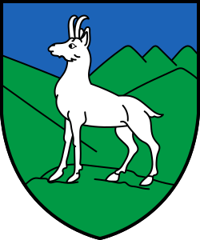
Trient
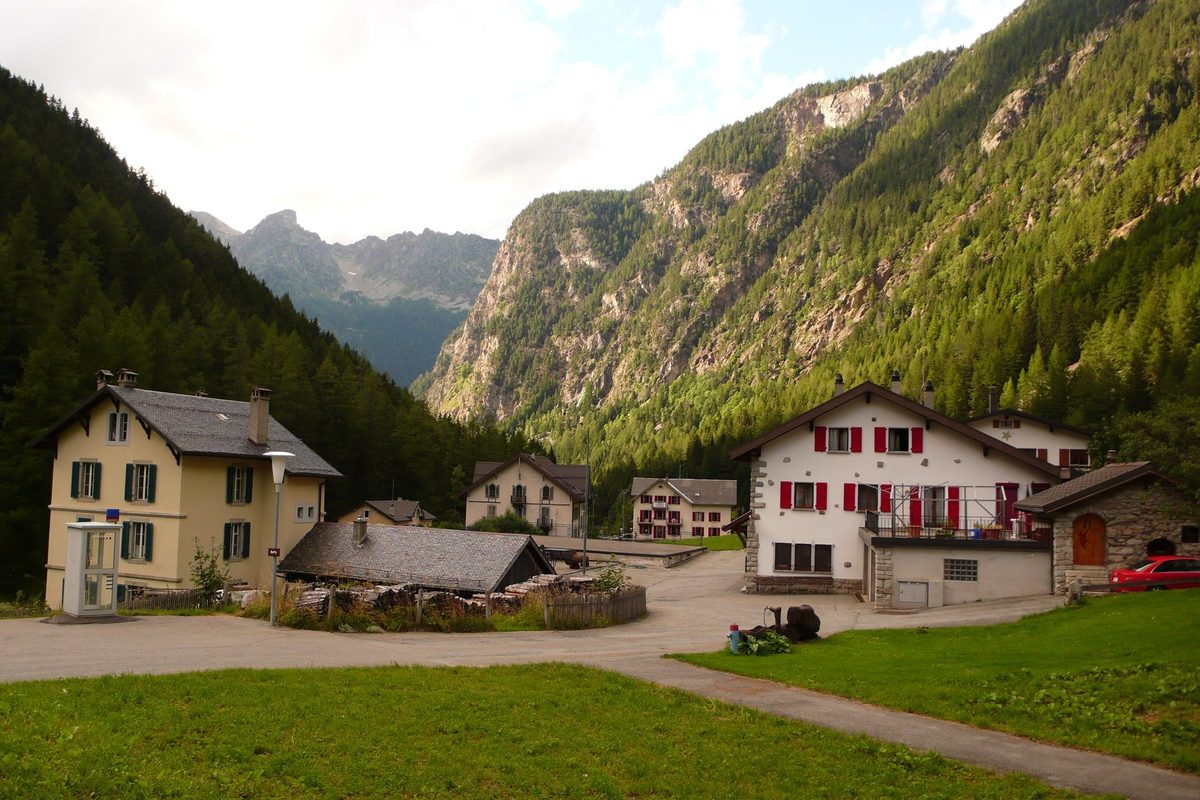
Origin of the name Trient
The place appears in the forms « Trioncia » (between 1025 and 1031) and « Triens » (1298). What the name means is not yet known.[1]
Founding of Trient
The hamlet of Trient was originally only a mayen (spring pasture), while Les Jeurs formed a small community around 1350, still belonging to the quarter of Martigny-Combe. In 1377 the bishop of Sion gave Nantelme, vidomne of Martigny, the forest and iron mine of Trient. In church matters Trient depended on Martigny. A chapel is said to have existed as early as 1286. Raised to a rectorate in 1830 and a parish in 1868, Trient only fully separated from Martigny in 1893, the year the church was built. Besides livestock farming, the inhabitants cut ice from the Trient glacier in the second half of the 19th century, and summer tourism developed between 1870 and 1906. The inhabitants voted in 1899 to separate from Martigny-Combe, and the municipality officially came into being in 1900. A very large municipality on the French border, on the Col de la Forclaz road, Trient has 22 hamlets, including Gillot, the chief place, and Les Jeurs.[1]
History of Trient
1025-1031. Mentioned in the form « Trioncia ».[1]
1286. A chapel is said to have existed already.[1]
1298. Mentioned in the form « Triens ».[1]
around 1350. Les Jeurs form a small community, while belonging to the quarter of Martigny-Combe.[1]
1377. The bishop of Sion gives Nantelme, vidomne of Martigny, the forest and iron mine of Trient.[1]
1657. Chapel at Les Jeurs.[1]
1830. Trient is raised to a rectorate.[1]
1868. Trient becomes a parish.[1]
1870-1906. Summer tourism develops, with seven hotels built.[1]
1878. Three schools: at Trient, Les Jeurs and Litroz.[1]
1893. The church is built; the church separation from Martigny is complete.[1]
1899. The inhabitants vote to separate from Martigny-Combe.[1]
1900. The municipality of Trient officially comes into being.[1]
1948. The Les Jeurs school closes. The building is now the library.[1]
1957. The new Forclaz road between Martigny and Chamonix opens.[1]
Population of Trient
Sources and references: [1][3]
| 1900 | 329 |
| 1950 | 188 |
| 2000 | 130 |
| 2025 | 181 |
Historic sites in Trient
Church of Trient. Built in 1893, the year in which Trient, a parish since 1868, completed its church separation from Martigny.[1]
Les Jeurs. Hamlet that formed a small community around 1350. It has a chapel of 1657 and had a school until 1948, now the library.[1]
Trient glacier. In the second half of the 19th century the inhabitants cut ice from the glacier, alongside livestock farming.[1]
Col de la Forclaz. The pass, at 1'527 m, is crossed by a road opened in 1957 between Martigny and Chamonix, which replaced the 19th-century road, itself the successor of the mule track.[1][2]
Remains in Trient
Iron mine. In 1377 the bishop of Sion gave Nantelme, vidomne of Martigny, the forest and iron mine of Trient. The municipality is said to have devoted an archaeological lecture to the Tseppes iron mines.[1]
Sources
- Dictionnaire historique de la Suisse, « Trient » (David Rey, version du 15.03.2012)
- Commune de Trient, site officiel (présentation, col de la Forclaz, conférence sur les mines de fer des Tseppes)
- Office fédéral de la statistique (OFS), STATPOP, chiffres provisoires au 31.12.2025, via citypopulation.de
- geo.admin.ch, recherche de lieux (coordonnées)
Localities of the municipality with a page
Other villages near Trient
Missing information, or do you have a source? Suggest a correction or addition. Every submission is checked before it's published.
Suggest a change