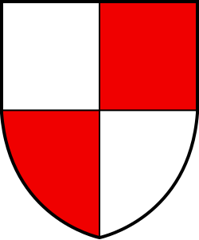
Chamoson
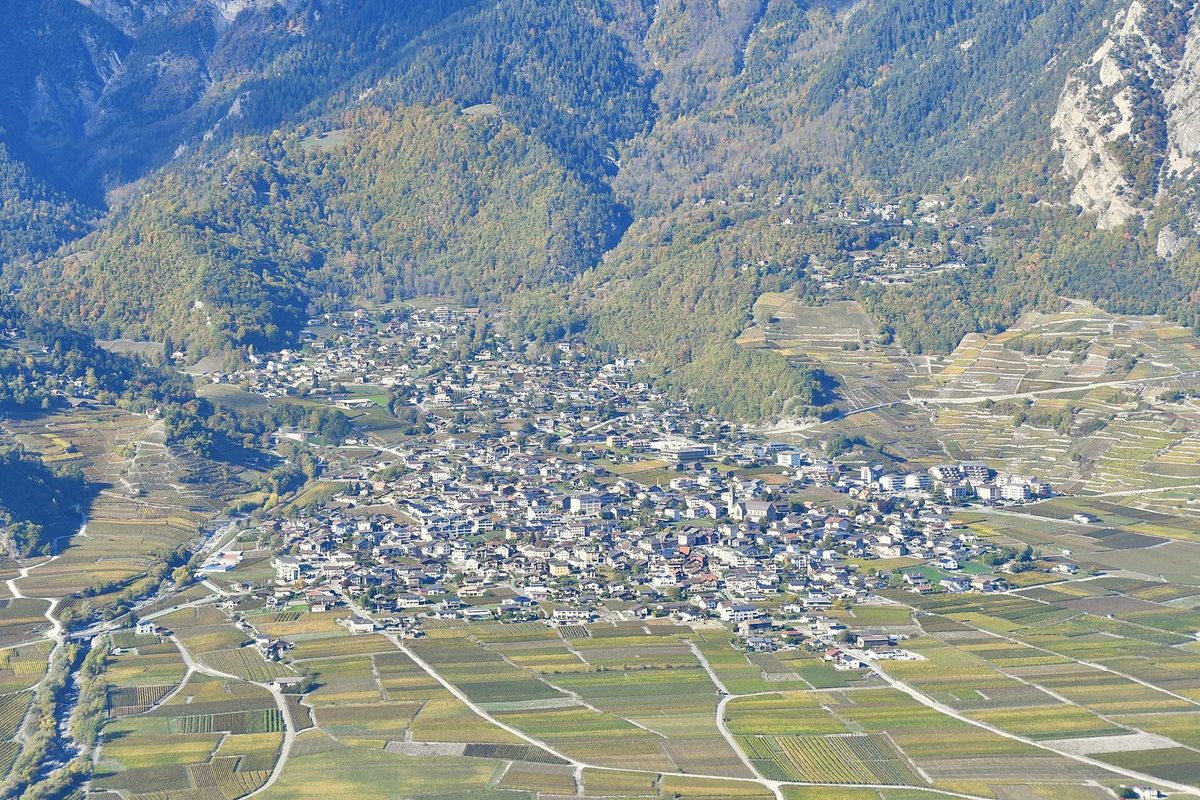
Origin of the name Chamoson
« Camusia » is found in 1050 and « Scamosun » in 1233. The name would refer, by ellipsis, to the estate of a certain Camusius, though this is not established. In German the village was reportedly once called Tschamboss.[1]
Founding of Chamoson
Nobody knows who founded the village, but the site has been occupied since the Neolithic, as an axe shows, and a Late Bronze Age settlement has been found there. From the 11th century Chamoson was part of the lordship of Ardon-Chamoson, which belonged to the episcopal mensa of Sion and also included Ardon, Saint-Pierre-de-Clages and Grugnay. A castle, Chavey, is attested there in the second half of the 13th century. Distinct since the Middle Ages, the communities of Chamoson and Ardon only fully separated in the 19th century. The vineyard spread over the Losentse fan in the 20th century, after major drainage and irrigation works.[1][2]
History of Chamoson
Neolithic. Neolithic remains, including an axe. A Late Bronze Age settlement is also attested.[1]
11th century. Chamoson is part of the lordship of Ardon-Chamoson, which belongs to the episcopal mensa of Sion.[2]
1050. Mentioned as « Camusia ».[1]
1233. Mentioned as « Scamosun ».[1]
13th century. In the second half of the century the castle of Chavey is attested at Chamoson. The date of its destruction is unknown.[2]
1315. Ardon and Chamoson already form separate communities.[2]
1319. Mention of the parish of Chamoson.[1]
1334. By this date at the latest the parish is attached to that of Ardon. It remains so until 1832.[1]
1384-1475. The lordship is held by the counts and later dukes of Savoy, before returning to the episcopal mensa.[2]
1798. End of the lordship of Ardon-Chamoson. Chamoson belongs to the district of Martigny until 1815.[1][2]
1819. Full municipal separation from Ardon.[1]
19th century. An iron mine is worked at the beginning of the century. Chamosite, a mineral recognised in 1820, is named after Chamoson. It was reportedly described by the engineer Pierre Berthier.[1][8]
1880. The vineyard covers 50 hectares.[1]
1922. Opening of an SBB railway station.[1]
1929-1930. A new church replaces the old church of Saint-André.[1]
1930-1942. Major works in the plain: Sion-Riddes canal (1930-1940), correction of the Rhône (1936-1942) and land consolidation (1937-1938), followed by irrigation canals (1938-1966).[1]
1944. The vineyard reaches 180 hectares.[1]
1945. Clages ceases to be part of the parish of Chamoson.[1]
Around 1990. The vineyard covers about 425 hectares, the largest in Valais.[1]
Population of Chamoson
Sources and references: [1][3]
| 1850 | 1'140 |
| 1900 | 1'731 |
| 1950 | 2'053 |
| 1980 | 2'094 |
| 2000 | 2'497 |
| 2025 | 4'483 |
Historic sites in Chamoson
Church of Saint-André. Church built in 1929-1930 to replace the old church. It reportedly kept the bell tower of 1751-1752 and is said to be decorated with a mosaic, wall paintings and stained glass by Edmond Bille.[1][7]
Saint-Pierre-de-Clages. Village of the municipality, part of the lordship of Ardon-Chamoson and of the parish of Chamoson until 1945. Its Romanesque church, mentioned from 1153 and topped by an octagonal tower of Cluniac inspiration, probably dates back to the 11th century, or perhaps to the first third of the 12th century. Together with the former priory it is a cultural property of national importance. The village is also home to the « Village suisse du Livre ».[1][2][5][6][7]
Losentse vineyard. The largest vineyard in Valais, which grew from 50 hectares in 1880 to about 425 hectares around 1990 on the fan of the Losentse, a torrent that often causes floods.[1]
Remains in Chamoson
Chavey castle. Castle attested in the second half of the 13th century, whose date of destruction is unknown.[2]
Iron mine. Worked at the beginning of the 19th century. Only a few remains reportedly survive.[1]
Legends of Chamoson
The fairies of Gru. Above Ardon and Chamoson, a ruined rampart set against the rock of Gru is said to have sheltered mischievous fairies who plundered vineyards and fields. They offered to dam the Rhône if left in peace. The people of Chamoson refused and besieged their lair. The fairies escaped behind a curtain of smoke and never returned, and from then on the harvests were spared.[9]
Sources
- Dictionnaire historique de la Suisse, « Chamoson » (Danielle Allet-Zwissig), version de 1998 remaniée le 24.05.2005
- Dictionnaire historique de la Suisse, « Ardon-Chamoson » (Danielle Allet-Zwissig), version de 1997 remaniée le 10.04.2014
- Office fédéral de la statistique (OFS), STATPOP, chiffres provisoires au 31.12.2025, via citypopulation.de
- geo.admin.ch, service de recherche de swisstopo (Chamoson)
- Commune de Chamoson, « Le patrimoine bâti de St-Pierre-de-Clages »
- Inventaire PBC (OFPP), fiche 6682 « St-Pierre-de-Clages, église St-Pierre et ancien prieuré », texte de la Société d'histoire de l'art en Suisse
- Office fédéral de la protection de la population (OFPP), Inventaire PBC, liste cantonale du Valais (objets A et B, état au 1.1.2026)
- Webmineral, « Chamosite Mineral Data »
- Solandieu, Légendes valaisannes, 1919, « Les Chamosards et les fées de Gru »
Localities of the municipality with a page
Other villages near Chamoson
Missing information, or do you have a source? Suggest a correction or addition. Every submission is checked before it's published.
Suggest a change