Founex
In 1893 Founex led the way in the canton of Vaud, replanting its vineyards with American stock to fight phylloxera.
Entry based on 7 sources · Our method · Reusable text (CC BY-SA)
Origin of the name Founex
Founex first appears in writing in 1224 as « Fosnay ». The name is reportedly formed from a Latin personal name such as « Fusinus » and the suffix of Celtic origin « -acum », and would thus designate a former estate.[1]
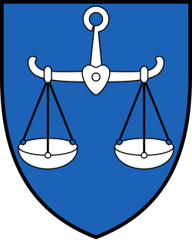
Coat of arms of Founex
Azure, a pair of scales argent. A white pair of scales stands out on a blue field. The municipality adopted these arms in 1927. The scales, a symbol of justice and balance, already decorated the sign of the village inn. The colours recall those of Coppet.[4][3]
Founding of Founex
In Roman times a settlement stood at Le Gachet, where a milestone marking the fourth mile from Nyon, on the road along Lake Geneva, was also found. No specific founder is known. The medieval village developed under the authority of the lordship, later barony, of Coppet, in the parish of Commugny. Its first appearance in the archives is sometimes dated to 1273, whereas the form « Fosnay » is recorded as early as 1224. A confraternity of the Holy Spirit, attested from 1383, shows an organised community of inhabitants.[1]
History of Founex
Roman period. Roman settlement at Le Gachet. A milestone indicates the fourth mile from Nyon.[1]
1224. First mention of the village in the form « Fosnay ».[1]
1383. A confraternity of the Holy Spirit is attested.[1]
1536-1798. Dependent on the barony of Coppet, Founex belongs to the Bernese bailiwick of Nyon. It is attached to the parish of Commugny.[1]
1729. A council of six members and two governors is appointed.[1]
1739. The first tavern opens.[3]
1764. The hamlets of La Châtaigneraie and Le Gachet are joined to Founex.[1]
18th century. Lawsuits between the Baron of Coppet and the community, which seeks autonomy.[1]
1798. Founex becomes part of the district of Nyon.[1]
1802. Founex joins the Bourla-Papey uprising.[3]
1858. The Lausanne-Geneva railway line crosses the municipality.[1]
1868. A railway halt opens.[1]
1886. Phylloxera is reportedly detected in the village vineyards on 8 July.
1893. Founex is a pioneer in the canton of Vaud, replanting its vineyards with American vines against phylloxera.[1]
1898-1899. The Catholic church of Saint-Robert is built. It was reportedly blessed on 3 August 1899.
1908. An École nouvelle is founded near La Châtaigneraie.[1]
1951. The school becomes a campus of the International School of Geneva.[1]
after 1960. The farming village becomes a residential municipality.[1]
2004. Founex station closes on 12 December (date uncertain).
Population of Founex
Sources and references: [1][2]
| 1764 | 223 |
| 1850 | 246 |
| 1900 | 374 |
| 1950 | 536 |
| 1990 | 1'775 |
| 2000 | 2'648 |
| 2025 | 3'737 |
Families of Founex
Citizen families before 1800. Bory, Debluë, Magnin and Veluz, with no precise date, as well as the Etier family, from France. Two more French families are admitted in the 18th century: the Nerfin in 1712 and the Dejoux in 1768.[6]
In the 19th century. The Pellaton family is listed with no precise date. In 1824, Founex admits the van Muyden family, from the Netherlands.[6]
From 1901 to 1962. Four families, all in the late 1950s: the Kilchherr of Kriechenwil BE and the Schneebeli of Affoltern am Albis ZH in 1957, then the Balmer of Wilderswil BE and the Pichon, from France, in 1959.[6]
Notable people of Founex
Paul Etier (1863-1919). Born in Founex, this surveyor worked as a hydrographer for the Federal Topographic Bureau and then as road inspector of the canton of Vaud in Nyon. A Radical Councillor of State, he headed the Military Department (1902-1906) and then Public Works (1906-1919). He also chaired the Pro Sempione foundation.[7]
Economy of Founex, past and present
The vineyard. Nearly fifty hectares of vines lie between the houses of Founex. Its wines regularly win awards.[5]
Historic sites in Founex
Church of Saint-Robert. This Catholic church was built in 1898-1899 on land donated by Baroness Double de Saint-Lambert. It was reportedly inaugurated and blessed on 3 August 1899.
La Châtaigneraie. Hamlet of Founex where an École nouvelle was founded in 1908. In 1951 it became a campus of the International School of Geneva.[1]
Remains in Founex
Roman settlement and milestone at Le Gachet. At Le Gachet, remains of a Roman settlement have been uncovered, as well as a milestone indicating the fourth mile from Nyon (a Roman colony), a witness to the ancient road along Lake Geneva.[1]
Sources
- Dictionnaire historique de la Suisse, « Founex »
- Statistique Vaud, « Population résidante permanente au 31 décembre 2025 »
- Commune de Founex, « Histoire & Patrimoine »
- IPI, Swissreg, emblems database: coat of arms of Founex (no. 102092)
- Municipality of Founex, "La Commune en bref"
- Register of Swiss Surnames, 3rd edition (1989), search Commune "Founex", Canton VD
- Dictionnaire historique de la Suisse, « Etier, Paul », version du 21.03.2006
Published by Sébastien Jörg ·
Other villages near Founex
Missing information, or do you have a source? Suggest a correction or addition. Every submission is checked before it's published.
Suggest a change