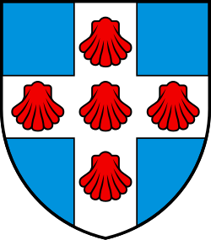
Céligny
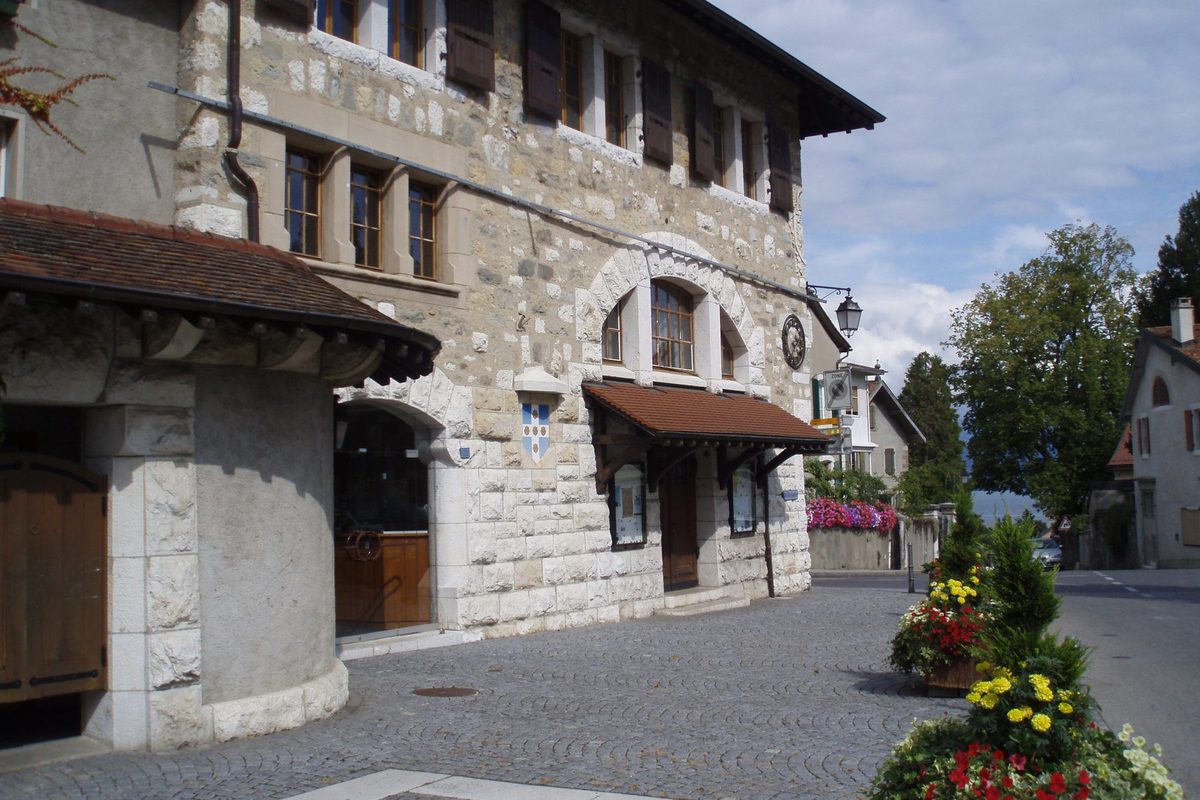
Origin of the name Céligny
Céligny is first mentioned in 1163, as « Siliniacum ». The name is said to come from a Gallo-Roman estate, the « fundus Siliniacus », meaning the estate of Silinius.[1]
Founding of Céligny
The site has been used since the Bronze Age, from which objects have been found in the lake and in graves west of the village. Beneath the present temple, a 4th-5th century villa was replaced by two wooden churches, and some graves probably date from the Burgundian period. In the Middle Ages Céligny belonged to the mandement of Peney: the bishop of Genève held the sovereign rights there, including high justice, while economic rights went to the nobles of Céligny or to the abbey of Bonmont. When the commoners swore allegiance to the Seigneurie of Genève, the bishop's successor, Bern claimed the protection that had been granted to the Duke of Savoy. The Treaty of Lausanne settled the dispute, but Bern refused to cede the Bogis-Bossey corridor, which separates Céligny from Les Coudres. The municipality thus remained a Genevan enclave in Vaud territory, made up of the village of Céligny and the enclave of La Grande and La Petite Coudre.[1]
History of Céligny
Bronze Age. Objects are deposited in the lake and in graves west of the village.[1]
4th-5th century. A villa is built on the site of the future temple. It is later replaced by two wooden churches, one of which is the origin of the present church.[1][4]
1163. First mention of Céligny (« Siliniacum »).[1]
1275. A parish priest is mentioned at Céligny.[1]
14th century. The bishop of Genève holds the sovereign rights over Céligny, attached to the mandement of Peney, including high justice.[1]
1441. The commoners obtain the protection of the Duke of Savoy in return for a payment.[1][2]
1469. Bishop Jean-Louis de Savoie grants franchises to the men of the mandements of Jussy, Thiez and Peney.[1]
1490. The protection of the Duke of Savoy is renewed.[1][2]
1536. The procurators of the commoners swear allegiance to the Seigneurie of Genève. Bern claims the commitment to the Duke. The Protestant parish dates from this year.[1]
1547. Céligny, first attached to the castellany of Peney, forms a castellany with Genthod.[1]
1564. The Treaty of Lausanne ends the dispute between Bern and Genève over Céligny.[1]
1726. A boundary report ends the conflicts of jurisdiction and boundaries with Bern.[1]
1758. The Naville family acquires the Garengo estate, remodelled for the banker Étienne Naville and his brother Pierre.[2]
1764. Élisabeth Torras, widow Bonnafous, acquires the Élysée estate, whose manor house is built before 1771.
1806. The medieval choir of the temple is demolished and the nave enlarged.
1858. Opening of the Genève-Lausanne railway line, with a first halt below the historic core.[2]
1901. The economist Vilfredo Pareto settles in Céligny, where he dies in 1923.
1907. A town hall in Heimatstil style replaces the former tithe barn.[2]
1953. A Genevan law sets the boundaries between the cantons of Vaud and Genève. It is amended in 1971 after the construction of the motorway.[1]
1984. The actor Richard Burton dies in Céligny. He is buried in the old cemetery.
1991. The temple, the former Romanesque church of Saint-Martin, burns. Restoration work and excavations continue until 1994 and the temple reopens in 1993.[1][4]
Population of Céligny
Sources and references: [1][5]
| 1850 | 312 |
| 1900 | 390 |
| 1950 | 415 |
| 1990 | 633 |
| 2000 | 599 |
| 2025 | 839 |
Historic sites in Céligny
Saint-Martin temple. Former Romanesque church of Saint-Martin, a Reformed temple since 1536. The medieval choir was demolished in 1806. Ravaged by fire in 1991, it was restored and reopened in 1993.[1][4]
Enclave of Les Coudres. La Grande Coudre and La Petite Coudre form a second Genevan enclave in Vaud territory, separated from the village by the Bogis-Bossey corridor that Bern refused to cede.[1]
Garengo. Estate on the site of the medieval fortified house of the nobles of Céligny, remodelled from the 1760s for the Naville family. The pianist Ernest Schelling bought it in 1910.[2]
L'Élysée. Estate bought in 1764 by Élisabeth Torras, widow Bonnafous. Her son named it after the garden described by Rousseau.
Town hall of 1907. Town hall in Heimatstil style built on the site of the former tithe barn.[2]
Cemeteries. The old cemetery holds the grave of Richard Burton. Vilfredo Pareto is buried in the village cemetery.
Remains in Céligny
Villa under the temple. The excavations of 1991-1994 revealed a 4th-5th century villa, replaced by two wooden churches, one of which gave rise to the present church.[1][4]
Roman remains of Murat. Remains of a Roman villa found while a chalet was being built on the Murat land, bought in 1870 by the brothers Édouard and Émile Chaponnière. A few mosaics and an aqueduct.[1][2]
Ancient graves. Bronze Age objects found in the lake and in graves west of the village. Graves probably dating from the Burgundian period.[1]
Sources
- Dictionnaire historique de la Suisse, « Céligny » (Catherine Santschi), version du 05.07.2005
- Inventaire fédéral des sites construits à protéger en Suisse (ISOS), « Céligny »
- Commune de Céligny, « Bienvenue à Céligny »
- République et canton de Genève, « Parution du nouvel hors-série d'Archéologie genevoise » (19.12.2024)
- Office cantonal de la statistique (OCSTAT), Mémento statistique du canton de Genève 2026, tableau Population résidante par commune, en 2025
- geo.admin.ch, service de recherche de swisstopo (coordonnées)
Localities of the municipality with a page
Other villages near Céligny
Missing information, or do you have a source? Suggest a correction or addition. Every submission is checked before it's published.
Suggest a change