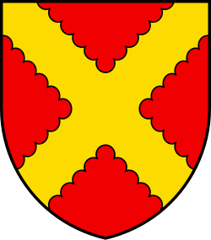
Genthod
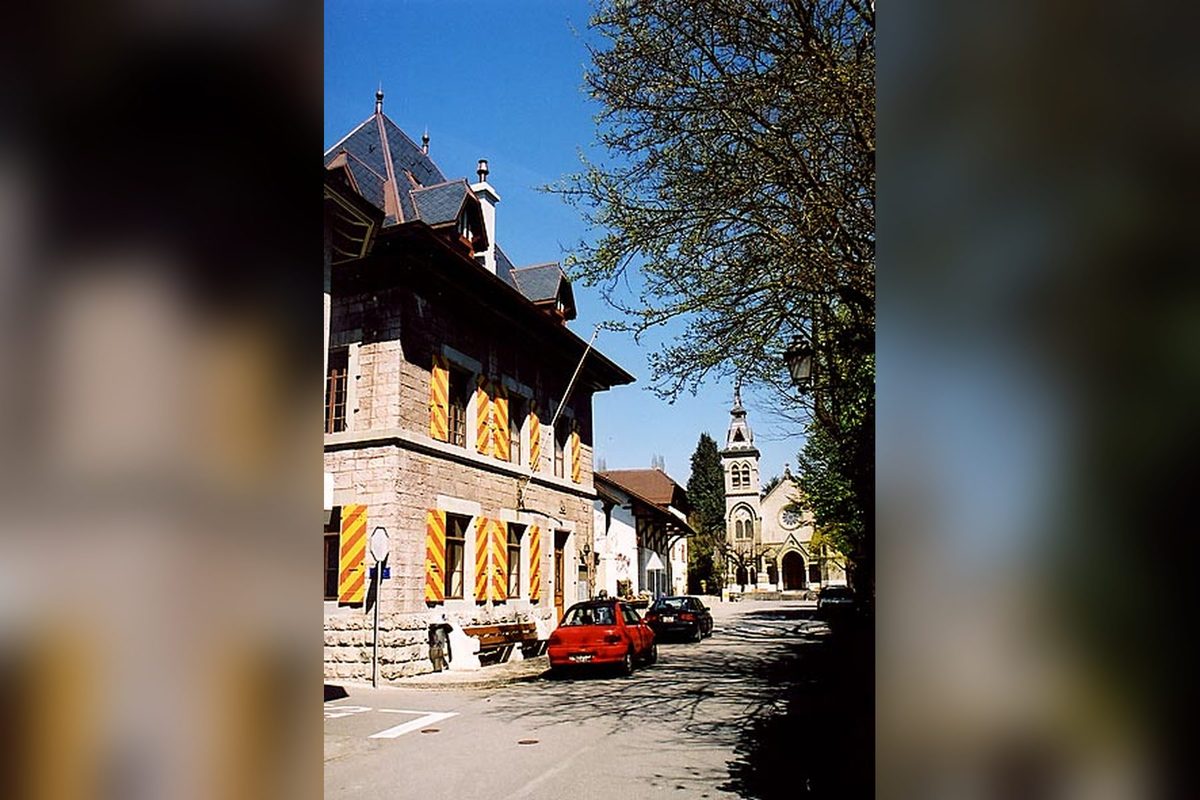
Origin of the name Genthod
The name appears in the 14th century in the form « Gentouz ». What the name means is not yet known.[1]
Founding of Genthod
Who founded Genthod is not known. Its territory has nonetheless yielded Neolithic pile-dwelling sites, Roman remains and a 3rd-7th-century necropolis at the Maladière. In the Middle Ages the village belonged to the mandement of Peney and depended on the bishop of Genève. He granted jurisdiction as a fief to the de Genthod family, owners of a fortified house in the village. The fief later passed to the Seigneurie of Genève, then to bourgeois families of the city. After the Bernese occupation Genthod found itself enclosed in the Pays de Gex, causing many difficulties over worship and borders. The municipality was born when Genthod returned to Genevan territory after the French occupation.[1]
History of Genthod
Neolithic. Pile-dwelling sites.[1]
3rd-7th centuries. Necropolis of the Maladière.[1]
14th century. Mention in the form « Gentouz ».[1]
1328. The bishop of Genève grants jurisdiction as a fief to the de Genthod family, who own a fortified house in the village. The village belongs to the mandement of Peney.[1]
1536-1564. Bernese occupation; Genthod is then enclosed in the Pays de Gex.[1]
1541. The fief passes to the Seigneurie of Genève, then is held by bourgeois families of the city until 1798.[1]
1685. After the Reformation the village is attached to the parish of Moëns. When the temple of Moëns closes in 1685, a Genevan pastor serves it.[1]
1725-1752. The Saladin family assembles the Grand-Malagny estate, buying up the houses of the hamlet and having them razed.[2]
1749. The Treaty of Paris resolves the difficulties over worship and border demarcation. It also fixes the limits of the Malagny enclave.[1][2]
1765. Horace Bénédict de Saussure marries Albertine Amélie Boissier, granddaughter of Ami Lullin, for whom the house at Creux-de-Genthod had been built.[8]
1798-1814. French occupation.[1]
1816. Creation of the municipality, when Genthod returns to Genevan territory.[1]
1817. Genthod becomes an independent parish.[1]
1823. Opening of a first shipyard, after a dairy in 1801.[1]
1858. Opening of Genthod-Bellevue station.[1]
1869. Construction of the present temple.[1]
1900-1925. A tram links Genthod to Genève. A bus line succeeds it in 1990.[1]
1985. On 20 November, during the Reagan-Gorbachev summit, the President of the Confederation Kurt Furgler holds a reception at the La Gandole residence.[9]
1995. The watch manufacturer Franck Muller Watchland SA settles in Genthod.[1]
2006. The Franck Muller group buys the Malagny estate.[2]
Population of Genthod
Sources and references: [1][3]
| 1850 | 228 |
| 1900 | 380 |
| 1950 | 739 |
| 1980 | 1'175 |
| 2000 | 2'171 |
| 2025 | 2'858 |
Historic sites in Genthod
Domaine du Saugy. Country house whose estate was created by the Gallatin family. Cultural property of regional importance (PCP inventory, Campagne Le Saugy).[1][7]
Malagny. Hamlet mentioned in 1295 (« Malagnier »), which in the Middle Ages, like Genthod, belonged to the mandement of Peney. The Saladin family assembled the Grand-Malagny estate there between 1725 and 1752. The classical-style country house was sold in 1819 to Alexandre Marcet, and the estate was bought in 2006 by the Franck Muller group.[2]
Lullin-de-Saussure house. House at Creux-de-Genthod built in 1723-1730 to plans by the Parisian architect Jean-François Blondel for Ami Lullin, whose granddaughter married Horace Bénédict de Saussure in 1765. Listed by the Council of State on 14 September 1956, cultural property of national importance.[5][7][8]
Charles Bonnet house. Country house of the Beau-Pré estate, built in 1728-1731 for Horace-Bénédict De la Rive. The gardens were laid out after 1756 for Charles Bonnet, who received learned Europe there. Cultural property of national importance.[6][7]
Genthod temple. Temple of the parish independent since 1817, built in 1869.[1]
Remains in Genthod
Pile-dwelling sites. The municipal territory has yielded Neolithic pile-dwelling sites.[1]
Necropolis of the Maladière. Necropolis of the 3rd-7th centuries at the place called la Maladière. The municipal territory has also yielded Roman remains.[1]
Sources
- Dictionnaire historique de la Suisse, « Genthod » (Martine Piguet), version du 11.07.2007
- Dictionnaire historique de la Suisse, « Malagny » (Martine Piguet)
- Office cantonal de la statistique (OCSTAT), Mémento statistique du canton de Genève 2026, tableau Population résidante par commune, en 2025
- geo.admin.ch, service de recherche de swisstopo (coordonnées)
- Office du patrimoine et des sites, recensement architectural du canton de Genève, « Maison Lullin-de Saussure », route du Creux-de-Genthod 19 (fiche 2011-26166)
- Inventaire fédéral des biens culturels (PBC), fiche 2579 « Beau-Pré », texte de la Société d'histoire de l'art en Suisse (Guide artistique de la Suisse)
- Inventaire PBC, liste cantonale Genève (état au 1.1.2026)
- Dictionnaire historique de la Suisse, « Saussure, Horace Bénédict de », version du 23.02.2011
- Thomas Kern, « The Geneva Summit », swissinfo.ch, 27.05.2021 (photographies Keystone)
Other villages near Genthod
Missing information, or do you have a source? Suggest a correction or addition. Every submission is checked before it's published.
Suggest a change