Le Petit-Saconnex
Origin of the name Le Petit-Saconnex
The place appears in 1265 as « Saconay-Lo-Petit ». Where does the name come from? That is still unknown.[1]
Founding of Le Petit-Saconnex
Long before the hamlet, the right bank of the lake was inhabited: lakeside settlements stood at Les Pâquis from the Middle Neolithic. In Roman times three roads starting from the Pont de l'Ile crossed the area, where there was an agricultural estate. In the early Middle Ages cemeteries appeared at Grand-Pré and Le Petit-Saconnex, and the church of Saint-Jean-hors-les-Murs, given to the abbey of Ainay in Lyon, became a Benedictine priory. The place belonged to the lordship of Gex, Savoyard in the 14th century, then to Genève and the mandement of Peney until the end of the Ancien Régime. The political municipality, created under French rule, grouped around the hamlet of Le Petit-Saconnex, its main village, the districts of Les Pâquis, Le Prieuré, Sécheron, Les Grottes, Grand-Pré, Varembé, Morillon, Beaulieu, Moillebeau, La Servette, Les Charmilles and Saint-Jean. It is now part of the municipality of Genève.[1][2]
History of Le Petit-Saconnex
3000-750 BC. Lakeside settlements at Les Pâquis, from the Middle Neolithic to the end of the Bronze Age.[1]
6th-7th centuries. A wooden sanctuary precedes the church of Saint-Jean-hors-les-Murs. Cemeteries develop at Grand-Pré and Le Petit-Saconnex.[1]
before 1107. Bishop Guy de Faucigny gives Saint-Jean-hors-les-Murs to the abbey of Ainay in Lyon, which founds a Benedictine priory there, destroyed in 1536.[1]
1265. Mention of the place in the form « Saconay-Lo-Petit ».[1]
1355. The lordship of Gex, to which the right bank belongs, passes to Savoy.[1]
1458. First mention of a tile works at Les Pâquis.[1]
1508. Duke Charles III of Savoy gives the pastures of Les Pâquis to the plague hospital of Plainpalais.[1]
1536. Bern cedes the Pays de Gex to Genève. The place then belongs to the mandement of Peney until the end of the Ancien Régime.[1]
1590. The hamlet is burned during the war between Genève and Savoy.[1]
1621. The place, which belonged to the parish of Saint-Gervais, forms its own parish. The church is built in 1624-1628.[1]
1710. The first calico-printing works of Genève starts production at Les Pâquis.[1]
1798. Creation of the political municipality under French rule, with a mayor, two deputies and a municipal council.[1]
1850. The municipality loses Les Pâquis, Montbrillant and Les Grottes to the city of Genève.[1]
1858. Opening of the first Cornavin station, rebuilt in 1927-1932.[1]
1894. The canton's first electric tramway links the hamlet with the centre of Genève.[1]
1904. Opening of the botanical garden on a plot of the Ariana estate.[1]
1918-1919. Construction of the Sécheron workshops.[1]
1930. In May, the merger with the city of Genève is accepted by 2'150 yes to 186 no.
1931. The merger is carried out on 10 July: Le Petit-Saconnex becomes a district of the City of Genève until 1958. The League of Nations then has its palace built in the Ariana park.[1][2]
Population of Le Petit-Saconnex
Sources and references: [1][3]
| 1530 | 23 hearths (households) |
| 1850 | 1'106 |
| 1900 | 6'383 |
| 1910 | 9'310 |
| 1920 | 15'103 |
| 1930 | 18'978 (last figure before the merger) |
Historic sites in Le Petit-Saconnex
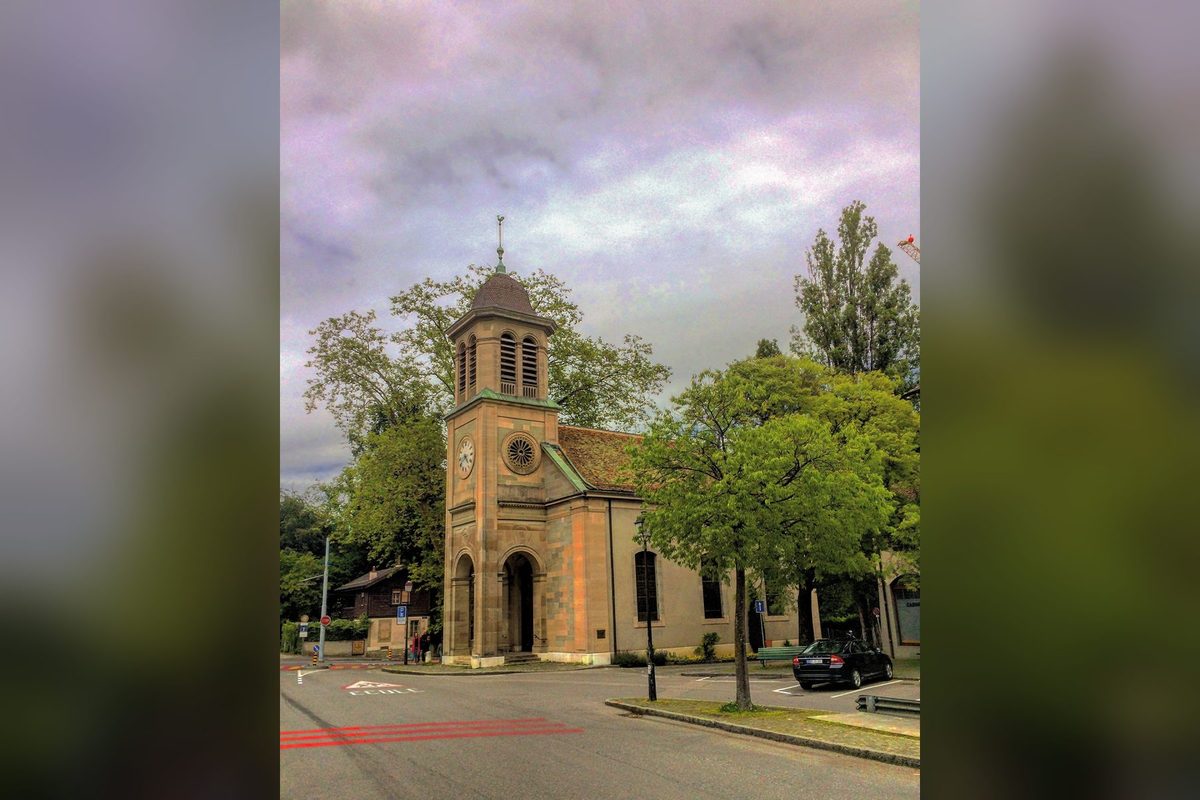
Temple du Petit-Saconnex. Reformed church built in 1624-1628, after the parish was created in 1621, and altered several times.[1]
Les Pâquis. Former pastures given in 1508 to the plague hospital, where the navigation society set up a shooting range and a port in 1677, and where the first calico-printing works of Genève started in 1710. The district passed to the city in 1850.[1]
Ariana estate. A large estate where the botanical garden opened in 1904 and where the League of Nations had its palace built after the merger of 1931.[1]
Cornavin station. The first railway station of Genève, opened in 1858 on the municipality's territory and rebuilt in 1927-1932.[1]
Remains in Le Petit-Saconnex
Prehistoric and Roman remains. Lakeside settlements at Les Pâquis (Middle Neolithic to the end of the Bronze Age) and remains of a Roman agricultural estate found on the Bartholoni estate.[1]
Early medieval cemeteries. Early medieval cemeteries uncovered at Grand-Pré and Le Petit-Saconnex.[1]
Sources
- Dictionnaire historique de la Suisse, « Petit-Saconnex, Le » (version allemande lue)
- Ville de Genève, Compte rendu de l'administration municipale pendant l'année 1931 (1932)
- Bureau de statistique du canton de Genève, Rapport du Bureau de statistique pendant l'année 1931 (1932), tableau 4
- geo.admin.ch, service de recherche de swisstopo (coordonnées)
Other villages near Le Petit-Saconnex
Missing information, or do you have a source? Suggest a correction or addition. Every submission is checked before it's published.
Suggest a change