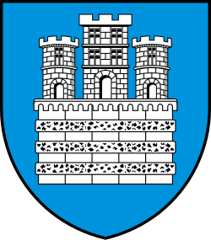
Troinex
Origin of the name Troinex
A mention of « Triuniacum » around 1100 may refer to the place, but this is not certain. Then come « Tronaco » in 1201, followed by « Troisnacum », « Trosnay » and « Troisna ». No explanation has yet been found for this name.[1]
Founding of Troinex
The site has been frequented since the Neolithic, as pottery fragments and the megalithic group of the Pierre-aux-Dames show. A tomb dates from Roman times. The parish existed in the early 13th century and then included the hamlet of Mugnay, which the plague would wipe out. The hamlet of La Grand'Cour grew up around a mill on the Drize. The village then belonged to the priory of Saint-Victor in Genève, which shared the fiefs with the Ternier family and later with the counts of Savoy. Attached to the parish of Bossey after the Reformation, Troinex became Catholic again. First Savoyard, then French, it passed to Genève, at first united with Veyrier before becoming a municipality in its own right. Today it is a residential municipality. Who founded Troinex is not known.[1]
History of Troinex
Neolithic. Pottery fragments show human presence. A megalithic group, including the Pierre-aux-Dames, is set up on a burial mound.[1][3]
Roman period. A tomb is built; the four human figures of the Pierre-aux-Dames date from this period.[1][3]
Around 1100. Possible mention of the place as « Triuniacum » (uncertain identification).[1]
1201. Mentioned as « Tronaco ». The parish was established before this date.[1]
1275. First mention of the church of Saint-Saturnin.[1]
1295. A mill on the Drize is attested. The hamlet of La Grand'Cour grows up around it.[1]
1302. The village belongs to the priory of Saint-Victor in Genève, which shares the fiefs with the Ternier family.[1]
1343. The hamlet of Mugnay disappears after the plague.[1]
1401. The counts of Savoy succeed the Ternier family in sharing the fiefs with the convent of Saint-Victor.[1]
1518. Troinex has 36 hearths.[1]
16th century. The church disappears at the Reformation and Troinex is attached to the parish of Bossey. The Genevan de Châteauneuf family owns the village's fortified house.[1][4]
1743. First attempts to drain the marshy eastern part of the municipality.[1]
1754. The Treaty of Turin assigns Troinex to Savoy.[1]
1792-1798. Troinex belongs to the French department of Mont-Blanc, then from 1798 to that of Léman.[1]
1816. Troinex is ceded to Genève and first united with the municipality of Veyrier.[1]
1817. Troinex becomes an independent municipality. Part of the municipality of Compesières is ceded to it.[1][2]
1819. Discovery of the megalithic group of the Pierre-aux-Dames.[1][3]
1872. The Pierre-aux-Dames is moved to the Parc des Bastions in Genève, then in 1942 to the courtyard of the Musée d'art et d'histoire.[3]
1907-1952. The Carouge-Collonges-sous-Salève tramway serves the village.[1]
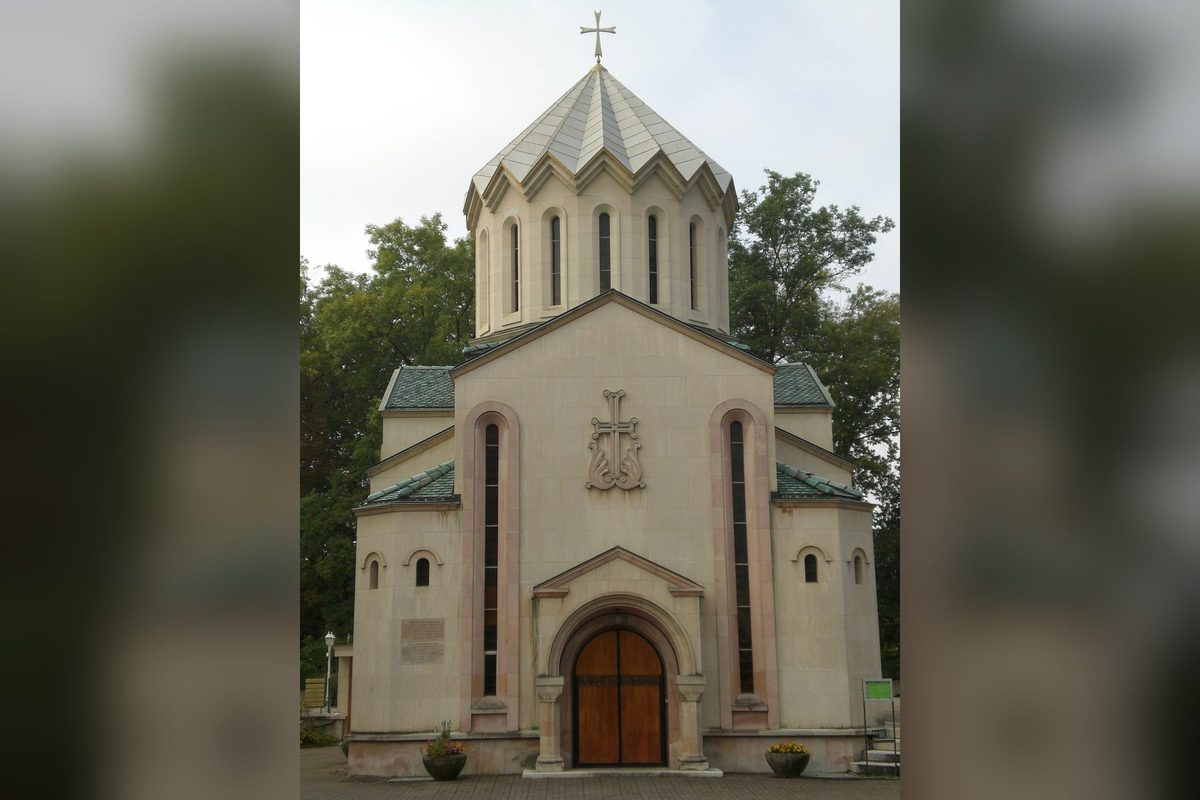
1958-1969. Opening of the Protestant temple (1958), construction of the church of Sainte-Marie-Madeleine (1958-1959), replacing a wooden chapel of 1931, and consecration of the Armenian Apostolic church of Saint-Hagop (1969).[1]
Population of Troinex
Sources and references: [1][6]
| 1518 | 36 hearths (households) |
| 1822 | 176 |
| 1850 | 247 |
| 1900 | 329 |
| 1950 | 706 |
| 2000 | 2'030 |
| 2020 | 2'507 |
| 2025 | 3'365 |
Historic sites in Troinex
La Grand'Cour. Hamlet that grew up around a mill on the Drize attested from 1295.[1]
Troinex-Ville, Troinex-Dessus, Troinex-Dessous and Marsillon. Hamlets which, together with La Grand'Cour, make up the municipality.[1]
Place de la Mairie. A copy of the Pierre-aux-Dames, made in 1998, is displayed here.[3]
Armenian Apostolic church of Saint-Hagop. Church consecrated in 1969; it is the only Armenian church in Switzerland, and its priest also serves the Armenian communities settled elsewhere in the country.[1][5]
Remains in Troinex
Pierre-aux-Dames. Granite block of more than three tonnes, named after the four human figures carved on one of its faces in the Roman period. Recorded from 1819 along the road to Bossey, on a mound with three other menhirs, it was moved to the Parc des Bastions in 1872 and then to the courtyard of the Musée d'art et d'histoire in 1942. The figures have been interpreted as matronae, deities of Celtic origin linked to fertility.[3]
Burial mound. When the mound was levelled for a road realignment in 1877, four burials containing seven skeletons were discovered, as well as scattered skulls mixed with red ochre at the base of the mound.[3]
Sources
- Dictionnaire historique de la Suisse, « Troinex » (Dominique Zumkeller), version du 10.08.2011
- Dictionnaire historique de la Suisse, « Compesières » (Isabelle Brunier), version allemande
- République et canton de Genève, Office du patrimoine et des sites, « Histoires d'archéo : La Pierre-aux-Dames » (5 mars 2024)
- Commune de Troinex, « Histoire et armoiries »
- Ambassade de la République d'Arménie en Suisse, page « Community overview » sur la communauté arménienne (non datée)
- Office cantonal de la statistique (OCSTAT), Mémento statistique du canton de Genève 2026, tableau Population résidante par commune, en 2025
Localities of the municipality with a page
Other villages near Troinex
Missing information, or do you have a source? Suggest a correction or addition. Every submission is checked before it's published.
Suggest a change